
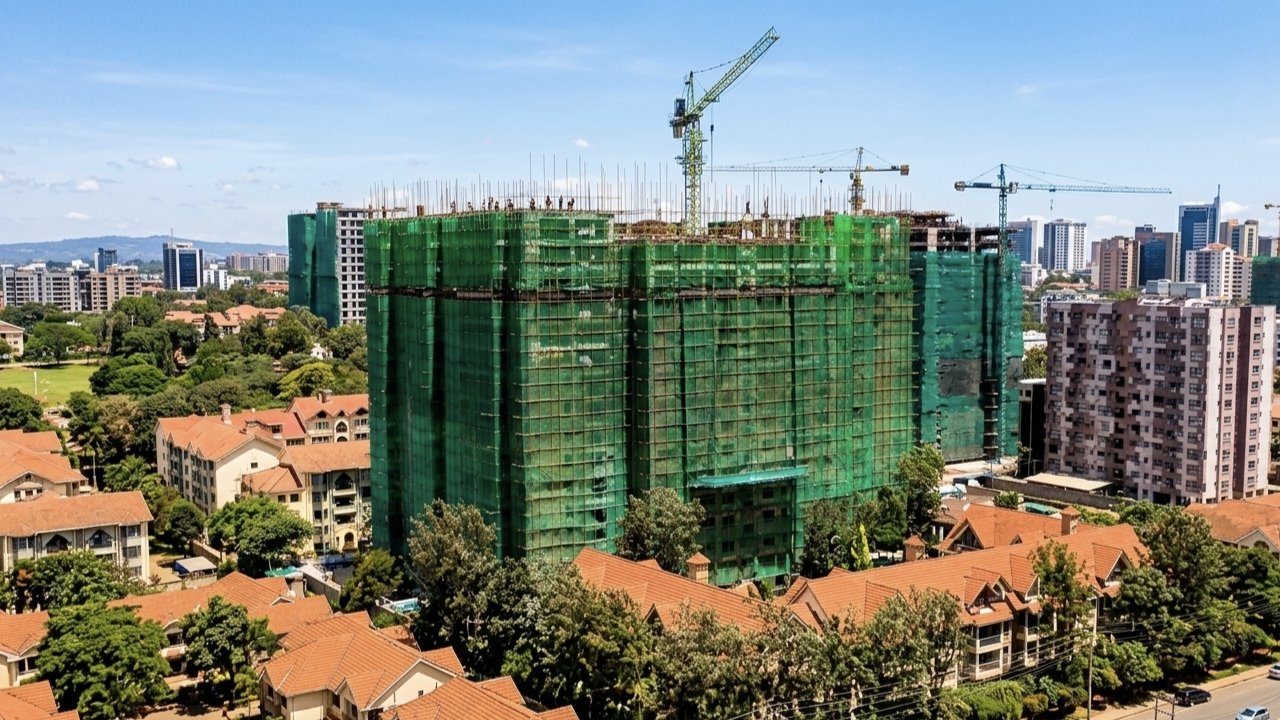

For years, the formula worked without much thought. Buy land, put up apartments, and collect rent. Across Nairobi and its expanding edges, that formula built fortunes. It is no longer working.
Half-finished buildings now interrupt the skylines of Kilimani, Kileleshwa, and a string of satellite towns. Completed luxury units sit vacant for months. Investors who once spoke confidently of 15 percent annual returns are struggling to break even.
The market has not simply slowed. It has changed shape.
Property analyst Samuel Kariuki puts the core problem plainly. "If a neighbor builds a block of two-bedroom apartments and it fills up, five other people buy the adjacent plots and build the exact same thing," he says. "They don't look at the shifting demographics or the fact that the first guy already satisfied the immediate demand."
That herd mentality has glutted areas like Kilimani and Kileleshwa with mid to high-end units chasing a shrinking pool of expatriates and high-income tenants. Rents in those corridors have stagnated. In some pockets, they have dipped.
Construction costs have compounded the problem. The price of cement, steel, and finishing materials has risen by more than 20 percent over the last two years. A weakening shilling has pushed imported fittings further out of reach, and many developers are finding their budgets exhausted before they reach the roofing stage.
There is another layer to the losses. Many Kenyan buildings proceed without registered project managers or qualified professionals, a decision often made to cut costs at the outset. The result is frequently the opposite. Design errors and procurement failures produce structures that cannot be legally occupied or are too flawed to attract the rents the investor projected. The money is spent. The returns are not there. Industry professionals refer to this as dead capital.
The picture is not entirely grim, however. While the speculative, build-and-sell model is under serious pressure, needs-based real estate continues to perform.
Student accommodation is one of the clearest examples. With university enrollment expanding under government policy, the gap between available beds and the student population has widened considerably. Purpose-built student housing that offers security, fast internet, and proximity to campuses is generating yields of between 10 and 12 percent, well above what a standard residential apartment in an oversupplied suburb can produce today.
Affordable housing is another area where demand has not let up. Kenya's housing deficit stands at over two million units. Developers who can deliver decent, low-cost units targeting the Sh25,000 to Sh40,000 monthly rent bracket are reporting full occupancy before construction is complete. The volume model is demanding to execute, but where it works, it works consistently.
Land in satellite towns, including Ruiru, Joska, and Malaa continues to appreciate, but with a condition attached. Investors are learning that proximity to planned infrastructure matters more than the land price itself. Areas along confirmed bypass routes or with reliable water connections are moving. Plots in areas without those anchors are sitting.
Specialized warehousing is attracting attention from a different class of investor altogether. E-commerce growth in Kenya has created demand for last-mile delivery hubs and cold storage facilities that the existing property stock cannot meet. Small-scale industrial parks are now outperforming traditional office blocks on returns, a reversal that would have seemed unlikely five years ago.
The Kenya Property Developers Association has described the broader shift as a move toward asset-backed enterprise, where investors build for long-term management and steady cash flow rather than a quick exit. That framing aligns with what the numbers are showing on the ground.
The conclusion the market is drawing is not subtle. Real estate in Kenya is now a sophisticated professional sector. The winners will be those who do their homework, hire professionals, and build what the market actually needs, rather than what they think looks good on a brochure.
Comments (0)
Leave a Comment
No comments yet. Be the first to share your thoughts!