
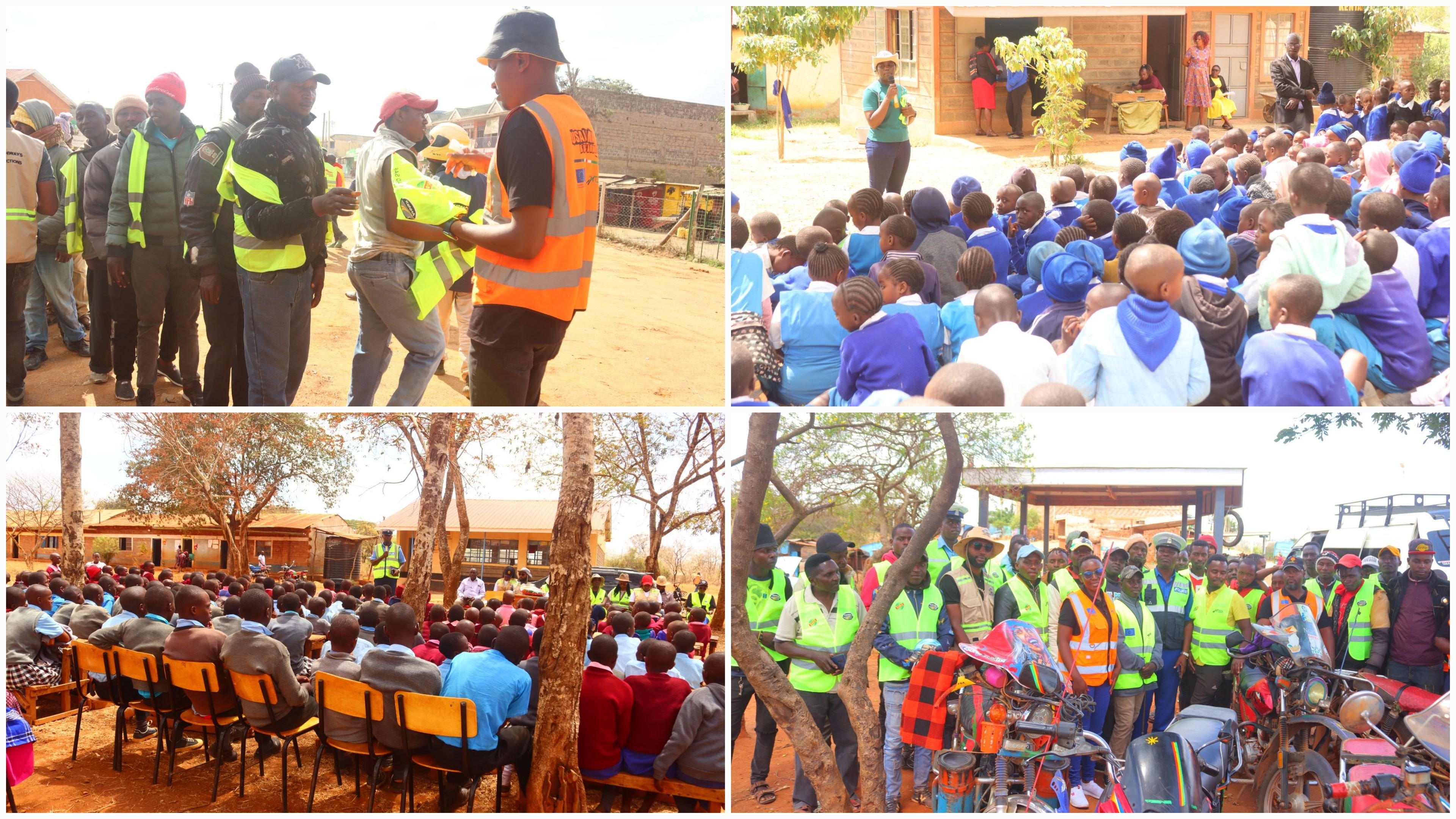

Through interactive sessions and targeted outreach, the KeNHA road safety program soughts to instill life-long road safety habits among young learners, empower bodaboda operators with knowledge on traffic regulations and personal safety, and reduce road accidents by promoting proactive community engagement. This comprehensive approach recognizes that road safety is a shared responsibility that extends beyond law enforcement and infrastructure development to embrace the individual actions and collective awareness of all road users. By focusing on these distinct but interconnected groups, the Kenya National Highways Authority, or KENHA, is laying the groundwork for a cultural shift toward greater road responsibility and vigilance across the nation's major highway networks to ensure the safety of every person who travels on them.
The effort to educate young learners represents a vital investment in Kenya's future road safety landscape. KENHA's teams are visiting primary and secondary schools near major highways to conduct workshops that use engaging materials and interactive games. These sessions cover essential topics such as safe pedestrian behavior, the importance of wearing seatbelts, recognizing and obeying traffic signs, and the dangers of playing near busy roads. By starting early, the program aims to cultivate a generation of responsible road users who instinctively prioritize safety. For many children, these lessons are their first formal introduction to the rules of the road, making the delivery clear, memorable, and fun.
A critical component of the campaign is the dedicated focus on bodaboda operators, who are essential for transport but are often disproportionately involved in road traffic incidents. These sessions are designed not as punitive lectures but as collaborative learning environments where experience and safety best practices are exchanged. Operators receive training on defensive driving techniques, the proper use of safety gear like helmets and reflective vests, understanding key sections of the Traffic Act, and first aid basics. Emphasis is placed on the economic and personal costs of accidents, framing compliance not just as a legal requirement but as a means of protecting their livelihoods and their lives.
Furthermore, the program's success hinges on fostering proactive community engagement. KENHA understands that local communities are the best custodians of their road environments. Through local barazas and community forums, the initiative encourages residents to report hazardous road conditions, provide feedback on road design elements, and participate in local road safety committees. This dialogue helps tailor solutions to specific local challenges, making the safety interventions more relevant and sustainable. Promoting this sense of ownership ensures that safety measures are embraced and maintained long after KENHA's initial outreach concludes.
In addition to education and community outreach, the program provides valuable data and insight to inform future infrastructure improvements. Feedback gathered from the public, coupled with accident data analysis, helps KENHA identify high-risk areas for targeted interventions such as installing speed bumps, improving signage, or constructing pedestrian overpasses. With this approach, resources are allocated where they can have the maximum impact on saving lives and preventing serious injuries. KeNHA’s ongoing commitment to this holistic program demonstrates a profound understanding that a nation’s development is inseparable from the safety and well-being of its citizens.
.
Comments (0)
Leave a Comment
No comments yet. Be the first to share your thoughts!