

A version of this article appeared on Interesting Engineering.
Chinese engineers developed a ground validation network for an orbital energy installation designed to beam electrical energy across tens of thousands of kilometres. The initiative aims to capture uninterrupted sunlight directly from space.
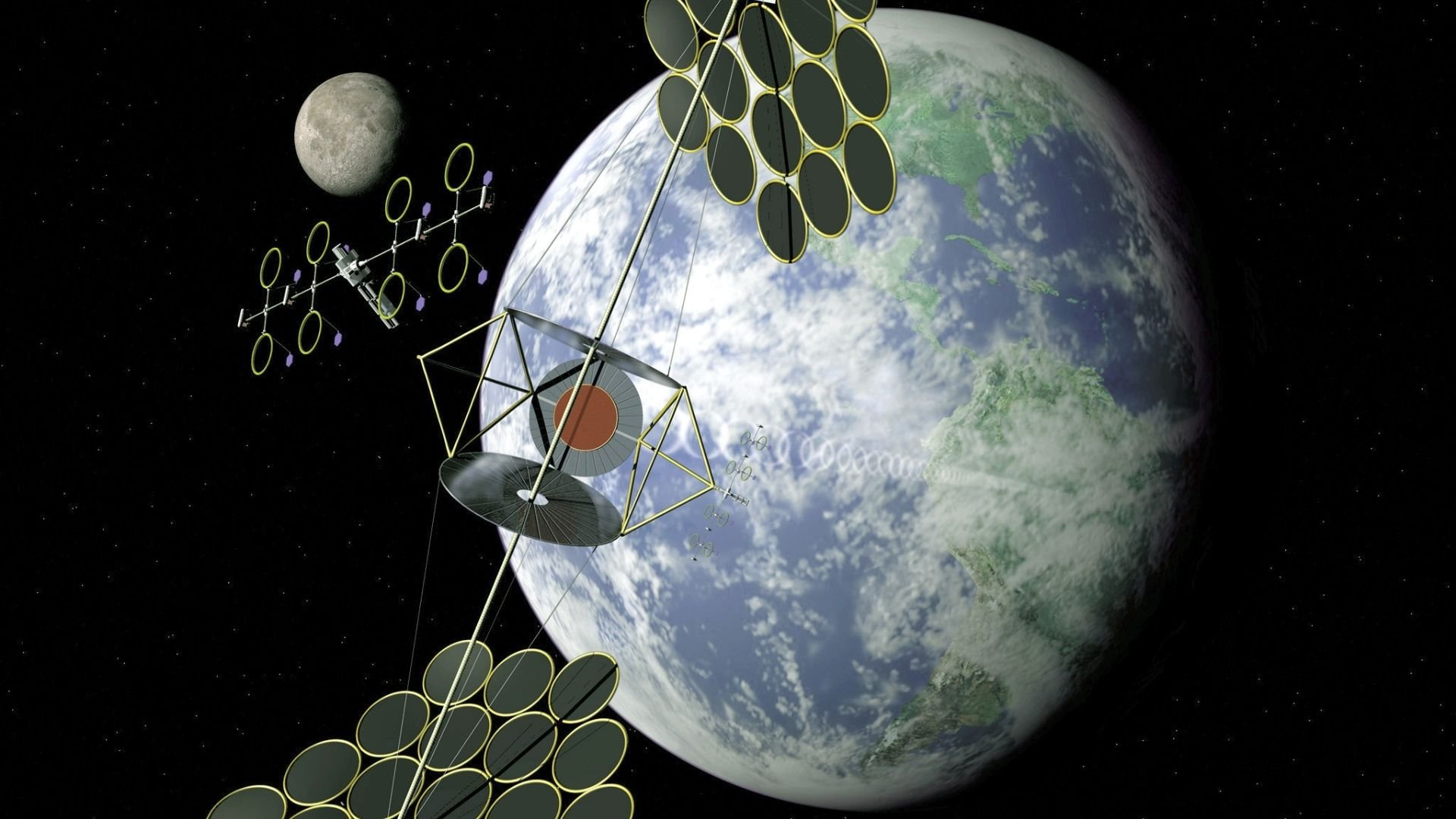
The program, which is known officially as the Zhuri project, translates to chasing the sun. Led by researchers at Xidian University in Xi'an, the engineering team designed a system to harvest solar energy in geostationary orbit, where atmospheric interference does not exist.
According to documentation from the project, the system will eventually beam power down to Earth from a distance of 36,000 kilometres, which equates to 22,369 miles. This orbital placement allows the installation to collect solar radiation continuously, bypassing terrestrial weather limitations.
To test the mechanics of this extraterrestrial infrastructure, researchers built a seventy-five-meter steel structure on their university campus. This testing tower functions as a testbed for the core processes required, which include light concentration, photoelectric conversion, and microwave wireless energy transmission.
The physical infrastructure on the ground relies on specialized mirrors and lenses to focus light. The team uses a four-point-eight-meter dome mirror suspended from the main tower, but they are also testing alternative arrays that utilize Fresnel lenses, which measure two-point-seven meters in width.
These concentric glass sections concentrate solar rays onto photovoltaic panels beneath them, but the intense concentration creates extreme thermal stress. To manage this heat, engineers integrated a network of cooling tubes carrying specialized fluid, which prevents the hardware from warping in unventilated environments.
Once the solar cells collect the light, the system converts the energy into Direct Current (DC). The infrastructure then packages this power into microwaves, which a high-precision transmitting antenna beams to a receiving rectenna, which subsequently converts the waves back into usable electricity.
Recent verification testing achieved a major development by transitioning from fixed point-to-point transmission to dynamic multi-target tracking. The updated platform can now beam power to several moving devices simultaneously, which mimics how an orbital hub would service multiple targets on the ground.
During these field trials, the ground infrastructure achieved a DC-to-DC transmission efficiency of twenty-point-eight percent over a distance of one hundred meters. The system delivered one thousand one hundred and eighty watts of power, which proved the basic operational capabilities of the current design.
In a parallel experiment focused on mobile reception, the system successfully tracked an Unmanned Aerial Vehicle (UAV). The drone flew at thirty kilometres per hour at a distance of thirty meters, where it received a stable one hundred and forty-three watts of wireless power.
Duan Baoyan, a professor at Xidian University and an academician of the Chinese Academy of Engineering (CAE), leads the research. He noted that, although the current laboratory success is significant, the technical hurdles of deploying such a massive structure in space remain exceptionally complex.
Constructing a functional Space-Based Solar Power (SBSP) plant requires self-assembling structures that can fold inside launch vehicles. Furthermore, the system demands an incredibly precise pointing mechanism to ensure that the microwave energy beam does not drift away from its intended ground targets.
The underlying technology could find intermediate applications before full orbital deployment is achieved. These include wireless ground-to-ground power transmission, or space-to-space applications such as charging existing satellites in orbit, which would reduce their dependence on individual onboard panels.
Engineers also suggest the system could beam electricity from the lunar surface, or from a dedicated lunar orbit, to supply power to future research bases on the moon, which would help sustain long-term exploratory infrastructure without heavy terrestrial fuel shipments.
The concept originally drew inspiration from research conducted by the National Aeronautics and Space Administration (NASA) on distributed satellite constellations. However, the Chinese team developed an innovative distributed Omega architecture, which provides improved heat dissipation and simplified control systems compared to older configurations.
The timeline for this infrastructure spans decades. Chinese agencies plan low Earth orbit experiments involving wireless power transmission by 2028, which will test ten-kilowatt payloads across four hundred kilometres.
If these early orbital trials succeed, an experimental space station could be operational by 2030. The final phase of the long-term infrastructure roadmap aims for a fully operational, commercially viable space solar plant by 2050, which would permanently alter global energy grids.
Comments (0)
Leave a Comment
No comments yet. Be the first to share your thoughts!