

A version of this article appeared on Interesting Engineering.
The global maritime sector took a practical step toward wind-assisted shipping as the commercial car carrier Tirranna completed initial trials with a massive rigid wing sail. The vessel began regular operations using wind propulsion following the conclusion of technical evaluations on July 1, 2026.
Engineers installed the prototype structure, known as Wing560, at the Damen Shipyard in Rotterdam during a four-day dry-dock window between June 21 and June 24, 2026. The system represents the first real-world deployment under a broader European Union (EU) research framework.
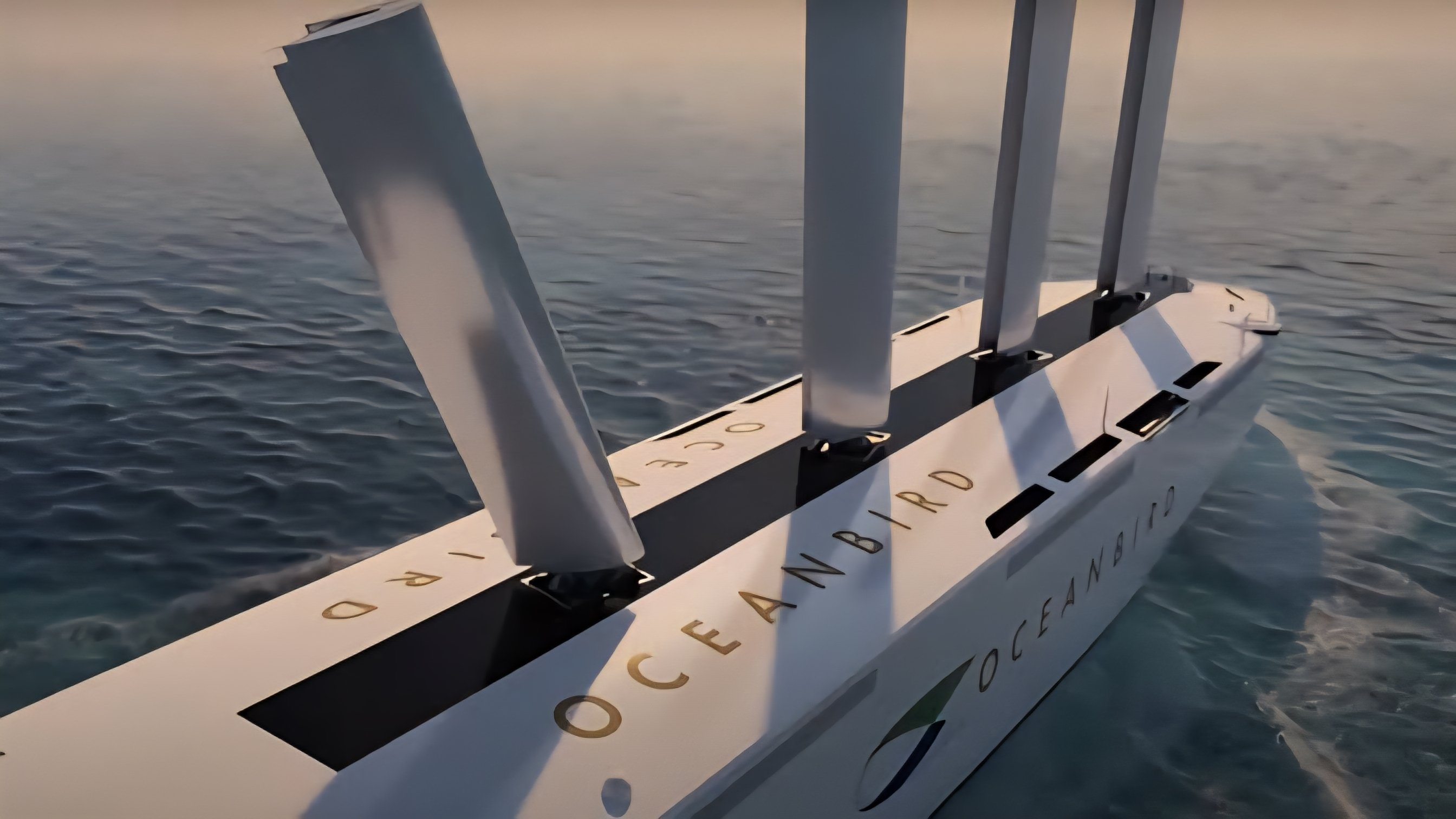
The system consists of a rigid, tiltable wing sail standing 46 metres tall and 14 metres wide. This large surface area generates direct aerodynamic thrust, which allows the vessel to decrease its reliance on traditional fossil-fuel engines during transit on global trade routes.
The vessel hosting the technology is the Tirranna, a 230-metre car carrier operated by Wallenius Wilhelmsen. The ship has a carrying capacity of approximately 8,000 vehicles, which makes it a representative test platform for the international Roll-on/Roll-off (RoRo) cargo shipping industry.
Oceanbird, a joint venture established in December 2021 by Alfa Laval and Wallenius Lines, developed the automated propulsion unit. The manufacturing design combines a carbon steel foundation with a flap and panel structure made from Polyethylene Terephthalate (PET) core and glass fibre composites.
Before starting open-sea operations, the technology required regulatory verification. Classification society Det Norske Veritas (DNV) issued an official design certificate during the first week of June 2026, confirming that the structure met maritime safety and operational compliance standards.
Following the physical installation in Rotterdam, the vessel immediately underwent field testing. The crew successfully completed the Harbour Acceptance Test (HAT), and subsequently finalized the Sea Acceptance Test (SAT) on July 1, 2026, confirming operational readiness.
According to data from the developers, a single-wing installation of this scale targets a reduction of up to 10 percent in fuel consumption and greenhouse gas emissions, particularly when operating along optimal transoceanic weather routes.
An onboard team of technical specialists from Oceanbird will remain with the vessel for a limited period. This group will monitor real-world performance, evaluate aerodynamic efficiency, and gather live operational data to guide future engineering modifications.
The deployment serves as the primary live demonstrator for the Orcelle Horizon project. This collective initiative involves 11 partners, who aim to develop large cargo vessels capable of achieving more than 50 percent of their total propulsion from wind energy.
To prepare for the new technology, the crew underwent dedicated operational training in December 2025. This instruction covered safety protocols, mechanical management, and specific circumstances under which the automated wing sail can remain upright during challenging weather events.
Commercial operators are tracking the data closely, as the industry faces regulatory pressure to decarbonize. Oceanbird has already secured its next commercial order, which entails the installation of two identical rigid wing units on an undisclosed merchant vessel in mid-2027.
The project relies on specialized software to maximize energy efficiency. The automated system interfaces with advanced weather routing applications, which calculate optimal sea lanes to leverage prevailing wind patterns without disrupting strict commercial shipping timetables.
Comments (0)
Leave a Comment
No comments yet. Be the first to share your thoughts!