
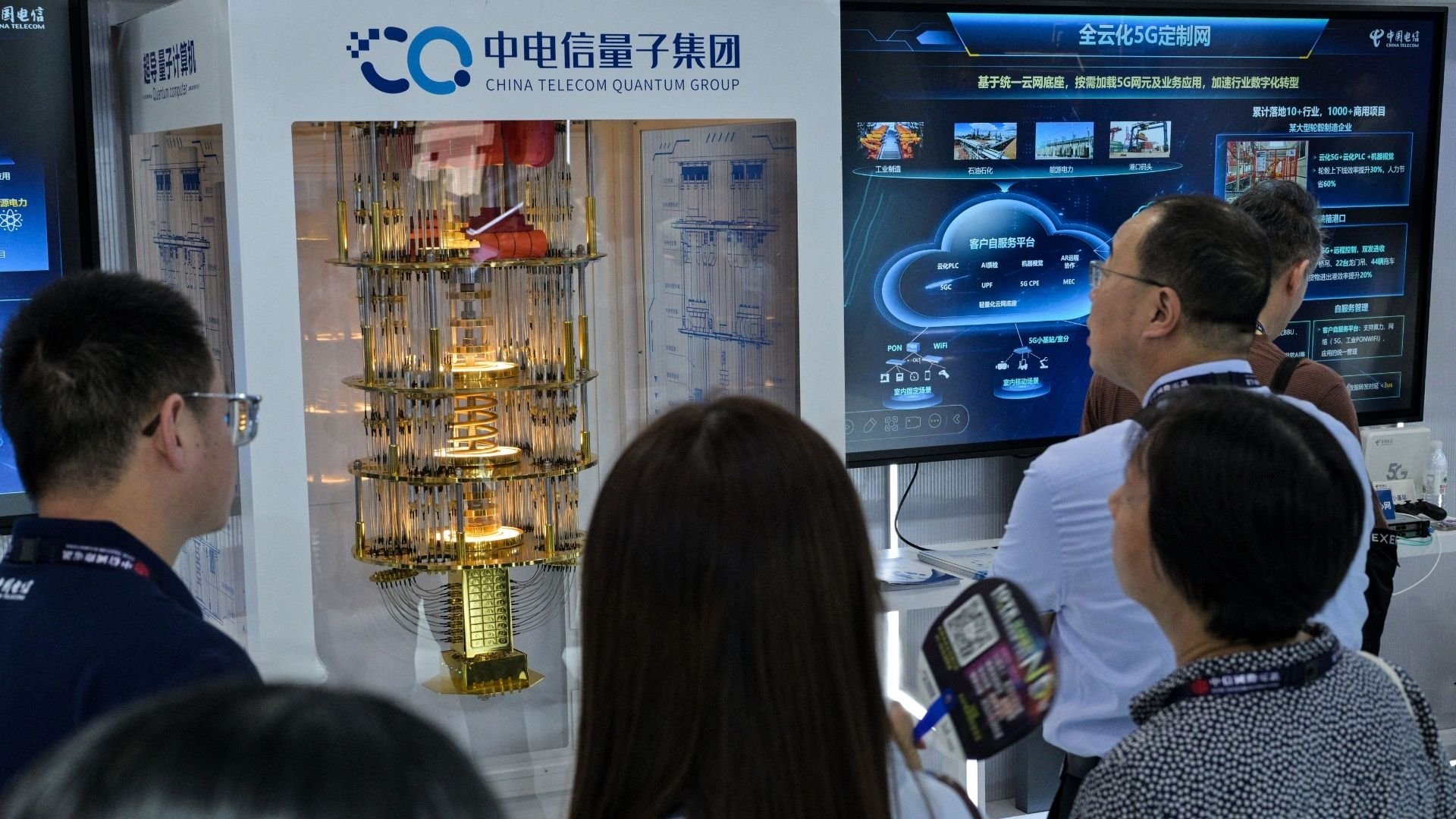

Shanghai opened a dedicated industrial zone for advanced computing in its Xuhui district, deploying millions in state-backed funding to anchor twenty-six founding companies. The municipal initiative seeks to fast-track laboratory research into a commercial ecosystem, focusing heavily on industrial-scale deployment.
Official records show the Shanghai Quantum Computing Future Industry Incubation Zone receives up to 100 million yuan, equivalent to 14.73 million US dollars, for foundational research, technological innovation, and shared infrastructure platforms. The capital injections target early-stage development hurdles that often stall deep-tech ventures.
According to reports by the state-backed Jiefang Daily, participating enterprises can access up to 20 million yuan in individual subsidies for initial product validation. Municipal authorities designed these financial provisions to lower validation costs, which frequently restrict startups trying to scale hardware.
The new facility establishes an infrastructure network that offers specialized computational resources and talent attraction tools. By clustering these resources, the district administration expects to expand its local corporate network to more than 100 specialized firms within three years, raising regional competitiveness.
This development positions Shanghai against established Chinese technology clusters in Beijing, Hefei, and Shenzhen. Local authorities want to compress the distance between academic discovery and commercial markets, creating a dense ecosystem where hardware testing beds can operate adjacent to market users.
The project relies on a strategic integration with Artificial Intelligence (AI) sectors. Xuhui district already functions as a prominent base for algorithmic development, hosting prominent laboratories such as StepFun AI and the Shanghai Artificial Intelligence Laboratory, which will now coordinate with quantum researchers.
Integrating these computational fields allows firms to run specialized algorithms for downstream applications. Initial structural plans outline pilot programs in biomedical research, real-time meteorological modeling, low-latency financial clearing, and advanced materials science, which require immense processing capabilities.
The timing of this launch corresponds with the deployment of China's 15th Five-Year Plan (FYP). Running from 2026 through 2030, this national policy blueprint prioritizes sovereign semiconductor networks, advanced manufacturing, and post-classical computing blocks to secure global market share.
Other regional municipal administrations continue to advance parallel programs. Hefei reported more than 90 quantum-related entities operating within its borders last year, while Shenzhen recently recorded its first industry unicorn, SpinQ, which secured one billion yuan in late-stage private funding rounds.
Shanghai is executing a dual-hub framework to counter this domestic competition. Just days before the Xuhui launch, municipal officials introduced the Zhangjiang Quantum Bay in the Pudong New Area, expanding the city's overall corporate ecosystem to more than 60 active quantum enterprises.
The localized industrial policy focuses heavily on neutral atom quantum computing as its primary technical roadmap. Engineering partners within the ecosystem have already assembled localized hardware stacks, breaking historical optical alignment bottlenecks that previously restricted neutral-atom scaling under laboratory conditions.
To build momentum, regional administrators previously organized the Shanghai Xuhui Quantum Hackathon, drawing international developers to solve real-world industrial bottlenecks across five specialized computational tracks.
The cross-industry consortium supporting the hub includes the Shanghai Meteorological Bureau and Shanghai Instrumentation & Electronics Group. These entities provide immediate testing frameworks for incoming software, ensuring that local investments yield measurable commercial applications within the three-year target window.
Comments (0)
Leave a Comment
No comments yet. Be the first to share your thoughts!