
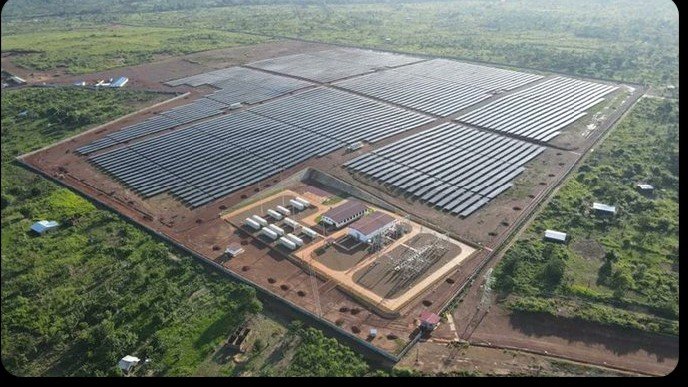

The Central African Republic (CAR) has emerged as a leader in renewable energy on the African continent, with solar power playing a central role in its electricity generation. Currently, approximately 37.7% of the country’s electricity comes from solar energy, making it the highest share of solar power production in Africa. This achievement reflects the country’s ongoing efforts to expand access to clean energy while addressing the challenges of electricity supply in a nation where conventional power infrastructure has historically been limited.
The use of solar energy in CAR has grown steadily over recent years, driven by both government initiatives and international support. Much of the population lives in rural areas where access to the national grid is minimal or nonexistent. Solar installations have provided a practical and sustainable solution for these communities, offering a reliable source of electricity that supports daily life and economic activities. Households, schools, clinics and small businesses have benefited from solar systems, which enable lighting, refrigeration, and communication technologies.
One of the key advantages of solar power is its scalability. In CAR, solar panels and mini-grid systems have been installed across urban and rural locations, ensuring that electricity generation is closer to the point of use. These installations reduce reliance on expensive and polluting diesel generators, which were previously the main source of electricity in many areas. By generating power locally, communities experience fewer outages and lower costs, while also reducing carbon emissions that contribute to climate change.
The government of the Central African Republic has been actively promoting the development of solar energy. Policies have encouraged private investment and international partnerships in renewable energy projects. Funding and technical support from international organizations have facilitated the deployment of solar panels and battery storage systems, particularly in areas where extending the national grid is challenging. These projects not only provide energy but also create local employment opportunities, from installation to maintenance, which supports economic development.
In addition to improving energy access, the widespread adoption of solar power has social benefits. Schools equipped with solar panels can operate electronic devices, improving learning opportunities for students. Clinics with solar powered refrigeration can safely store vaccines and medications, enhancing healthcare services in remote areas. For households, access to electricity improves quality of life by enabling lighting for study or work after dark and reducing the time spent collecting firewood for cooking or heating.
Despite these successes, challenges remain in fully realizing the potential of solar energy in CAR. The country still experiences periods of political instability and logistical difficulties that can slow the implementation of large-scale projects. Ensuring the long term maintenance of solar systems is also critical, as technical failures can reduce reliability in remote areas. To address these challenges, ongoing training of local technicians and community based management of solar systems are becoming increasingly important.
Another area of focus is the integration of solar power with other renewable energy sources. While solar energy currently dominates, the development of hydroelectric and biomass projects could complement solar generation, ensuring a more stable and diverse energy supply. Researchers and policymakers are exploring ways to balance energy production throughout the day and during seasonal variations, enhancing the resilience of the country’s electricity system.
The example of the Central African Republic highlights the transformative role that solar energy can play in countries with limited access to traditional electricity infrastructure. By prioritizing solar power, the country has created a model for clean energy adoption that other African nations may look to emulate. The progress in CAR demonstrates that even in regions facing economic and logistical challenges, renewable energy can be a practical, sustainable and socially beneficial solution.
As solar installations continue to expand, the Central African Republic is not only increasing electricity access but also contributing to broader environmental goals. Reducing dependence on fossil fuels helps lower greenhouse gas emissions, supporting efforts to mitigate climate change. The combination of environmental, economic, and social benefits positions solar energy as a cornerstone of the country’s energy strategy for the coming years.
In conclusion, the Central African Republic’s achievement in generating 37.7% of its electricity from solar power is significant for both the country and the African continent. Through widespread solar installations, targeted government policies, and international support, CAR has made clean energy accessible to a large portion of its population. While challenges remain, the country’s approach demonstrates the potential of renewable energy to drive development, improve quality of life and contribute to global climate goals. By continuing to invest in solar and complementary energy sources, the Central African Republic is building a more sustainable and resilient energy future.
Comments (0)
Leave a Comment
No comments yet. Be the first to share your thoughts!