
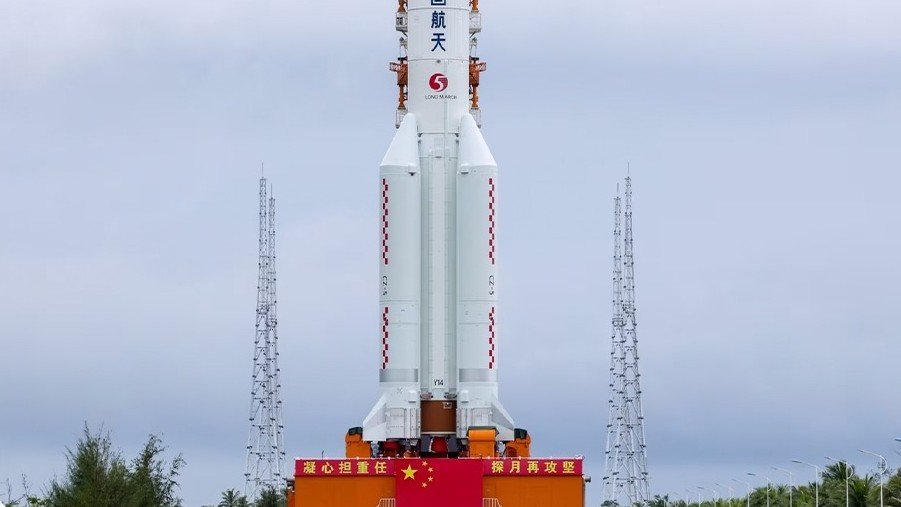

China has postponed the launch of a planned lunar mission designed to search for water and other resources near the Moon’s south pole. The delay comes as China, the United States and other countries increase their efforts to explore the lunar surface and prepare for future missions.
The mission is part of China’s wider lunar exploration programme, which has already included robotic landings, sample collection and the operation of spacecraft around the Moon. Its next phase is focused on areas that could provide useful information about the Moon’s history and the availability of resources.
Scientists are particularly interested in water ice believed to exist in permanently shadowed areas near the lunar south pole. Finding and studying water could help researchers understand how water is distributed on the Moon and how it may have been preserved over long periods.
The postponed mission is expected to use advanced spacecraft and instruments to study the lunar environment. Missions targeting the south pole face difficult conditions because of the region’s rough terrain, extreme temperatures and areas that receive little or no sunlight.
China has been expanding its lunar programme steadily over the past decade. The country’s Chang’e missions have demonstrated the ability to orbit, land on and collect samples from the Moon, giving Chinese scientists and engineers experience for more complex missions.
The latest delay highlights the technical challenges involved in lunar exploration. Launch schedules can change because of spacecraft testing, launch vehicle preparations, weather conditions or other technical considerations. A postponement does not necessarily mean that the mission has been cancelled.
China’s lunar plans are also developing alongside those of other space powers. NASA’s Artemis programme is aimed at returning astronauts to the Moon, while other countries and private companies are working on lunar landers, scientific missions and technologies that could support longer stays on the surface.
The Moon’s south pole has become a major area of interest because of its possible water deposits. Researchers believe water could be useful for scientific research and, in future missions, could potentially be processed into resources needed for human activities in space.
For China, successful robotic missions remain an important part of preparations for more ambitious lunar exploration. The country has also announced plans for future crewed lunar missions and has been developing the technology needed for astronauts to operate on the Moon.
The postponed launch means scientists and engineers will have additional time to prepare the spacecraft and mission systems before the next launch opportunity. The mission will be closely watched because its search for lunar water could provide new information about one of the most important resources for future exploration.
Comments (0)
Leave a Comment
No comments yet. Be the first to share your thoughts!