
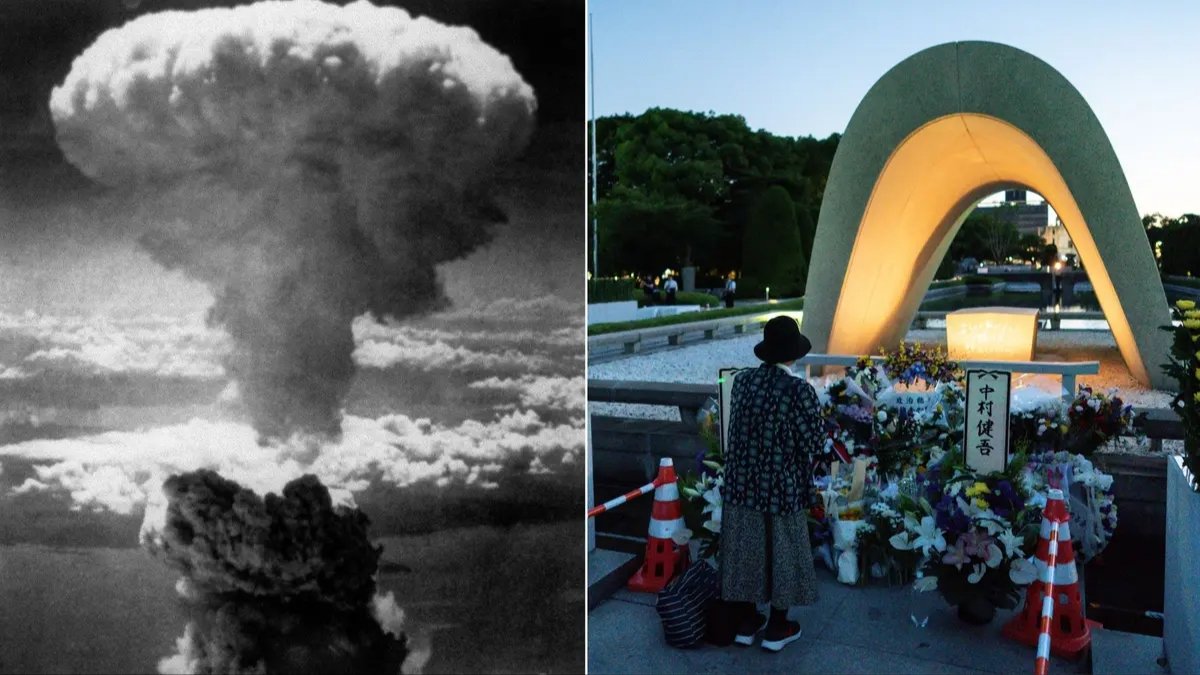

Japan observed the 81st anniversary of the Hiroshima atomic bombing on Wednesday with a solemn ceremony that renewed appeals for the elimination of nuclear weapons. Thousands gathered at Hiroshima Peace Memorial Park as representatives from more than 120 countries and regions joined survivors, officials and residents.
A minute of silence was held at 8:15 a.m., the precise moment the American B-29 bomber Enola Gay released the uranium bomb known as Little Boy on August 6, 1945. An updated register listing the names of 353,639 atomic bomb victims was placed inside the park’s cenotaph.
By the end of 1945 an estimated 140,000 people in Hiroshima had died from the blast, burns and radiation. Three days later a second bomb struck Nagasaki. Japan announced its surrender on August 15, ending the Second World War in the Pacific.
Many survivors, known as hibakusha, lived with cancers and other radiation-related illnesses for decades afterward. Japanese government figures presented at the ceremony show that about 91,000 hibakusha remain alive. Their average age is now 86.
Hiroshima Mayor Kazumi Matsui delivered the annual Peace Declaration. He cautioned that attempts to justify nuclear weapons as tools of security risk repeating past tragedies. “Downplaying the inhumanity of nuclear weapons and accepting the use of force to pursue one’s own prosperity risk cycles of violent retaliation that could ultimately result in another Hiroshima or Nagasaki,” Matsui said.
He argued that too many political leaders still treat nuclear deterrence as a realistic strategy, a view that pushes a nuclear-free world further away. Matsui also called on younger generations to study the historical record and take part in peace efforts.
Prime Minister Sanae Takaichi addressed the gathering and restated Japan’s long-standing non-nuclear principles. At the same time she has previously indicated openness to reviewing those principles, including the ban on introducing nuclear weapons into Japan. She stopped short of pledging to keep the current policy unchanged indefinitely.
The ceremony took place against a backdrop of heightened global tensions. Arms-control agreements have weakened in recent years while several major powers continue to modernise their nuclear arsenals. Officials and survivors presented the memorial as both a tribute to the dead and a warning that the humanitarian costs of nuclear conflict have not changed.
As the number of living hibakusha declines, the task of preserving their accounts falls increasingly to later generations. The message delivered at the park remained consistent with earlier anniversaries: the consequences of nuclear war must not be forgotten.
Comments (0)
Leave a Comment
No comments yet. Be the first to share your thoughts!