
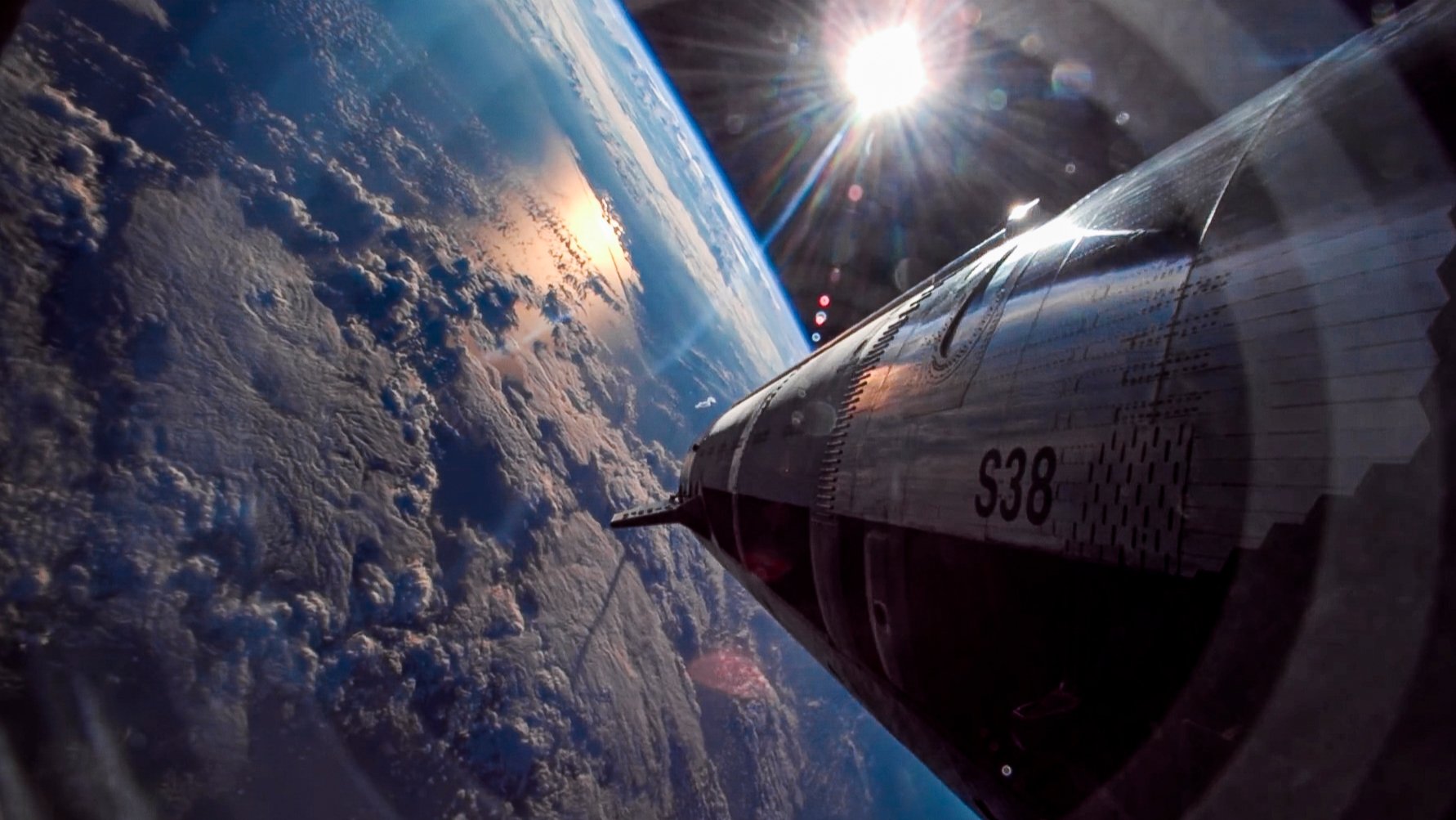

Elon Musk announced on Monday that SpaceX, his rocket and satellite company, has taken over xAI, the artificial intelligence startup he founded just two years ago. The move consolidates key elements of Musk's business holdings, with the combined entity now valued at more than $1 trillion based on recent investor rounds. While financial details of the acquisition remain undisclosed, the deal aligns with Musk's long-stated goals in space exploration and advanced computing.

SpaceX, known for its reusable Falcon rockets and the expanding Starlink satellite network, was pegged at $800 billion in a secondary share sale last month. xAI, which develops AI models like Grok, reached a $230 billion valuation in its latest funding. The acquisition follows xAI's earlier integration with X, the social media platform Musk purchased for $44 billion in 2022. That merger, completed in March 2025, valued the group at $113 billion at the time.
In a post on X, Musk described the rationale behind the buyout as part of a broader effort to create "a sentient sun to understand the Universe and extend the light of consciousness to the stars." This phrasing echoes his recurring themes of merging human intelligence with machines and pushing technological boundaries beyond Earth. More concretely, the announcement highlights plans for data centers in space, a concept Musk has floated in various forums as a way to handle massive computational demands without the constraints of terrestrial infrastructure.
Data centers, the backbone of modern cloud computing and AI training, traditionally require vast amounts of land, power, and cooling on Earth. Placing them in orbit could leverage solar energy directly, reduce latency for global communications, and avoid environmental regulations tied to ground-based facilities. SpaceX's existing expertise in deploying constellations of satellites (Starlink now operates over 6,000 units providing broadband to remote areas) positions it to build such systems. Analysts note that integrating xAI's software capabilities could optimize these networks for real-time AI processing, potentially revolutionizing fields like autonomous vehicles, remote sensing, and scientific research.
The deal comes amid intense competition in both space and AI sectors. Rivals like Blue Origin and Amazon's Project Amelia are advancing satellite internet, while OpenAI, Anthropic, and Google pour billions into AI development. Musk, who co-founded OpenAI but left in 2018 over disagreements, has positioned xAI as a "maximum truth-seeking" alternative focused on understanding the universe. SpaceX's chief financial officer, Bret Johnsen, was set to brief investors on the acquisition's implications during a call later Monday, according to sources familiar with the plans.
This consolidation raises questions about governance and antitrust scrutiny. Musk controls multiple interlocking companies, including Tesla for electric vehicles and Neuralink for brain-computer interfaces. Regulators in the US and Europe have already examined his influence across industries, though no immediate probes into this deal have been announced. The Federal Trade Commission, for instance, reviewed Musk's X purchase closely, citing concerns over data privacy and market dominance.
From an infrastructure perspective, the acquisition underscores a shift toward space as the next frontier for critical systems. SpaceX has launched more payloads than any other entity in recent years, with its Starship vehicle designed for Mars missions and heavy-lift operations. Building data centers in space would involve constructing modular habitats or satellite clusters capable of housing servers, a task requiring advances in thermal management and radiation shielding. Industry experts point to NASA's collaborations with private firms on the International Space Station as precedents, where experiments in microgravity computing have shown promise.
Musk's vision isn't without precedents in his own portfolio. Starlink has already demonstrated how space-based assets can deliver infrastructure services, connecting underserved regions in Africa, Asia, and the Pacific. In Kenya, for example, Starlink terminals have been deployed since 2023 to bridge digital divides in rural areas, supporting education and commerce. Extending this to AI-driven data processing could amplify those benefits, enabling faster analysis of satellite imagery for agriculture or disaster response.
Yet challenges abound. Orbital data centers would need reliable power sources, perhaps from advanced solar arrays or nuclear reactors, and robust communication links to ground stations. Debris risks and international space law add layers of complexity. Musk has acknowledged these hurdles in past interviews, emphasizing iterative testing through SpaceX's rapid prototyping approach.
The merger also reflects broader trends in tech infrastructure investment. Global spending on data centers topped $300 billion last year, driven by AI's insatiable need for graphics processing units. Companies like Microsoft and Amazon have built massive facilities, but power grid strains and water usage have sparked backlash. Space offers a theoretical escape, though initial costs could run into trillions, far beyond current budgets.
As details emerge, the deal positions SpaceX at the intersection of rocketry and AI, potentially accelerating projects like autonomous spacecraft or AI-assisted mission planning. For now, investors appear bullish: SpaceX shares traded up 3 percent in after-hours following the announcement. Musk, ever the showman, ended his post with a teaser: "The future is multi-planetary—and multi-computational."
This acquisition, while not a traditional ground-up construction project, signals a new era where infrastructure extends into the cosmos. Observers will watch closely as Musk's empire integrates these pieces, testing whether orbital computing becomes reality or remains a bold aspiration.
Comments (0)
Leave a Comment
No comments yet. Be the first to share your thoughts!