
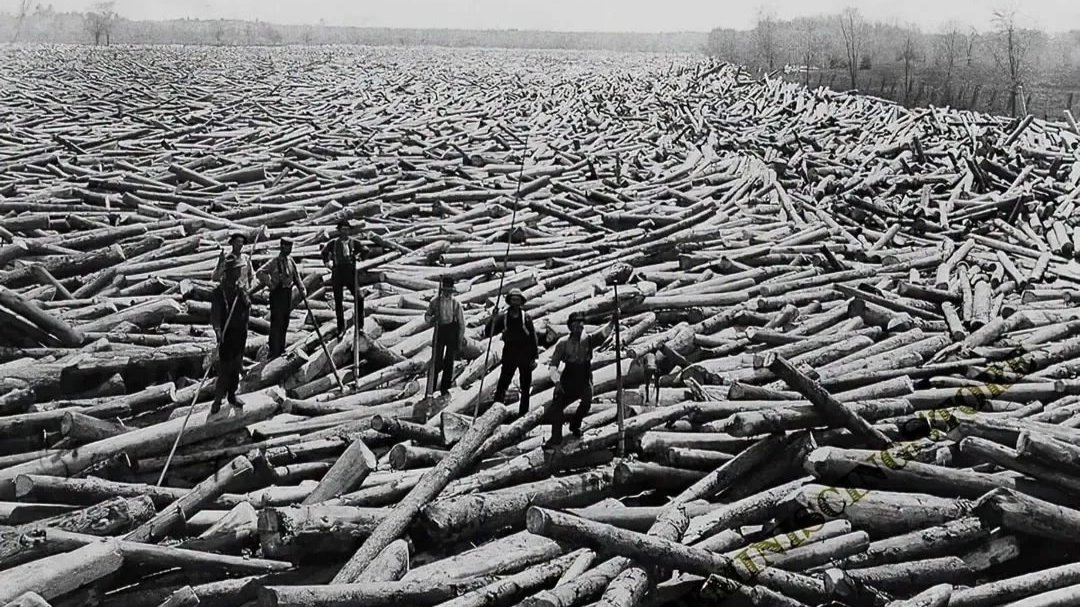

A 1907 photograph captures the scale of an annual operation that once moved timber from the Adirondack Mountains down the Hudson River. Thousands of freshly cut logs filled the water as far as the eye could see, with several men standing on the shifting surface.
Each spring, snowmelt and seasonal rains raised water levels high enough to carry the timber downstream. The movement was known as a log drive. It turned the river into a temporary highway that linked remote forests to the sawmills supplying the Northeast.
Workers called river drivers balanced on the floating logs. They used long pike poles to steer individual pieces, break up dangerous jams, and keep the mass moving with the current. The work demanded constant attention. Logs were wet and unstable. Currents shifted without warning.
The occupation ranked among the most hazardous of its time. Slippery surfaces, fast water, and sudden collapses of timber piles claimed lives every season. Still the drives continued because the lumber they delivered was needed for the cities then expanding along the eastern seaboard.
Before railroads and road networks became reliable, rivers performed the heavy transport work of the timber industry. Logs that left the Adirondacks in the high water of spring reached mills weeks later, ready to be cut into boards and framing for houses, factories, and public buildings.
By the early years of the twentieth century that system began to fade. Rail lines pushed deeper into the mountains. Improved roads allowed trucks to haul timber year-round. The great river drives gradually disappeared.
The forests that once fed those drives now lie inside New York’s Adirondack Park. Established in 1892, the park protects more than six million acres. That area exceeds the combined size of Yellowstone, Yosemite, Glacier, Grand Canyon, and Great Smoky Mountains National Parks.
The 1907 photograph freezes one moment in a practice that repeated for decades. The men in the frame stand on the timber that would soon become the building stock of a growing region. Their work ended within a generation, replaced by mechanical transport that no longer required anyone to walk the logs.
Comments (0)
Leave a Comment
No comments yet. Be the first to share your thoughts!