
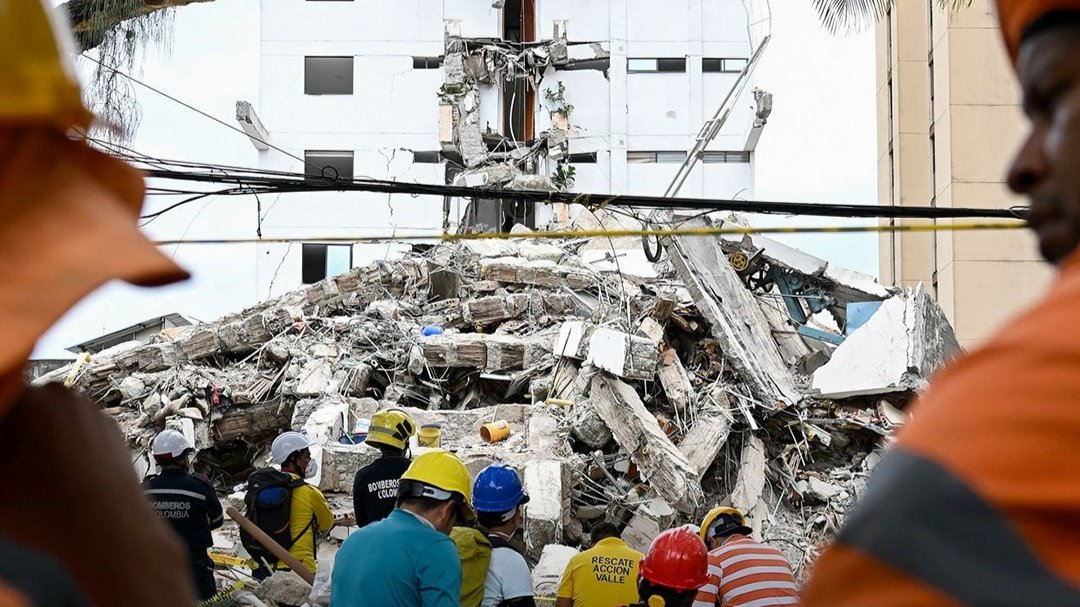

Colombia has begun receiving international assistance after initially declining some offers of foreign search-and-rescue support following Monday’s devastating earthquake.
The government has now requested rescue teams from four countries, the United States, Israel, Ecuador and El Salvador, according to newly appointed disaster management chief David Tamayo.
The shift came as Colombian crews continued searching collapsed buildings and other damaged structures, with the operation entering a critical period for finding survivors trapped beneath rubble.
President Abelardo de la Espriella said the magnitude 7.4 earthquake had killed 265 people and injured 3,494 others. A further 496 people remained missing, while more than 53,000 people had been affected by the disaster.
The earthquake struck western Colombia on August 10, causing widespread destruction across several cities and communities. Rescue crews have continued working around the clock as authorities search collapsed structures and assess damage.
The latest casualty figures have risen as authorities continue identifying victims and assessing the scale of the destruction. The number of people still missing remains a major focus of the search operation.
Colombia’s initial position on foreign rescue teams attracted criticism. Several governments had offered assistance, but Bogotá initially indicated that it had domestic search-and-rescue capacity and sought to coordinate external assistance according to its requirements.
The United States, Mexico and El Salvador were among countries offering assistance as the scale of the disaster became clearer. International personnel and humanitarian supplies have since begun arriving to support Colombia’s response.
The decision to request selected foreign rescue teams came as the search for survivors continued. Colombian authorities have said the international teams will work alongside domestic emergency personnel rather than replace the country’s own rescue operation.
The earthquake has severely affected cities including Cali, Pereira, Manizales and Quibdó. Buildings and infrastructure have been damaged, while thousands of families have been displaced from their homes.
Rescuers have been working through collapsed structures using specialist equipment, machinery and manual searches. The first 72 hours after a major earthquake are particularly important because survivors can remain trapped beneath rubble during that period.
The response has also been complicated by continuing aftershocks and difficult conditions in some affected communities. In parts of Chocó, geography and damaged infrastructure have made access more difficult for emergency teams.
The government has announced plans for an emergency reconstruction fund covering damaged homes, hospitals, schools and infrastructure. The reconstruction effort will follow the immediate search-and-rescue operation and assessment of damage across affected areas.
For now, the priority remains the search for people still listed as missing. Rescue crews continue working at damaged sites while authorities coordinate domestic operations with international assistance.
The decision to request foreign teams represents a change from Colombia’s initial response to offers of overseas search-and-rescue support. The four countries requested by the government are now expected to contribute specialist personnel as the operation continues.
Comments (0)
Leave a Comment
No comments yet. Be the first to share your thoughts!