

The Vision and Construction
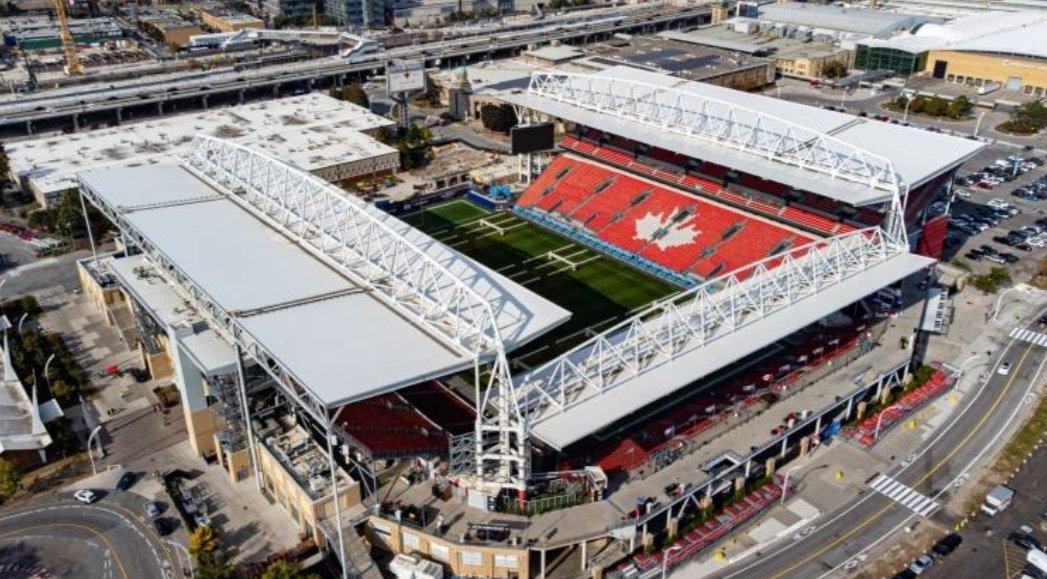
Toronto Stadium, known permanently as BMO Field, stands in Exhibition Place downtown Toronto. The soccer-specific stadium was designed by Canadian architect Brimley Cummings with structural engineering by Fast + Epp. Construction began in 2006, and the stadium opened on July 28, 2007.
The stadium cost 72.5 million CAD (KES 6.5 billion) initially. The engineering team designed a purpose-built concrete bowl with 15-degree seating slopes optimized for soccer viewing. This contrasts with converted multi-purpose stadiums, where sightlines are compromised for football or other sports.
The foundations required deep excavation into Lake Ontario's former shoreline. Engineers installed 80 reinforced concrete piles, averaging 20 meters deep, to stabilize the structure on soft clay. The steel superstructure uses 1,200 tons of structural steel framing the canopy roof.
BMO Field /Gensler
The stadium is named after the Bank of Montreal, which sponsors the venue. During the FIFA World Cup 2026, FIFA requires all stadiums to remove commercial brand names from their official tournament names. This is why it is called Toronto Stadium for World Cup matches instead of BMO Field.
World Cup Debut and International Events
Toronto Stadium hosted its first international match in 2008 when Canada played El Salvador. The venue became home to Toronto FC from 2007 and Toronto Argonauts starting in 2010.
The stadium hosted the 2015 FIFA Women's World Cup opening match and several knockout games. It also hosted the CONCACAF Cup 2015 between the USA and Mexico, and the 2016 MLS Cup Final.
Engineering Expansion and Modernization
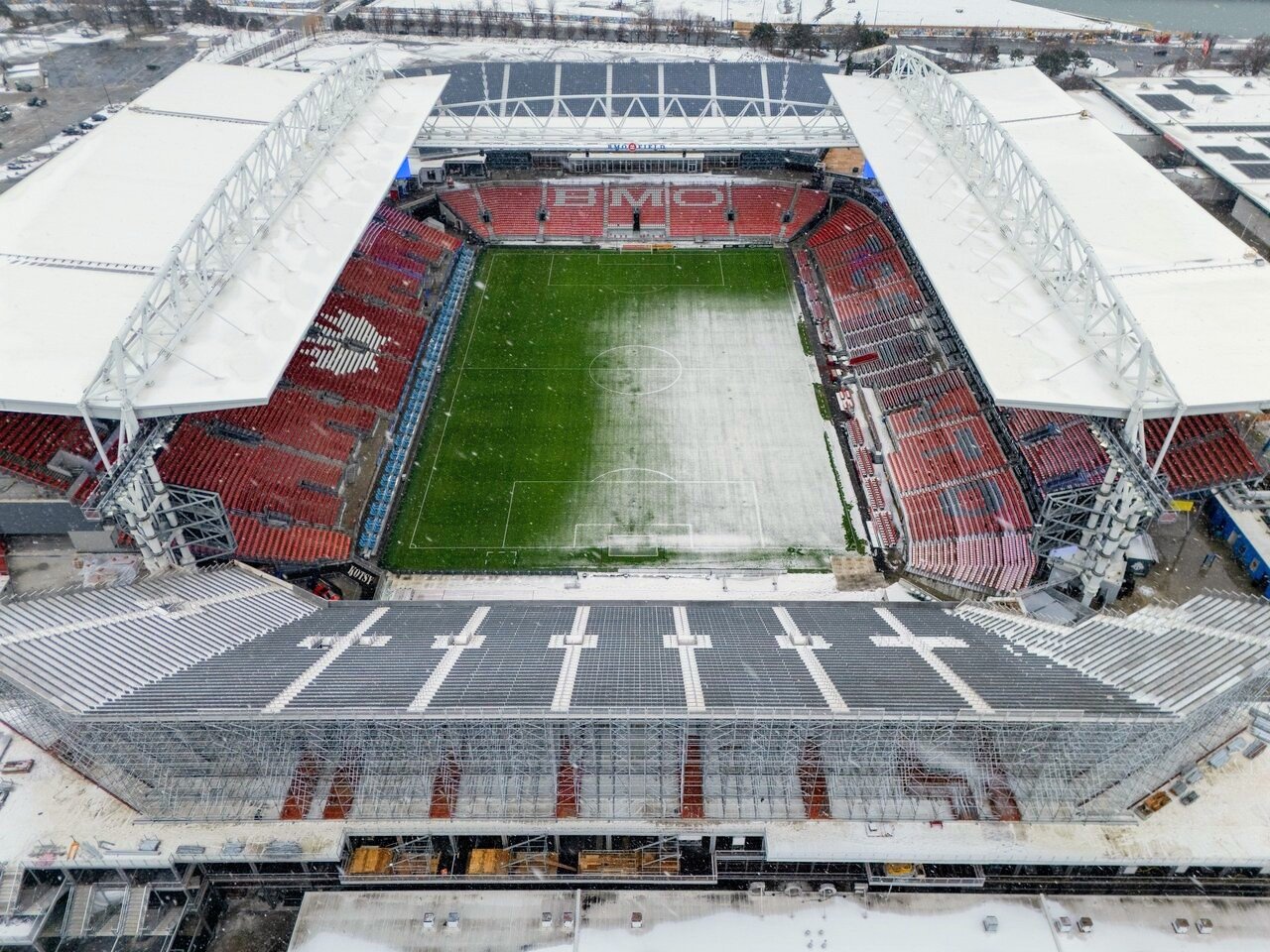
The original 2007 stadium seated 20,000. Between 2014 and 2016, Toronto Stadium underwent major expansion, adding the north side Explowan deck and upper bowl. This expansion cost 100 million CAD and increased capacity to 30,000.
The 2024 World Cup expansion added 15,000 more seats, reaching 45,736 capacity. Engineers designed modular steel seating tiers that could be added without expanding the footprint. The canopy roof was extended 12 meters, covering all new seats.
The pitch measures 105m x 68m on natural grass with undersoil heating installed for Canadian winter matches. The heating system uses 400 kilometers of piping beneath the turf.
Modern Setup for 2026
Toronto Stadium will host 13 matches at the World Cup, with seven group stage games and potential knockout rounds. This makes it Canada's primary World Cup venue alongside Vancouver's BC Place.
The stadium's capacity of 45,736 makes it the smallest venue of the 16 World Cup stadiums. Compared to Mexico's stadiums, Toronto Stadium is smaller than Guadalajara Stadium at 49,813 and Azteca Stadium at 87,000.
What Makes It Unique
The stadium is engineered for a football atmosphere above all. Its bowl design creates acoustic resonance that amplifies crowd noise. The 15-degree seating slope brings fans closer to the pitch than traditional stadiums with steeper angles.
The concrete construction uses precast panels from local Ontario suppliers. The canopy roof structure weighs 450 tons with tension cables anchoring it to the concrete bowl. Engineers designed the roof to shed snow efficiently during Toronto's winter.
The Explowan deck is a 3,000-seat outdoor terrace overlooking the pitch. This innovative feature adds stadium atmosphere while providing premium viewing at waist-level to the action.
Toronto Stadium stands on Exhibition Place, a historic Toronto grounds dating to 1879. The stadium's modern steel and concrete design contrasts with the nearby 1930s Exhibition Stadium ruins.
Toronto's two World Cup venues are Toronto Stadium downtown and BC Place in Vancouver. Toronto Stadium will host Match 3 of the tournament with Canada's opening match on June 12, 2026, at 3:00 PM ET against the UEFA playoff winner, Bosnia and Herzegovina.
Game on.
Comments (0)
Leave a Comment
No comments yet. Be the first to share your thoughts!