

The national government has signaled a continued push to replace informal settlements in Nairobi with structured housing developments as part of broader efforts tied to the Kenya Vision 2030 framework.
Principal Secretary for Internal Security and National Administration Dr. Raymond Omollo noted that conversations surrounding the country's long-term developmental blueprint cannot be complete while the capital city remains dotted with slums and shanties.
Speaking on urban housing priorities, Dr. Raymond Omollo explained that the government is focusing on slum upgrading initiatives designed to convert informal settlements into modernized housing structures. The statement underlines an ongoing urban development push targeting densely populated areas in Nairobi where housing infrastructure remains limited or informal.
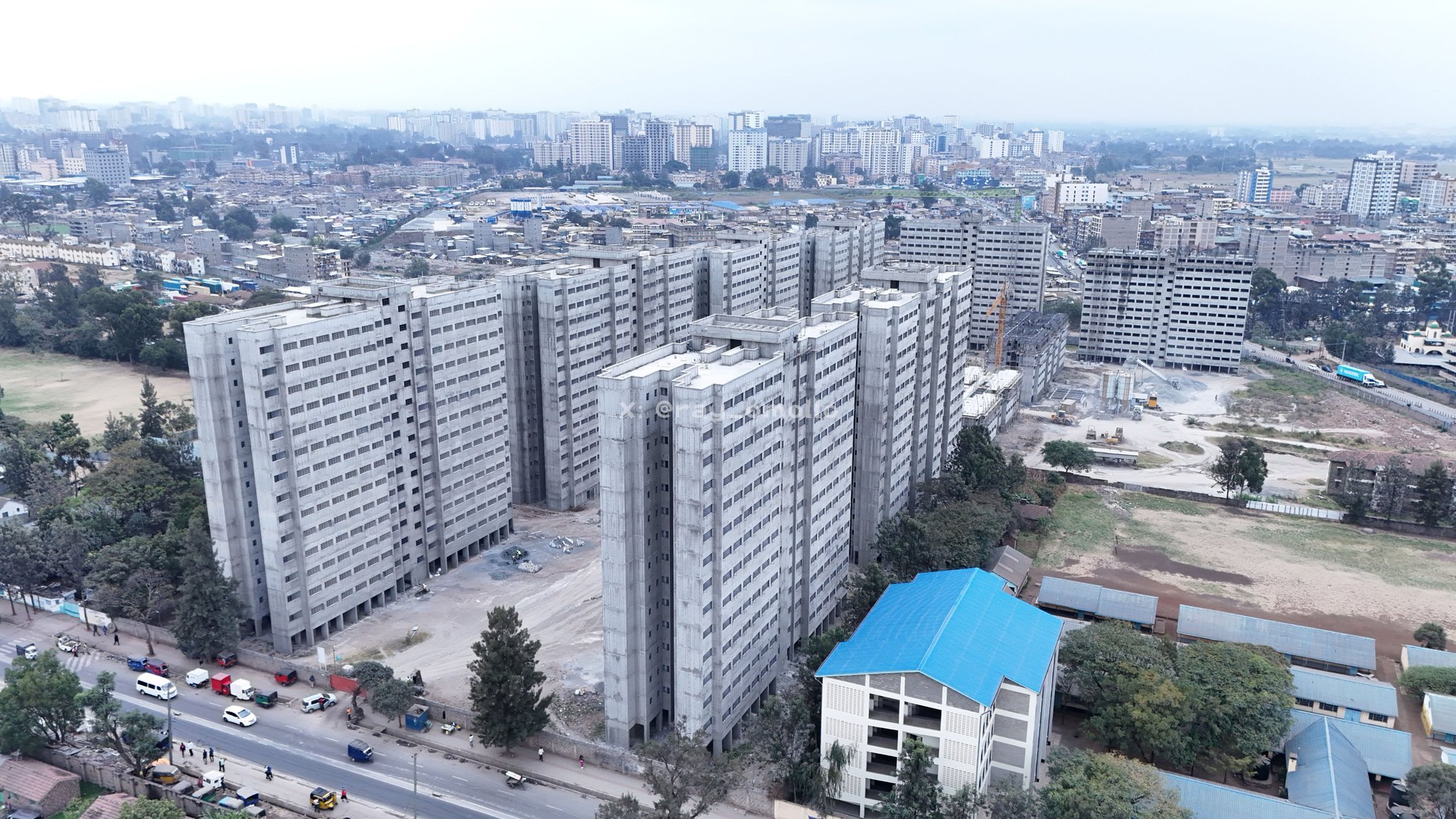
The effort forms part of the State’s broader Affordable Housing Program (AHP), which seeks to construct thousands of new housing units across urban centers nationwide. Under this initiative, high-rise residential blocks are being constructed to maximize land utility within tight urban footprints in the capital.
Aerial images released alongside the statement show multi-storey residential blocks currently under construction near established residential and commercial sectors in Nairobi. These structural projects are meant to replace temporary housing structures with high-density concrete developments.
In recent years, urban expansion in Nairobi has placed severe pressure on municipal infrastructure and land availability. Informal settlements have historically grown in close proximity to major transport corridors and commercial hubs, presenting logistical challenges for urban planners attempting to install basic amenities.
By prioritizing slum upgrading, the state aims to systematically alter the capital's physical infrastructure while aligning urban housing policy with long-term economic plans. The transition involves clearing informal structures to make room for high-rise apartment units equipped with proper access roads and service connections.
Government officials maintain that addressing informal housing remains a crucial component of national infrastructure priorities. As urban centers continue to expand, state agencies are tasked with delivering planned residential developments that fit within national planning frameworks.
The focus on informal settlement transformation reflects an integrated approach between security, administration, and housing authorities. Coordinating land redevelopment in high-density urban areas requires collaboration across multiple government sectors to manage site clearances and structural rollouts effectively.
Work on various housing sites across Nairobi remains ongoing as contractors build out multi-storey residential towers intended to shift thousands of urban dwellers into formal housing environments over the coming years.
Comments (0)
Leave a Comment
No comments yet. Be the first to share your thoughts!