
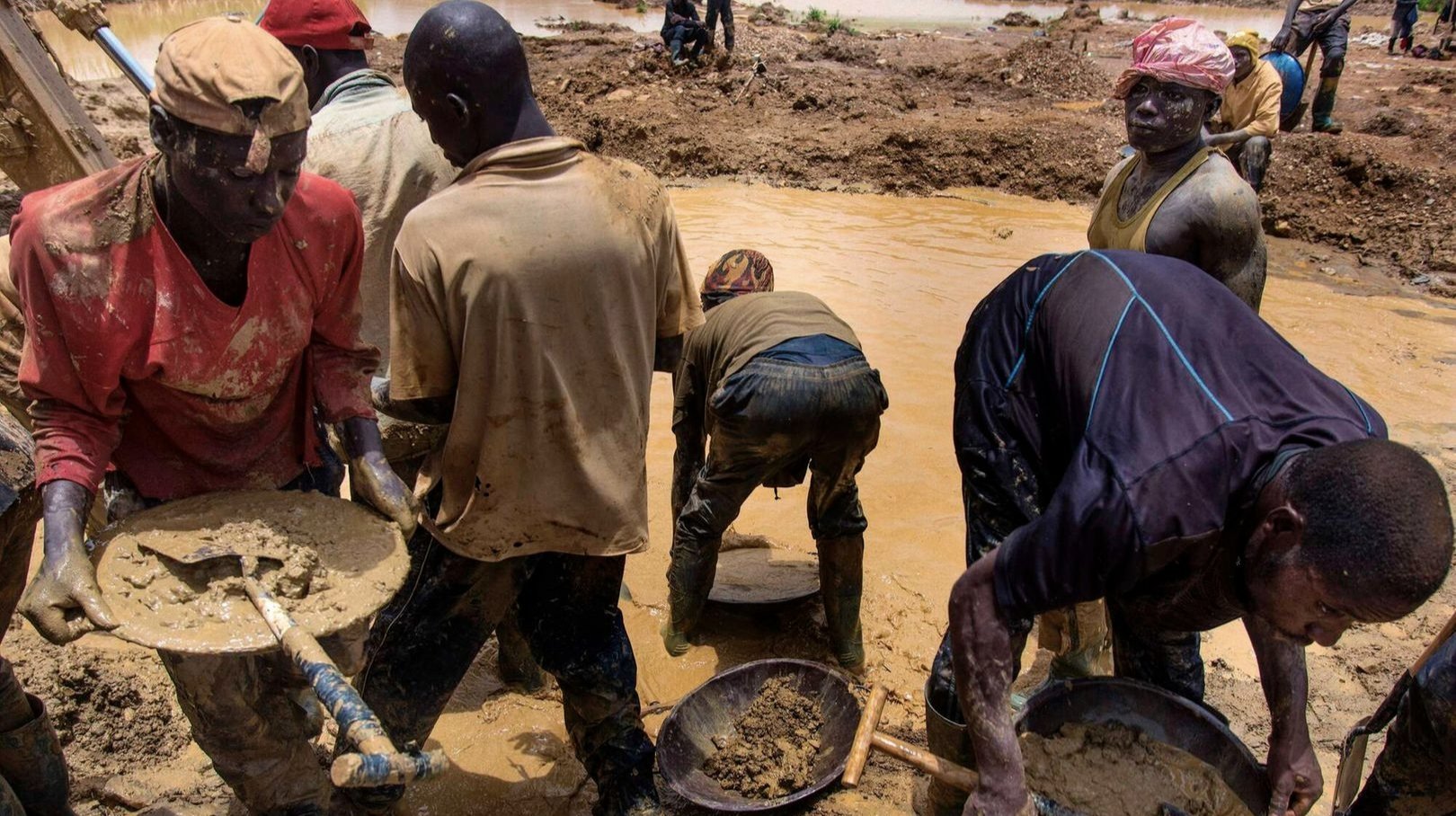

Surging global demand for critical minerals should translate into a major industrialisation opportunity for Africa, experts say, as regional leaders push governments to move away from raw exports toward local processing and value addition.
Africa holds roughly 30 per cent of the world's reserves of critical energy transition minerals, a category that includes cobalt, copper, graphite, lithium, manganese, nickel, platinum group metals and rare earth elements. Much of that wealth sits within Southern Africa, where policymakers are now urging a shift toward domestic refining and manufacturing rather than continued reliance on raw exports.
South African President Cyril Ramaphosa, who currently chairs the Southern African Development Community (Sadc), argued the region needs to stop exporting unprocessed minerals only to import finished goods made from that same material. Speaking at the 46th Ordinary Sadc Summit of Heads of State and Government in Durban last week, he said the bloc should own the full value chain through local smelting and refining.
The summit formally adopted critical minerals transformation as one of three core pillars of regional industrialisation, alongside infrastructure and agriculture.
United Nations Economic Commission for Africa (ECA) Executive Secretary Claver Gatete told the summit that minerals currently contribute around 10 per cent of Sadc's gross domestic product, 25 per cent of exports and 20 per cent of government revenue, yet account for only 7 per cent of direct employment. That gap, he said, points to the far greater job-creation potential of mineral-based industrialisation compared with raw extraction alone.
Gatete described critical minerals as a pathway toward industrialisation, regional integration and technological development for Sadc, arguing that value addition could generate jobs for women and young people while strengthening the region's position in the global green economy.
According to the ECA, major economies are already restructuring their supply chains in the name of energy security, a shift that Gatete said leaves Africa a narrow window to ensure its resources stop functioning primarily as a source of wealth for other economies.
The continent currently produces more than 77 per cent of the world's cobalt, 21 per cent of natural graphite, 65 per cent of manganese, 5.6 per cent of nickel and 83 per cent of platinum group metals, alongside a smaller 1 per cent share of global lithium output.
Within Sadc specifically, the Democratic Republic of Congo dominates cobalt production, Zimbabwe holds significant lithium reserves, South Africa leads in platinum and manganese, and Zambia anchors regional copper output, positioning the bloc as central to global critical mineral supply chains.
A 2021 study by BloombergNEF, commissioned by the ECA and its partners, found that building a 10,000-tonne battery precursor plant in the DRC could cost around $39 million, roughly a third of the cost of building similar capacity in the United States, while also cutting emissions compared with existing supply chains routed through China.
Gatete pointed to that cost advantage as exactly the kind of opportunity Africa should be capturing, rather than continuing to export raw ore while forfeiting the higher-value processing stages to other regions.
He also flagged structural obstacles standing in the way, including weak policy coordination that limits the region's ability to attract investment as a unified trading bloc, alongside skills shortages that constrain the shift into higher-value industrial activity.
Recent policy moves offer early signs of this shift. Zimbabwe has banned exports of unprocessed lithium, and the DRC has restricted unprocessed cobalt exports, both measures aimed at compelling greater local value addition. Gatete said Sadc's renewable energy resources, including solar and hydro power, could further strengthen the region's competitive position if tied directly to mineral beneficiation, refining and manufacturing.
Comments (0)
Leave a Comment
No comments yet. Be the first to share your thoughts!