

A version of this article appeared on LinkedIn by Africa Construction.
Africa faces a severe employment crisis, if the continent blindly adopts artificial intelligence and advanced robotics within its expanding building sector.
The construction industry remains the largest single employer of human labor across the continent today, keeping millions of families out of poverty.
Data indicates that the sector ensures more than 30 million households can afford basic meals, although rapid technological adoption could disrupt this balance.
In Nigeria, the domestic building sector is a critical pillar for job creation, trailing only behind agriculture in total employment capacity.
The industry contributes between 4% and 5.4% to Nigeria’s Gross Domestic Product (GDP), but its structural composition remains highly informal.
The nation's construction workforce employs between 8 million and 10 million people, but roughly 65% to 70% work in informal roles.
These laborers lack official benefits or formal job security, which means they face immediate destitution, if automated machines replace manual tasks.
South Africa reflects a similar reliance on manual labor, where the building industry employs approximately 1.2 million to 1.3 million citizens.
Records show that 62% of these workers hold formal positions, but 38% are engaged within the highly vulnerable informal workforce.
In the Gauteng province alone, the building trades employ roughly 347,000 local residents, who rely entirely on daily wages for survival.
The introduction of automated construction tools enables high precision and minimizes material waste, but it drastically reduces human labor chains.
For corporate investors, these mechanical systems maximize profit margins, but for millions of vulnerable families, it brings immediate food insecurity.
Replacing human laborers with autonomous machinery in developing nations could worsen existing struggles with corruption, ethnic diversity, and localized terrorism.
Sudden mass unemployment risks triggering severe food crises and community instability, if regional leaders do not manage the transition carefully.
The African continent currently faces an affordable housing gap of 52 million units, an unprecedented deficit requiring rapid construction methods.
While lean construction methods and automated machinery could help close this gap, mass deployment risks destroying the local labor economy.
In developed nations, advanced robotic systems are already active on commercial projects, showing the realistic capabilities of automated masonry.
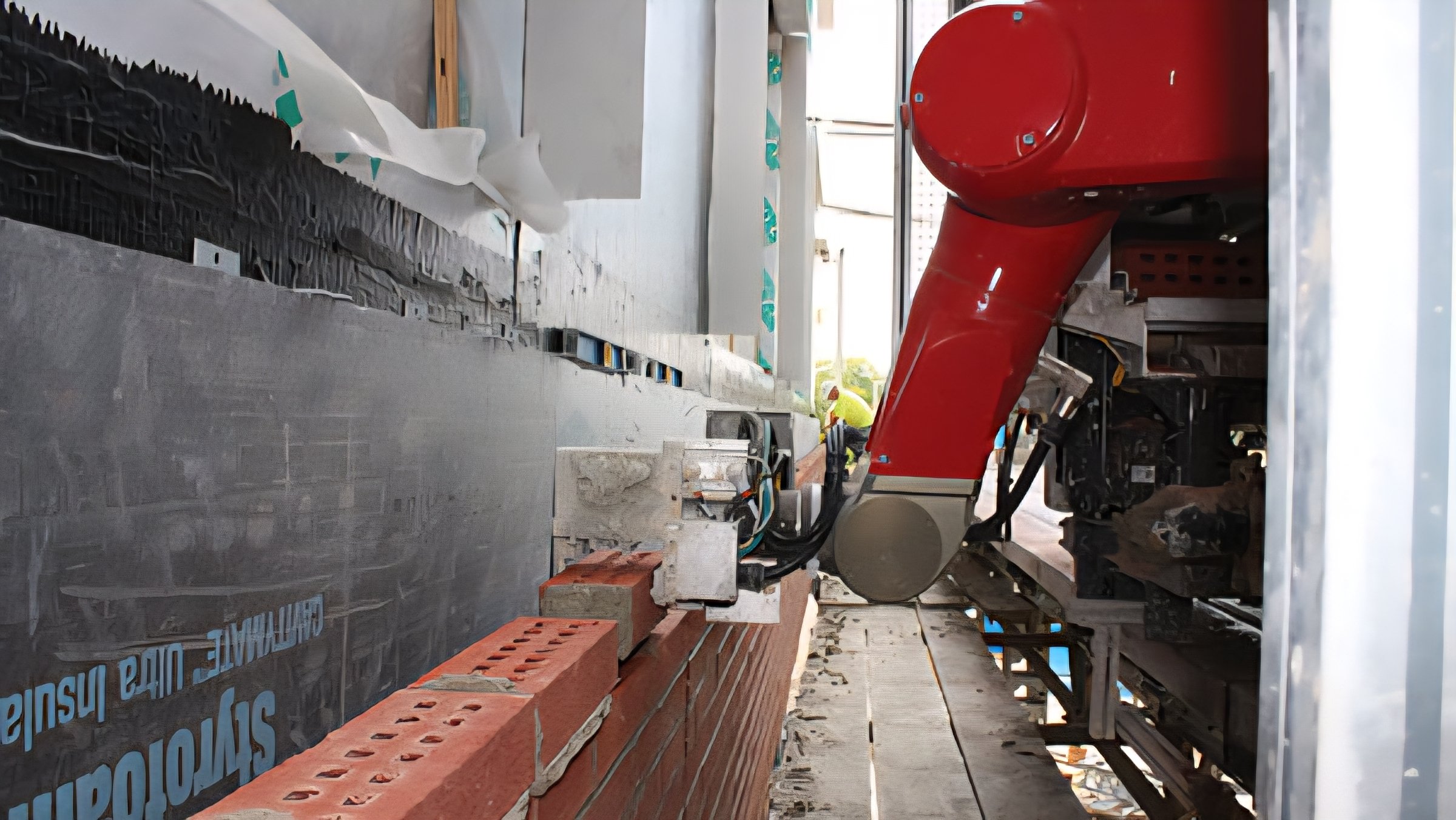
The Semi-Automated Mason (SAM100), developed by Construction Robotics, can lay between 1,200 and 3,000 bricks during a single day.
The machinery utilizes a synchronized system comprising a conveyor belt, a robotic arm, and an automated mortar applicator.
The mechanical assembly operates directly alongside a vertical wall structure.
The file named 259809.webp illustrates the red robotic arm component precisely positioning a brick onto a fresh mortar bed.
This robotic unit does not eliminate the need for human bricklayers entirely, but it fundamentally shifts their daily responsibilities.
The human professional remains completely responsible for site preparation, operational monitoring, and the final quality control of the masonry.
The automated unit simply handles the repetitive, heavy lifting movements thousands of times per day to accelerate the schedule.
In the United States, contractors deployed the system to build the Jay and Susie Gogue Performing Arts Center.
The project, located at Auburn University in Alabama, confirmed that the machinery sustained an output exceeding 3,000 bricks per day.
While such high productivity satisfies global financial stakeholders, African nations must weigh these technical benefits against widespread social displacement.
Comments (0)
Leave a Comment
No comments yet. Be the first to share your thoughts!