
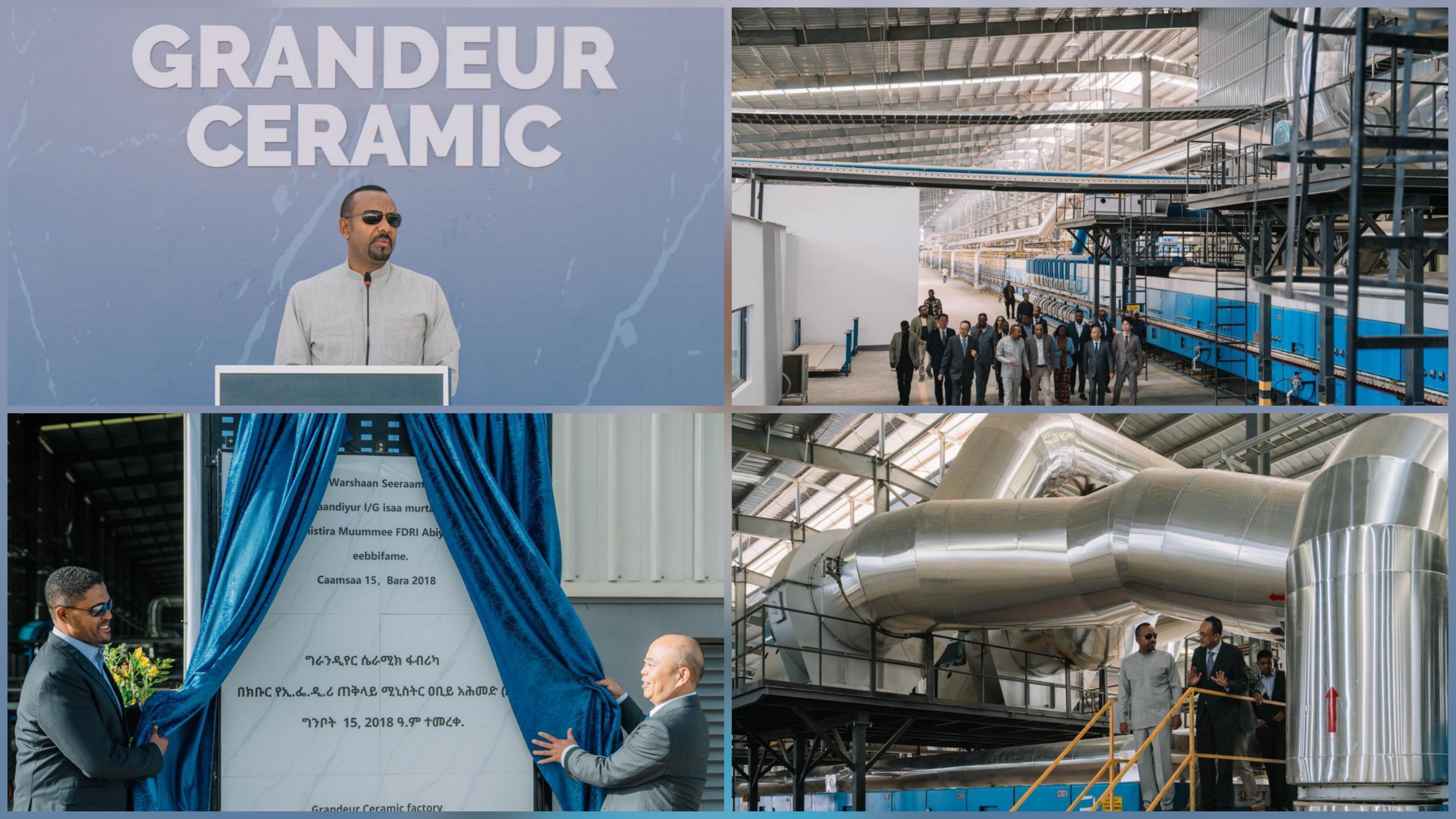

Ethiopian Prime Minister Abiy Ahmed, together with high-level government officials, has officially commissioned the Grandeur Ceramic Factory in Mojo city. Located in the East Shewa Zone, the massive facility covers 300,000 square meters of land.
The manufacturing plant required an investment exceeding 2 billion Ethiopian Birr. Construction progressed rapidly, moving from initial land preparation to full operational commissioning within nine months.
The factory addresses a core objective of the national "Made in Ethiopia" initiative. It aims to reduce heavy reliance on foreign construction materials, specifically targeting the commercial tile market.
According to state officials, the facility currently manufactures standard 60x60 centimeter ceramic tiles. Production schedules indicate an expansion within the next two months to accommodate larger dimensions.
Future product lines include 80x80, 60x120, 70x140, and 80x160 centimeter tile formats. The factory also plans to manufacture porcelain products engineered to meet European quality standards.
A key operational feature is the localized supply chain. The factory sources more than 80 percent of its raw materials locally, specifically within a 100-kilometer radius of the Mojo site.
This domestic sourcing model connects regional resource extraction directly to industrial processing. Prime Minister Abiy stated that utilizing these local resources reinforces domestic manufacturing capabilities while protecting foreign exchange reserves.
Official data indicates that import substitution strategies saved the country over 4.85 billion United States dollars in foreign exchange over a recent nine-month period.
During the launch event, Prime Minister Abiy announced that Ethiopia intends to completely halt ceramic imports by next year. The government relies on this new site and an upcoming facility in Debre Berhan to achieve self-sufficiency.
The industrial project is designed to attract further international investment into regional hubs. Authorities expect the factory to establish a stable, community-rooted supply network that supports the broader construction sector.
Comments (0)
Leave a Comment
No comments yet. Be the first to share your thoughts!