
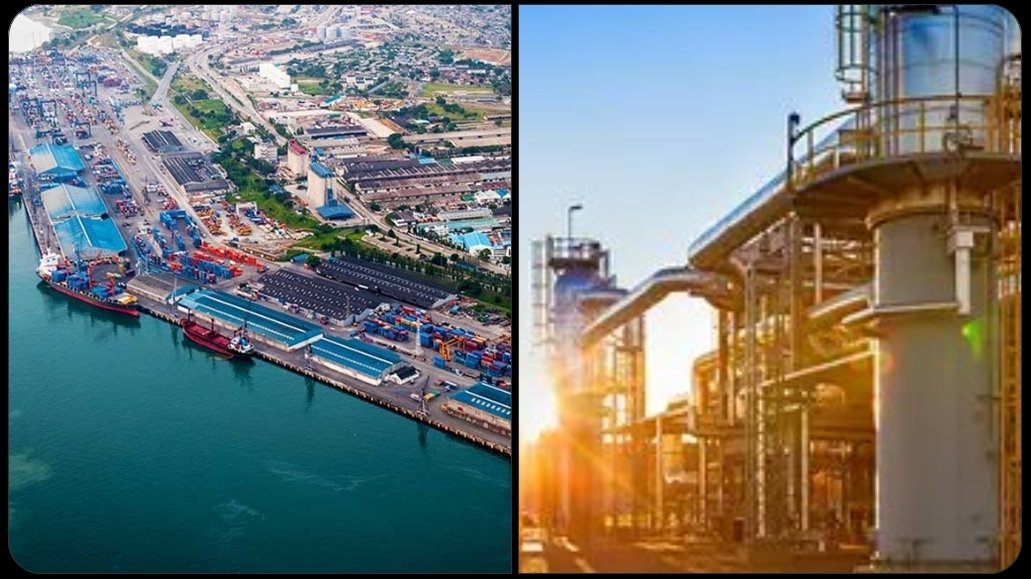

Tanzania and Uganda signed a memorandum of understanding on August 6 to develop a regional energy hub at the Tanzanian port of Tanga, a project officials say could attract investment exceeding $20 billion (approximately KSh 2.6 trillion).
The non-binding agreement was signed at State House in Dar es Salaam by the Uganda National Oil Company (UNOC), the Tanzania Petroleum Development Corporation (TPDC) and global commodities trader Vitol Bahrain E.C., and witnessed by Presidents Samia Suluhu Hassan and Yoweri Museveni.
The framework covers petroleum storage, refining, logistics, trading, petrochemicals and cross-border energy infrastructure along Tanzania's Indian Ocean coast, building on the East African Crude Oil Pipeline (EACOP) linking Uganda's oilfields to Tanga.
Tanzania's Energy Minister Deo Ndejembi described the hub as the next phase of the two countries' partnership, framing EACOP as transporting crude while the Tanga hub would add refining and industrial value to it.
Officials have not disclosed what exactly will be built at Tanga or its final cost, and Reuters reported that the $20 billion figure represents Tanzania's estimate of potential investment rather than a confirmed project budget.
The hub is expected to complement Uganda's own 60,000-barrel-per-day Hoima refinery rather than compete with it, according to both governments, as Uganda prepares to begin commercial crude production in 2026 or 2027.
Vitol is already a major partner in Uganda's petroleum sector, having signed a seven-year, $2 billion (approximately KSh 258.4 billion) financing agreement with UNOC covering storage, terminals and pipelines, alongside its position as Uganda's exclusive fuel supplier.
That existing relationship, spanning supply, financing and now infrastructure development, has drawn scrutiny from some regional analysts over the concentration of roles held by a single private trading firm within Uganda's energy sector.
Reactions on social media have been mixed. Some Ugandan commentators argued the country should prioritise completing its own Hoima refinery before backing infrastructure elsewhere, while others questioned whether Ugandan workers would be guaranteed meaningful employment under the deal.
Other observers linked the announcement to competing refinery ambitions in the region, including Nigerian billionaire Aliko Dangote's proposed refinery project in Lamu, Kenya, though no official statement has confirmed any connection between the two developments. Dangote has since confirmed that construction of the Lamu facility will begin before the end of 2026.
Some regional voices expressed concern about locking in new fossil fuel infrastructure at a time when other markets are shifting toward renewable energy, while others welcomed the project as an opportunity for regional industrialisation and job creation.
Kenya, whose Mombasa-based pipeline has historically supplied Ugandan fuel imports, was not party to the agreement, prompting some commentary framing the deal as part of a broader shift in regional energy logistics away from the Kenyan corridor.
The agreement builds on a legal foundation dating to the 2017 Uganda-Tanzania Inter-Governmental Agreement and subsequent Host Government Agreements underpinning EACOP, though the Tanga hub itself remains at an early, non-binding stage of development.
Comments (0)
Leave a Comment
No comments yet. Be the first to share your thoughts!