
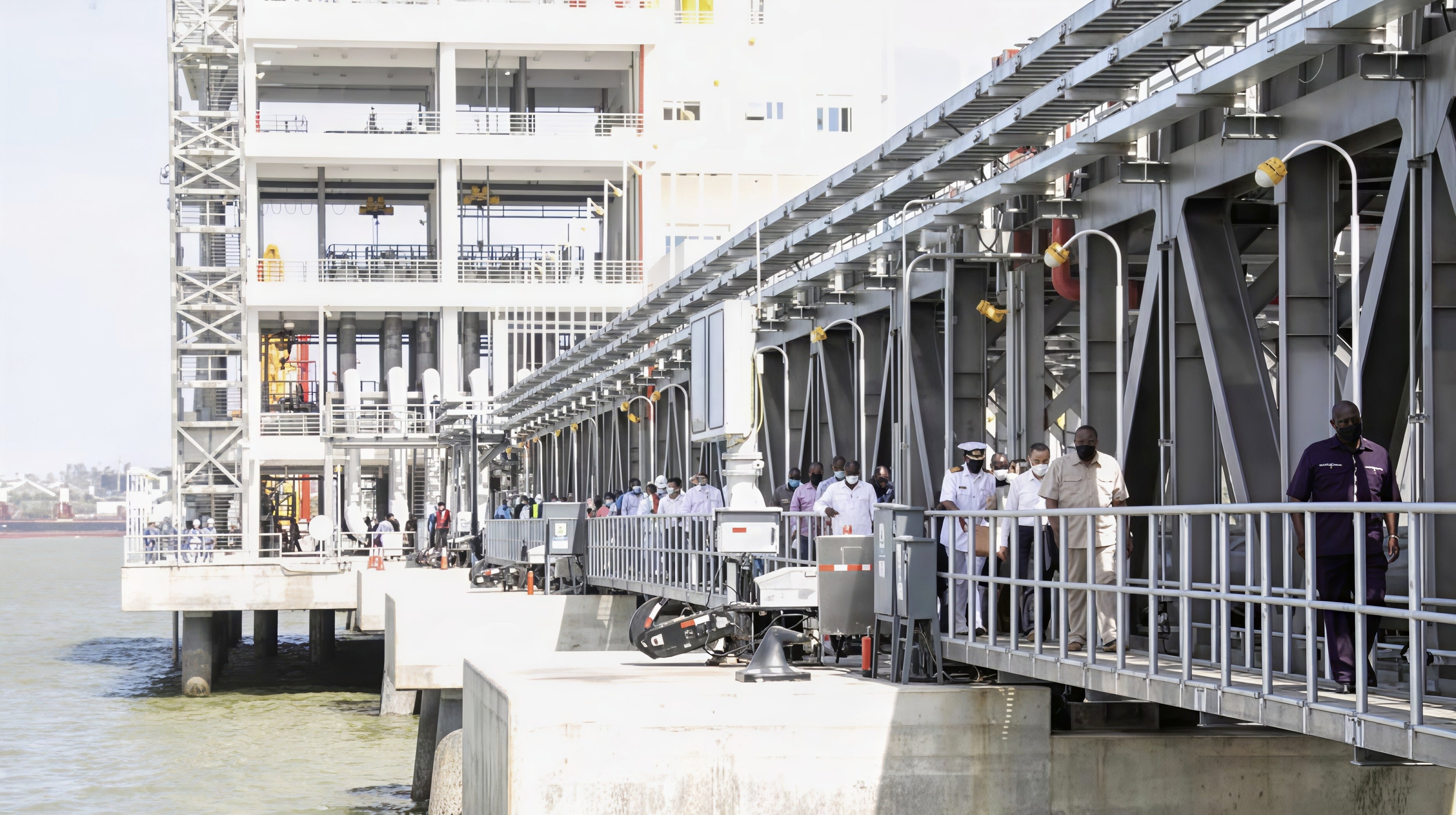

Saudi Arabia has overtaken the United Arab Emirates as Kenya's largest source of petroleum imports, after the closure of the Strait of Hormuz redrew the country's fuel supply map. Saudi Arabia's ability to bypass the strait entirely using overland pipelines gave it a decisive edge over its Gulf rival.
Kenya imported Sh99.78 billion worth of goods from Saudi Arabia between March and May, more than double the Sh42.10 billion shipped from the UAE over the same period, according to Kenya National Bureau of Statistics data. A year earlier, the UAE had led with Sh96.1 billion against Saudi Arabia's Sh11.17 billion, marking a Saudi surge of 793.4 percent.
Iran shut the Strait of Hormuz after the war between the two countries began on February 28, 2026, cutting off a corridor that normally carries roughly a fifth of global oil. Saudi Arabia responded by maxing out its East-West Pipeline, built in the 1980s during the Iran-Iraq War, which can move up to seven million barrels of crude daily to the Red Sea.
That infrastructure turned state oil giant Saudi Aramco into Kenya's leading fuel supplier under the country's government-to-government import programme, sidelining the UAE's ADNOC and ENOC, which had previously dominated deliveries. Saudi Aramco President and CEO Amin Nasser credited the company's East-West Pipeline, storage capacity and export terminals for maintaining business continuity through the disruption.
The UAE's own Hormuz bypass remains far more limited. Its existing Abu Dhabi pipeline carries up to 1.8 million barrels a day to Fujairah, while a new West-East pipeline that would double that capacity is only half complete and not expected to become operational until next year.
Kenya's monthly import data traces the reversal closely. The UAE led with Sh22.99 billion in January and Sh30.75 billion in February, before Saudi Arabia overtook it in March and widened the gap each month, reaching Sh43.69 billion in May against the UAE's Sh6.98 billion.
Energy Cabinet Secretary Opiyo Wandayi said Kenya's government-to-government agreement, signed with Saudi Aramco, ADNOC and ENOC in March 2023 on 180-day credit terms, places no restriction on where the three companies source their petroleum products, provided they meet Kenyan standards.
The supply shift has coincided with a sharp rise in Kenya's overall fuel bill, with spending on fuel and lubricants climbing 46.02 percent to Sh334.24 billion in the first five months of the year. Petroleum imports reached a record Sh122.35 billion in May, becoming Kenya's largest monthly import category for the first time in recent history.
The reordering of Kenya's fuel suppliers has unfolded alongside renewed scrutiny of the country's petroleum sector, following the resignations of Petroleum Principal Secretary Mohamed Liban, Kenya Pipeline Company Managing Director Joe Sang and Energy and Petroleum Regulatory Authority Director-General Daniel Kiptoo Bargoria, each implicated in investigations into fuel stock data and procurement.
Comments (0)
Leave a Comment
No comments yet. Be the first to share your thoughts!