
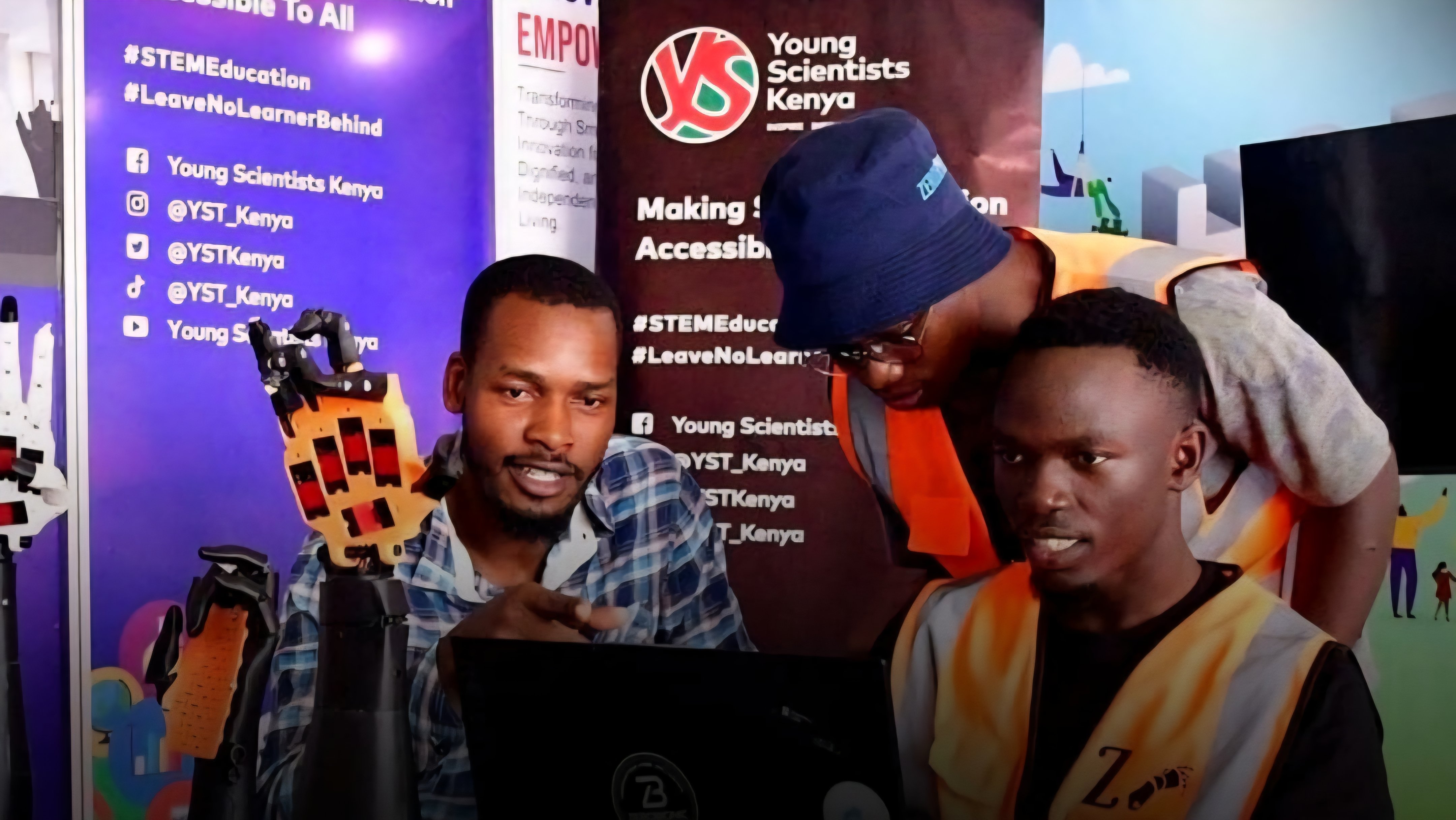

A distinct communication barrier in classrooms has led to the emergence of Zerobionic, a Nairobi-based assistive robotics startup that designs artificial intelligence powered hardware to translate speech into sign language in real time.
The innovation addresses a long-standing structural gap between how technical subjects are taught and how they are received by deaf learners, particularly in science, technology, engineering, and mathematics (STEM) fields.
Founded by Maxwell Opondo, a 21-year-old innovator, the company produces 3D-printed robotic prosthetic arms using recycled plastic waste, combining environmental engineering with digital inclusion.
The system operates bidirectionally, converting spoken or typed words from a teacher into sign language gestures, and translating a student's signs back into spoken speech or text.
By integrating machine vision and machine learning (ML), the robotic arm functions as a live classroom interpreter to ensure students with hearing impairments are not left behind in technical fields.
In Kenya, schools for deaf learners often struggle with a limited vocabulary for specialized technical terms, making standard curriculum delivery exceptionally difficult for educators.
The core use case of the technology focuses on education, where the hardware sits in the classroom to transcribe complex topics, providing visual aids alongside physical sign gestures.
According to the developers, when a trainer speaks about a specific technical component, the interface displays a corresponding image on a screen to foster deeper student comprehension.
The platform reportedly achieves 92% accuracy in translation, which has allowed the disability-led team to run successful pilots in several parts of the country.
Pilot programmes have been conducted in schools across Garissa, Machakos, and Kirinyaga counties, in partnership with organizations such as Young Scientists Kenya (YSK).
Early results from the initial prototypes indicated a measurable increase in deaf students' interest in STEM subjects, where very little engagement had previously been recorded.
The engineering process requires substantial datasets, prompting the team to spend significant man-hours training the machine learning models on specific curriculum materials to ensure localized accuracy.
The initiative has gathered international recognition, with the company securing a spot in the 2026 cohort of Qualcomm's Make in Africa Mentorship Programme.
Out of more than 1,200 applications from 45 African nations, the Nairobi enterprise was selected as the sole Kenyan representative for the tech mentorship initiative.
The firm previously received accolades including the Young Tech Innovator Award at the 2025 Africa Tech Summit, and a Gold award at the Reimagine Education Awards in 2024.
As the engineering team moves to scale the technology, they are seeking partnerships with investors to mass-produce the recycled prosthetic arms and deploy them to more learning centers.
Comments (0)
Leave a Comment
No comments yet. Be the first to share your thoughts!