

The ambitious African Integrated High-Speed Rail Network (AIHSRN) remains a cornerstone of the infrastructure development strategy across the continent, but new financial assessments indicate that the massive project carries a monumental price tag.
According to industry experts tracking continental logistics, delivering this expansive rail network could cost Africa three times more than the multi-billion-dollar Trans-African Highways asset.
The highway system alone requires an estimated investment of 170 billion US dollars, meaning the rail infrastructure demands unprecedented financial mobilization from African Union (AU) member states and international financing partners.
This high-speed rail initiative forms an integral part of the broader AU Vision 2063 framework, which outlines the strategic transformation of the continent over a 50-year period.
The blueprint aims to establish a highly interconnected network linking political capitals, economic hubs, and major industrial centers across Africa.
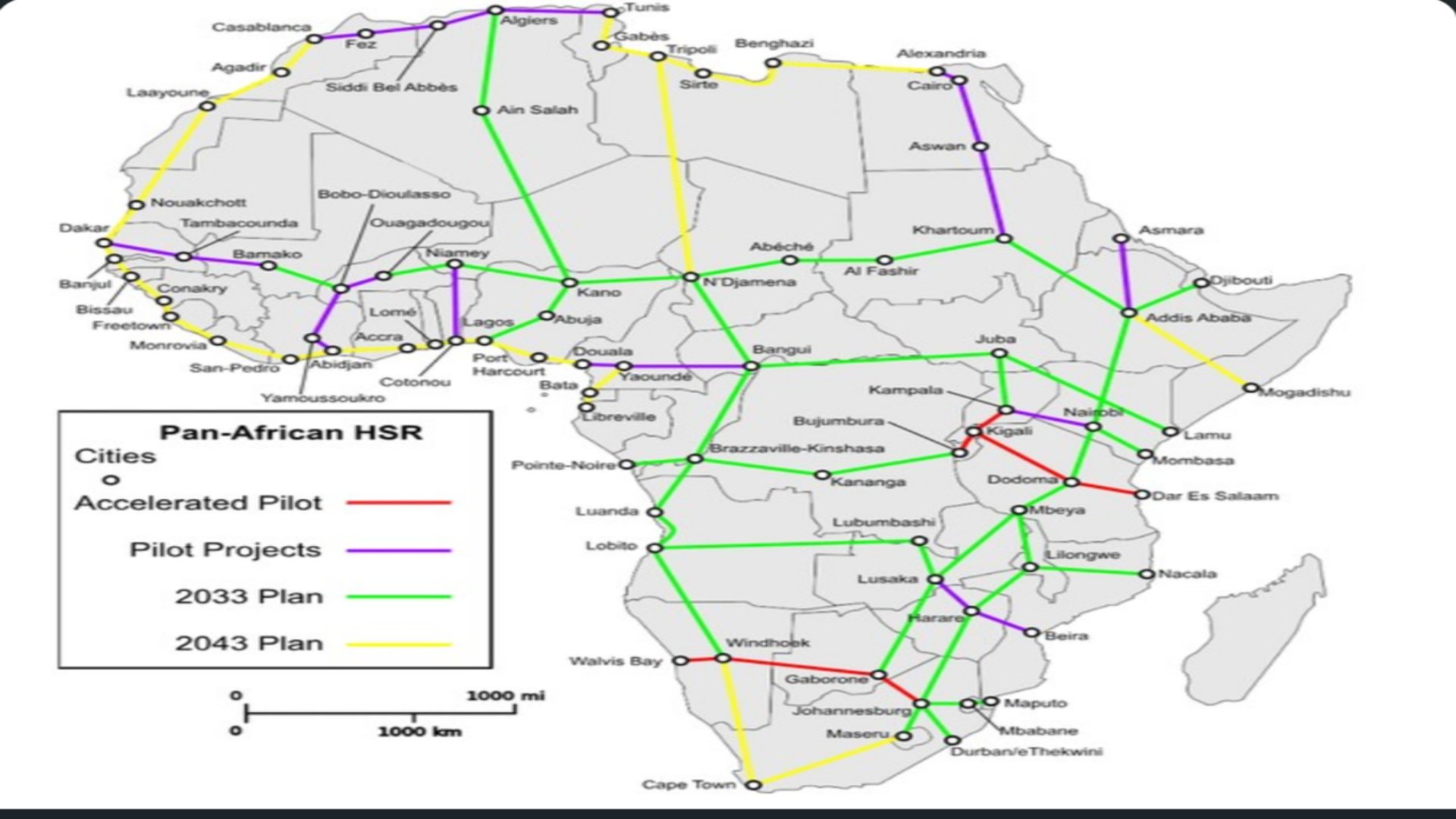
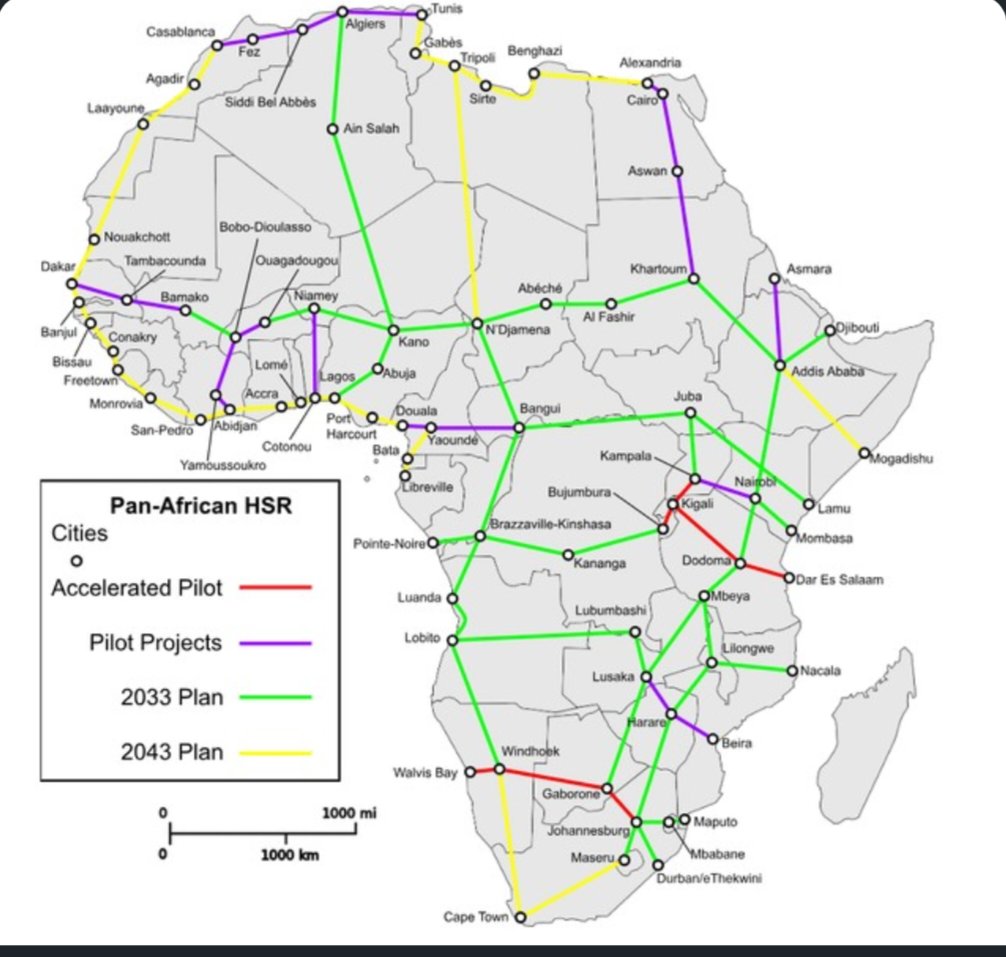
To manage this vast undertaking, the continental master plan splits implementation into distinct phases, which include an accelerated pilot, standard pilot projects, a 2033 plan, and a final 2043 plan.
Geographic mapping reveals that early priorities target specific regional corridors to prove the commercial and operational viability of high-speed rail.
Under the accelerated pilot phase, lines like the corridor from Kigali to Dar es Salaam are prioritized for early execution, which will link Rwanda directly to the Tanzanian coast.
The regular pilot projects encompass additional critical paths, such as the rail link connecting Kampala to Bujumbura, which strengthens transport reliability within the East African Community (EAC) bloc.
As the implementation timeline progresses, the 2033 plan introduces longer corridors, including the prominent connection between Nairobi and Mombasa, which builds upon existing standard gauge infrastructure in Kenya.
This phase also integrates long-distance routes like the Bamako to Khartoum corridor, and the expansive network connecting Addis Ababa to Nairobi, Dodoma, Lusaka, and Gaborone.
The long-term vision culminates in the 2043 plan, which focuses on massive trans-continental extensions to fully integrate remote economic zones.
This final phase includes coastal corridors stretching from Casablanca through Nouakchott to Dakar, and a southern connection between Windhoek and Cape Town.
With East Africa positioned as a major transit hub, Kenya occupies a central position in the continental logistics matrix, but local funding constraints remain a critical bottleneck.
The Programme for Infrastructure Development in Africa (PIDA) continues to flag the continental infrastructure gap, noting that annual requirements across all sectors frequently outpace available national budgets.
Regional development banks and global consortia have started assessing separate segments, but a unified financing mechanism for the entire high-speed network has not yet materialized.
Engineering assessments highlight that terrain challenges, disparate track gauges, and cross-border regulatory differences present substantial technical hurdles for contractors working on these international corridors.
While standardizing lines to standard gauge remains the objective, many member states must first focus on rehabilitating existing low-capacity rail infrastructure before deploying high-speed links.
The high costs mean that public-private partnerships (PPPs) will be essential, though attracting long-term private capital to cross-border rail projects historically presents significant risk profiles.
For Kenya, coordinating with neighbors like Uganda and South Sudan on the Lamu to Juba route will determine whether these regional rail lines can achieve financial viability.
Ultimately, the success of the high-speed rail network depends on sustained political commitment, and a coordinated approach to cross-border capital investment over the next two decades.
Comments (0)
Leave a Comment
No comments yet. Be the first to share your thoughts!