
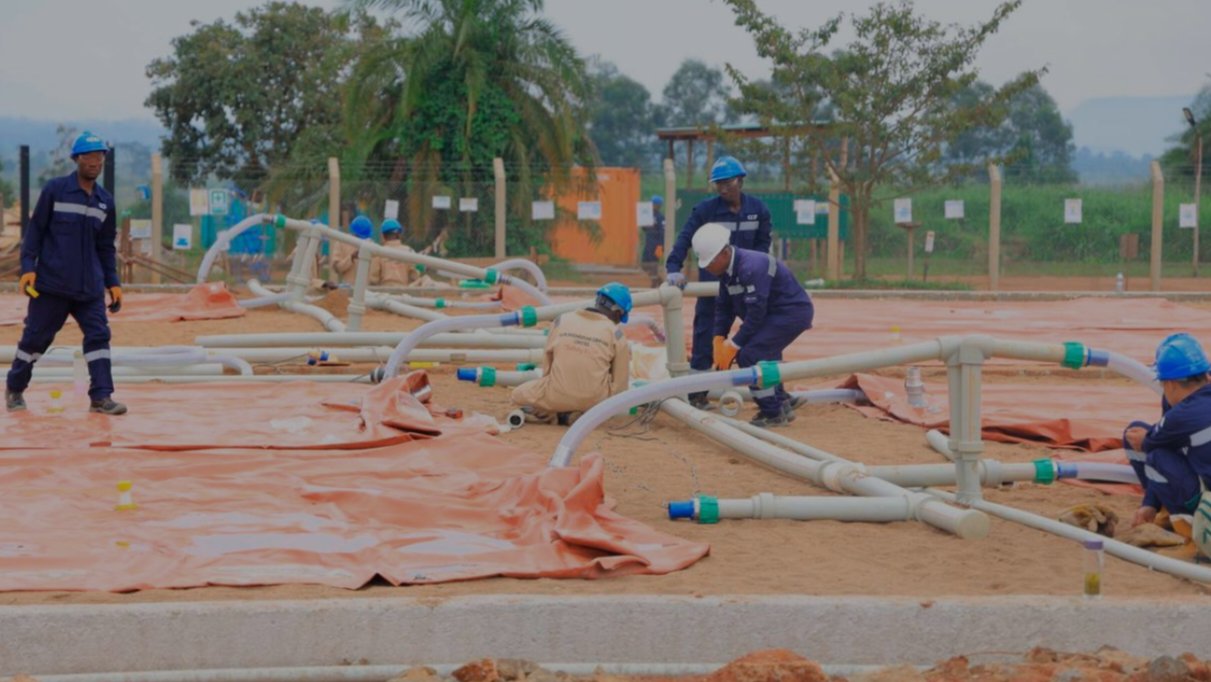

Uganda has officially launched a drive to position Hoima as the primary petrochemical manufacturing centre for East Africa. This initiative centres on opening the Kabalega Industrial Park (KIP) to prospective investors as the country approaches the start of commercial oil production.
The development is anchored on the nation’s planned 60,000-barrels-per-day refinery. Planners expect the site to host a wide range of industries dedicated to converting petroleum by-products into various value-added products.
The Uganda National Oil Company (UNOC), which is wholly state-owned, oversees the management of this strategic site. Officials state that the park is located approximately 50 kilometres west of Hoima City, near the shores of Lake Albert.
Projections indicate that the facility will host up to 221 factories once fully operational. Authorities estimate that the industrial activities within the park will contribute $4.9 billion annually to the national Gross Domestic Product (GDP).
In addition to economic contributions, the project aims to create thousands of jobs for the local population. This industrialisation strategy is designed to ensure that the country captures more value from its natural resources before they are exported to international markets.
The KIP serves as a critical component of the country’s broader energy and industrial roadmap. By co-locating petrochemical industries with the planned refinery, the government intends to create a vertically integrated hub that minimises logistics costs for manufacturers.
Infrastructure development within and around the site remains a top priority for the energy ministry. Ensuring reliable power supply, water, and road connectivity is essential for the 221 factories planned for the industrial zone.
These investments reflect a significant push to leverage the upcoming East African Crude Oil Pipeline (EACOP) and domestic refining capacity. The strategy focuses on regional integration, aiming to supply petrochemical products to neighbouring countries within the East African Community.
Environmental and safety standards are expected to be strictly enforced throughout the construction and operational phases of the park. Given the proximity to Lake Albert, sustainable practices are central to the planning permission granted for the heavy industrial zone.
As the East African region continues to witness growth in industrial demand, Hoima is increasingly viewed as a key node for future investment. The success of KIP may provide a model for other nations in the region looking to diversify their manufacturing bases through natural resource utilisation.
Market analysts are monitoring the uptake of plots within the park, as the timeline for first oil production continues to draw closer. The ability to attract high-value manufacturers will determine the long-term viability of the ambitious $4.9 billion economic target set by the state authorities.
Comments (0)
Leave a Comment
No comments yet. Be the first to share your thoughts!