
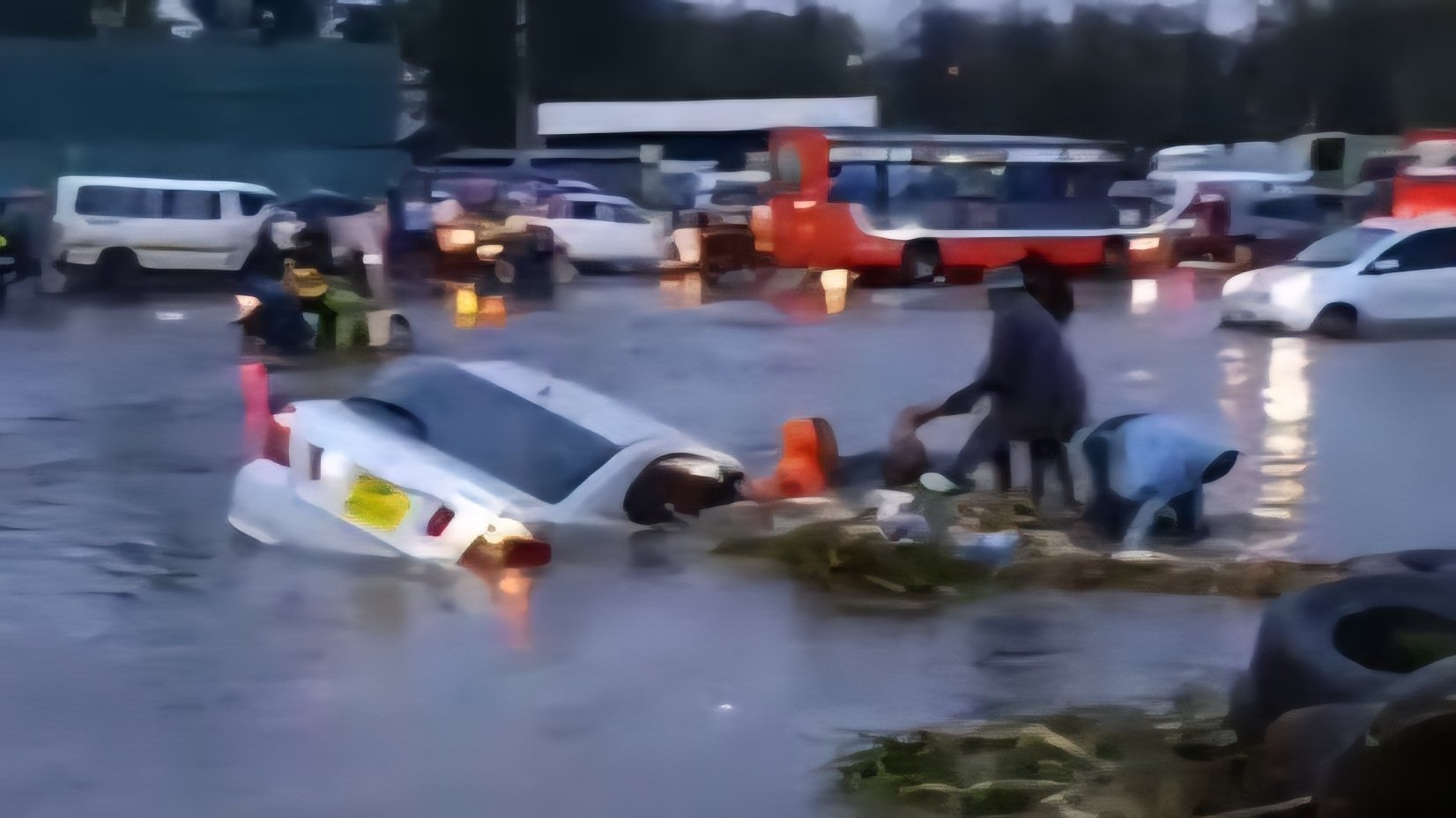

Persistent rainfall across Nairobi and several other regions has entered a critical phase, with ground conditions failing to provide relief for saturated drainage systems. Security and weather intelligence reports from April 29, 2026, indicate that the current situation is not an easing phase, as impacts remain active throughout the country.
In Nairobi, the heavy downpours that continued overnight have left many low-lying zones waterlogged. Drainage is moving slowly, which has put significant pressure on the city's rivers and existing drainage channels.
Commuters are facing ongoing traffic disruptions, particularly during peak hours, as floodwater remains standing in sections of major roads and residential zones. The Industrial Area and the Ngong Road corridors are among the hardest hit.
Other most affected areas in the capital include Westlands, Parklands, and Eastleigh, specifically sections near the rivers. Parts of South C and South B are also experiencing significant water accumulation on roads.
The situation extends well beyond the capital. In Central and the Highlands, ongoing rain has led to saturated ground and high runoff, increasing the risk of landslides or flash floods in vulnerable terrain.
The Coastal region is currently facing heavy rain paired with strong winds and rough sea conditions. Meanwhile, the Western and Lake Basin regions are under continued flood risk as rainfall persists.
North Eastern regions are reporting intermittent rain and storms. These widespread conditions suggest that the national infrastructure is being tested at multiple points simultaneously.
Weather intelligence suggests that rain is likely to continue on and off for the next one to three days. Flooding may worsen in some areas as the ground is already too saturated to absorb further moisture.
Roads may become impassable without much warning, although the slow drainage means that even after the rain stops, the hazards remain. Drivers are advised to avoid flooded roads where the depth and hidden hazards are not visible.
Delays are expected to continue, and planners are urged to allow for extra travel time. Caution is especially necessary in areas that flooded earlier in the season, as conditions there may still be unstable.
Movement across the country should be careful and informed, if the current weather patterns hold. The bottom line remains that the situation is active on the ground and can change quickly, requiring constant monitoring of reliable alerts.
Comments (1)
Leave a Comment
Farah
May 01