
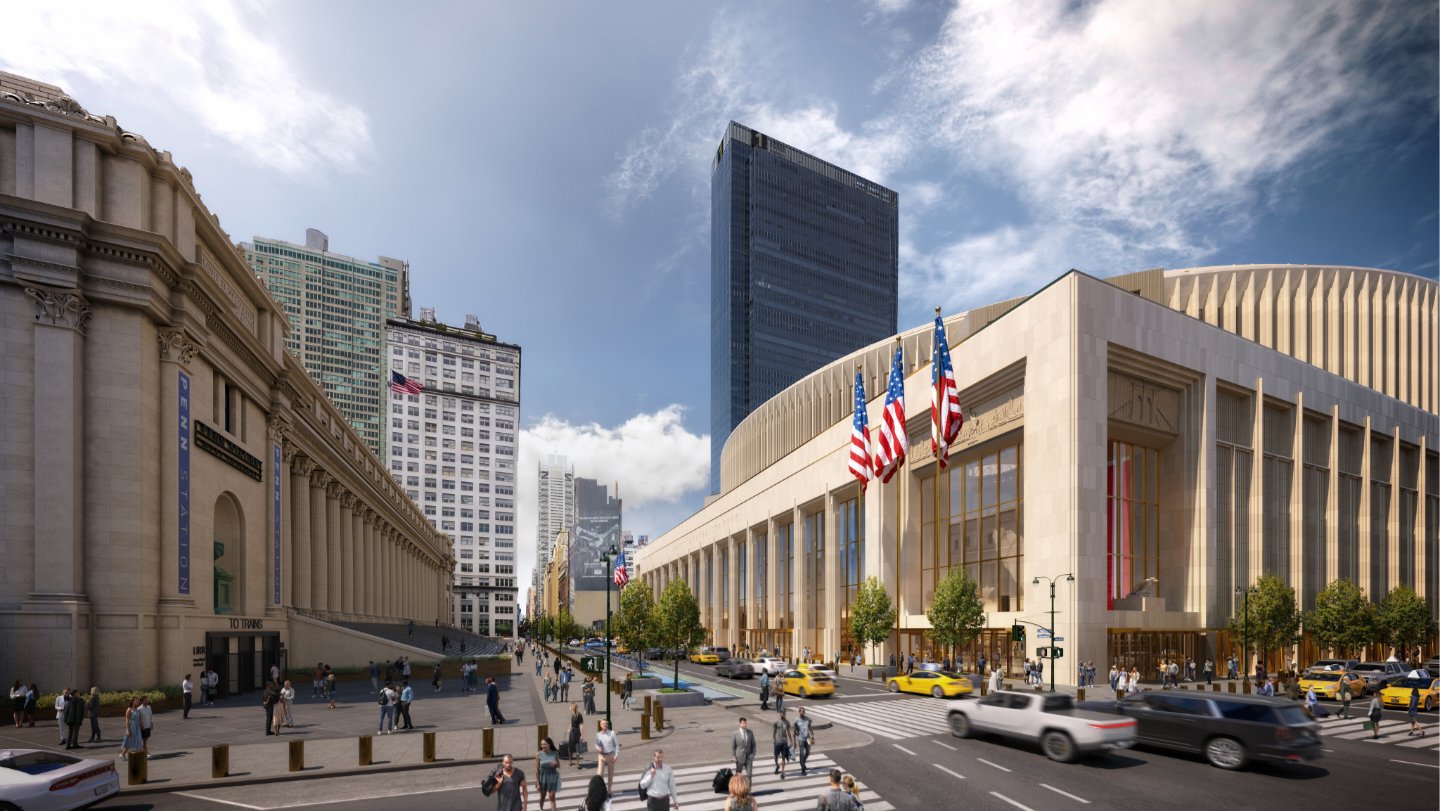

The U.S. Department of Transportation (USDOT) and Amtrak have released fresh design renderings detailing the upcoming overhaul of New York Penn Station. The shared images show a new exterior structural profile.
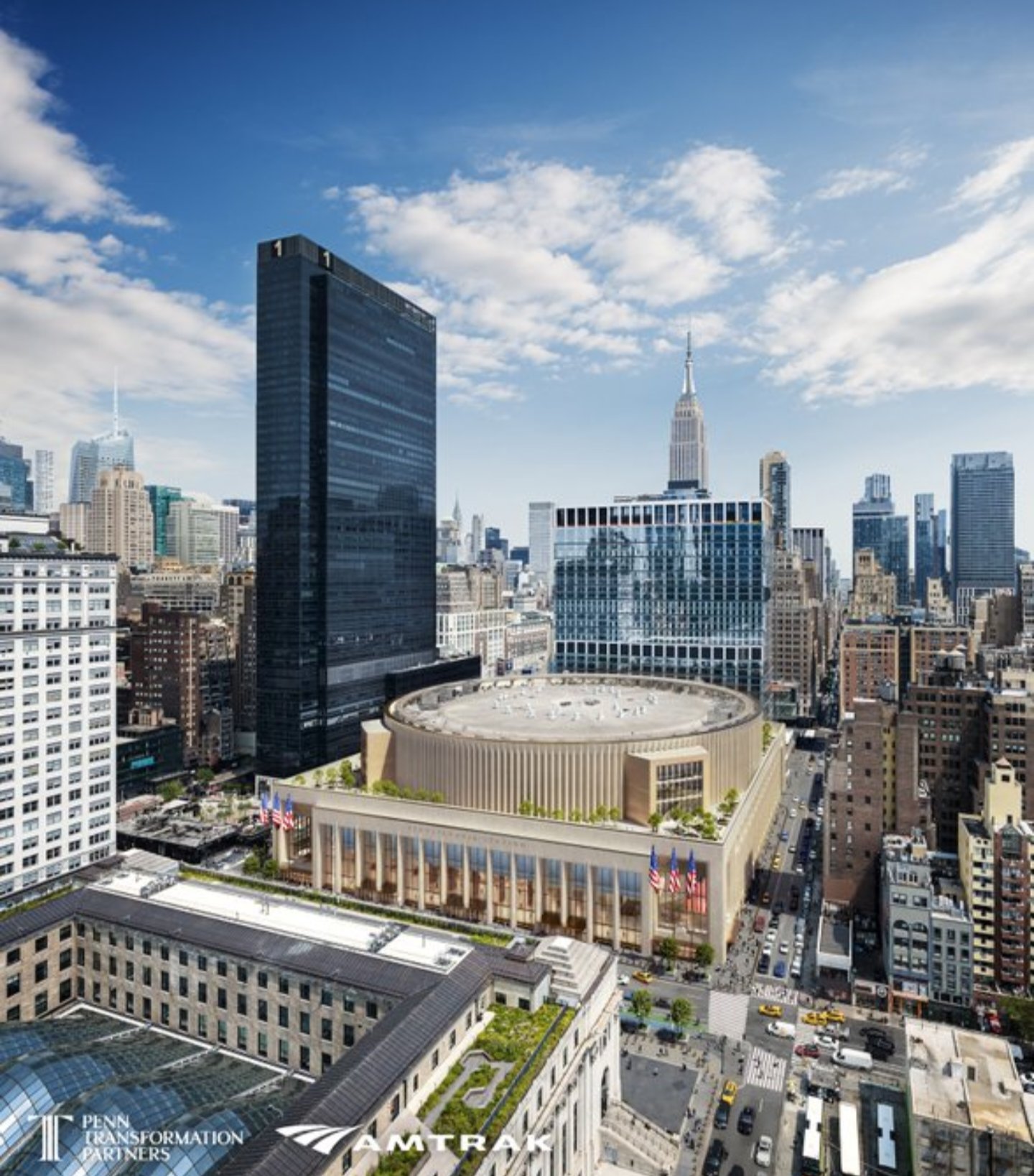
This design comes from Penn Transformation Partners (PTP), a development consortium led by Halmar and Skanska. The private consortium secured the master developer role following a competitive nine-month procurement process, which concluded earlier this year.
According to officials, the massive redevelopment project carries an estimated cost of 8 billion dollars. The federal government intends to fund the work through a combination of federal grants, low-cost federal loans, and private equity raised directly by the development partners.
A key aspect of the new architectural plan involves building a new, grand entrance along Eighth Avenue. This entrance will lead passengers directly into a single-level train hall designed to replace the existing cramped and dark subterranean corridors.
The architectural footprint incorporates a new 90-foot-tall square structure, which will enclose the existing Madison Square Garden cylinder. This addition will extend from 31st Street to 33rd Street, providing 150,000 gross square feet of space for retail and utilities.
The design team driving this vision includes an engineering joint venture between HNTB and Hellmuth, Obata & Kassabaum (HOK), working in association with the Practice for Architecture and Urbanism (PAU). Their concept draws visual cues from the classical architecture of the original terminal.
Project officials confirmed that Madison Square Garden will remain in its current location throughout the multi-year construction process. Furthermore, all transit systems and the arena itself will continue normal operations while construction crews work in carefully managed phases.
The station currently handles over 600,000 daily commuters, making it the busiest transportation hub in the Western Hemisphere. The original complex was built to accommodate only 200,000 people per day, resulting in severe overcrowding over the subsequent decades.
To resolve subterranean congestion, the engineering plans call for the removal of numerous structural columns on the platform level. This intervention will widen sightlines, enhance passenger circulation, and ensure compliance with modern fire safety regulations.
The Federal Railroad Administration (FRA) recently provided an additional 200 million dollars to advance design and permitting activities. This funding follows an initial 43 million dollar grant delivered when federal authorities took control of the project last year.
Transit authorities stripped the New York Metropolitan Transportation Authority (MTA) of project control in April 2025, after citing persistent management issues, schedule overruns, and budgetary concerns. Since then, federal officials have spearheaded the procurement.
The new interior space features a continuous concourse with soaring stone ceilings reaching heights of up to 55 feet. The design utilizes durable materials like stone and bronze, which are intended to withstand heavy commuter traffic for decades.
In addition to internal upgrades, the project will modify surrounding streetscapes by widening adjacent sidewalks. These adjustments aim to eliminate persistent traffic bottlenecks, particularly during major events at the neighboring entertainment theater.
Construction operations are scheduled to begin before the end of 2027, following a comprehensive federal environmental review process. Planners anticipate that the phased modernization will require approximately six years to achieve full completion.
While some local leaders have questioned the lack of municipal involvement, federal coordinators insist the plan provides the fastest path to delivery. The project remains on track to finalize contract negotiations and structural permits over the coming months.
Comments (0)
Leave a Comment
No comments yet. Be the first to share your thoughts!