
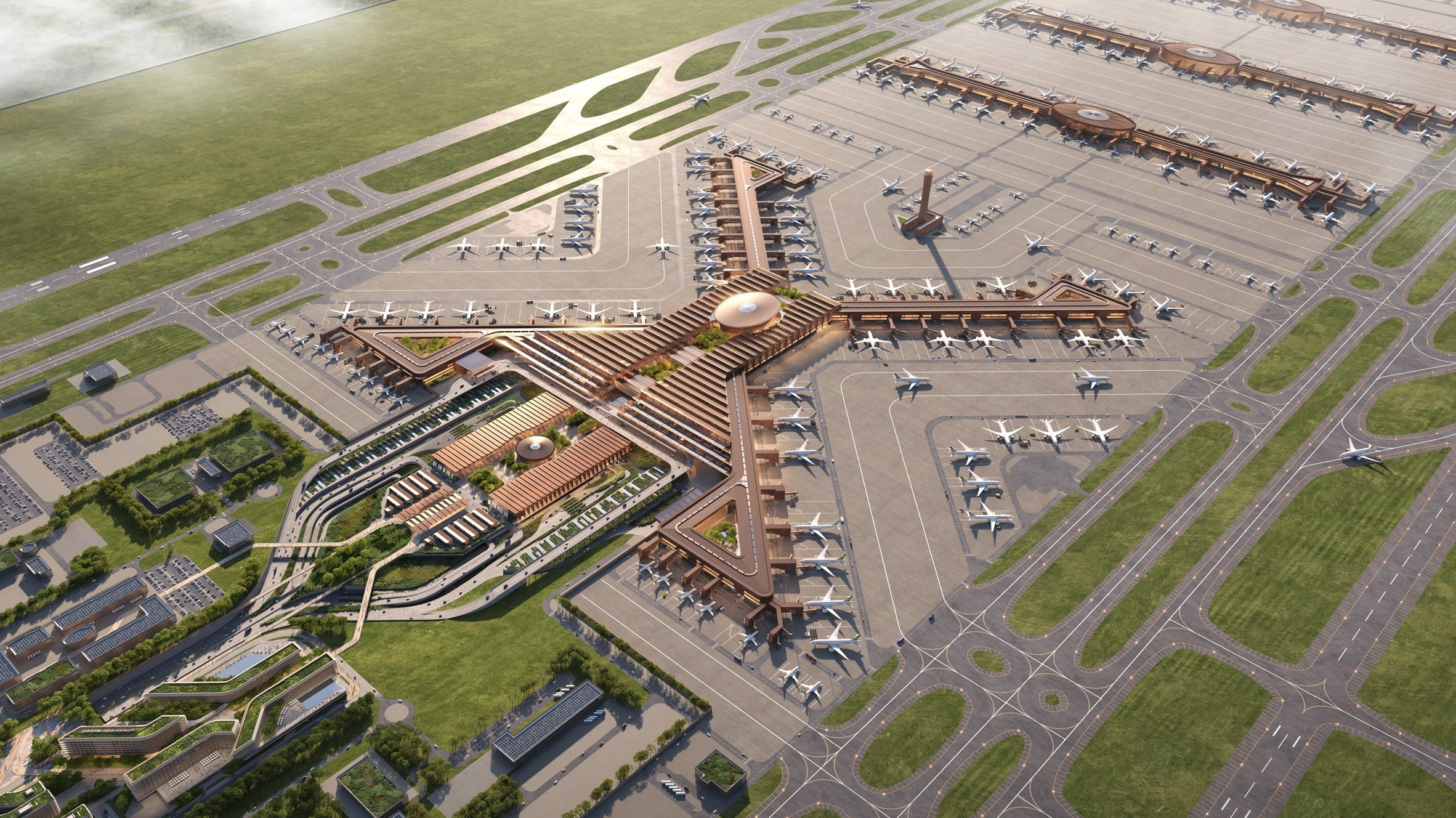

Construction is underway on Bishoftu International Airport, a project Zaha Hadid Architects and lead consultant Dar Al-Handasah describe as the largest aviation infrastructure undertaking in Africa's history. Ethiopian Prime Minister Abiy Ahmed Ali laid the cornerstone at a groundbreaking ceremony on January 10, 2026.
The airport sits roughly 40 kilometres south of Addis Ababa, near the city of Bishoftu, and will serve Ethiopian Airlines, the continent's largest carrier by passengers, destinations, fleet size and revenue. It is designed to become Africa's primary aviation hub.
Phase one is scheduled to open in 2030, with a 660,000 square metre terminal and two runways handling 60 million passengers a year. Once fully built out, the airport will expand to four runways and 270 aircraft stands, serving up to 110 million passengers annually.
The design draws its layout from Ethiopia's Great Rift Valley, using a single central spine to connect terminal facilities and runways and reduce transfer distances for passengers. Zaha Hadid Architects' director of aviation, Cristiano Ceccato de Sabata, said airports bring people together and bridge national divides.
The project also references Ethiopia's status as the site where Lucy, the fossilised hominid dated to roughly 3.2 million years old, was discovered. Designers describe the Rift Valley theme running through the terminal as a nod to that shared human origin.
With up to 80 percent of passengers expected to transit between destinations without leaving the terminal, the design includes a 350-room airside hotel, extensive dining and entertainment facilities, and outdoor gardens and courtyards for travellers waiting between flights.
The airport site sits nearly 400 metres lower than Addis Ababa's existing Bole Airport, allowing for longer runways that support higher maximum take-off weights and longer non-stop routes with greater passenger and cargo capacity. A planned high-speed rail line will connect Bishoftu to both Addis Ababa and Bole Airport.
BIA will use a modular structure of concrete and steel manufactured locally in Bishoftu, and the passenger terminal is targeting LEED Gold certification. Plans include channelling stormwater into new wetlands and bioswales for storage and reuse, alongside on-site energy generation through photovoltaic arrays.
Abiy Ahmed Ali said the new airport would have more than four times the capacity of Ethiopia's current main airport, which is projected to reach its traffic limits within two to three years, underscoring the urgency behind the project's scale.
Comments (0)
Leave a Comment
No comments yet. Be the first to share your thoughts!