
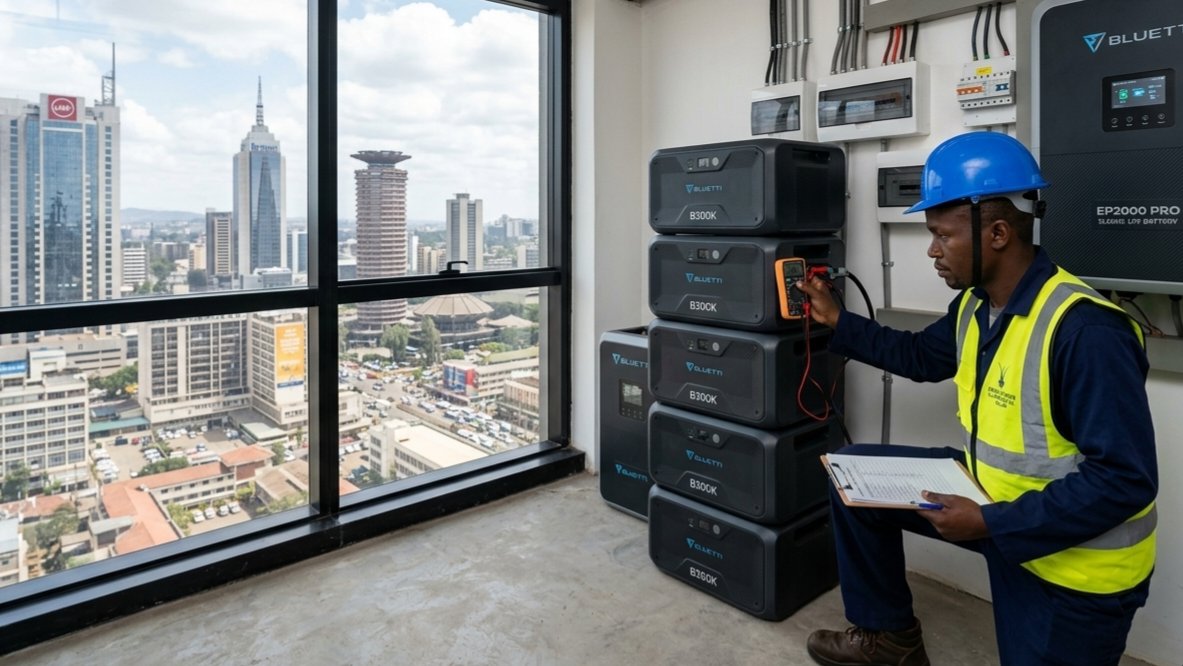

Global clean energy technology firm BLUETTI has introduced a Buy-Now-Pay-Later (BNPL) financing structure in Kenya. The financing mechanism targets off-grid solar energy storage systems for local buyers, who often face high initial equipment purchase expenses.
The initiative provides structured credit options for individual households and Small and Medium-sized Enterprises (SMEs). Under the arrangement, consumers can install energy equipment immediately, while spreading equipment repayments across manageable monthly installments over fixed payment schedules.
Power disruptions remain a recurring challenge across urban centers and rural locations in Kenya. Local businesses, which depend on steady electricity supplies for daily operational continuity, suffer serious financial losses whenever unexpected national grid breakdowns occur.
The new payment framework applies to several primary energy storage products, including the Home Star 2, Home Star 3, and GM Home Star 5 models. These systems deliver backup capability during outages caused by grid instability from Kenya Power and Lighting Company (KPLC).
BLUETTI Kenya Business Manager Barry Yang explained that the local market holds extensive solar potential. He noted that the company intends to lower access barriers through structured financing, while working alongside regional distributors to expand clean energy distribution network reach across the country.
Beyond consumer sales, the corporate rollout includes technical support, financing guarantees, and risk-sharing measures for domestic distributor partners. These commercial mechanisms help smaller regional suppliers stock equipment, without absorbing prohibitive financial exposure during distribution expansion.
The enterprise is also establishing local vocational instruction programs focused on technical skills. These workforce initiatives will train technicians in system installation and routine maintenance, which creates new employment opportunities for young workers within the growing renewable energy sector.
This operational strategy builds on previous commercial expansion efforts in Nigeria. In that West African market, similar structured payment options and partner distribution networks were deployed to address widespread commercial power deficiencies.
Industry analysts note that high capital requirements have traditionally delayed solar adoption across East Africa. While solar panels offer long-term operational savings, the initial purchase price deters many property owners, who lack immediate cash reserves.
Entrepreneurship expert Abel Meru stated that local solar adoption is approaching a critical turning point. He compared the potential growth trajectory of renewable power to the historic expansion of mobile financial services across the region.
Commercial property owners and industrial builders are increasingly integrating decentralized power options directly into structural designs. Commercial developers recognize that reliable solar installations protect long-term rental yields, when municipal electricity grids experience supply rationing or severe infrastructure failures.
Contractors operating across rural areas face unique energy access difficulties on construction sites. Off-grid solar generators supply steady electricity for field offices and heavy machinery maintenance, which keeps remote building projects moving forward on schedule.
Off-grid energy storage is rapidly becoming a vital design consideration for real estate developers in Nairobi. Incorporating battery storage into building plans gives commercial tenants reliable operational power, while reducing overall reliance on expensive emergency diesel generators.
As financing structures evolve, more Kenyan enterprises are expected to transition toward hybrid energy systems. Expanding flexible credit access helps commercial sectors adopt cleaner power solutions, which strengthens overall energy resilience and grid independence across the region.
Comments (0)
Leave a Comment
No comments yet. Be the first to share your thoughts!