
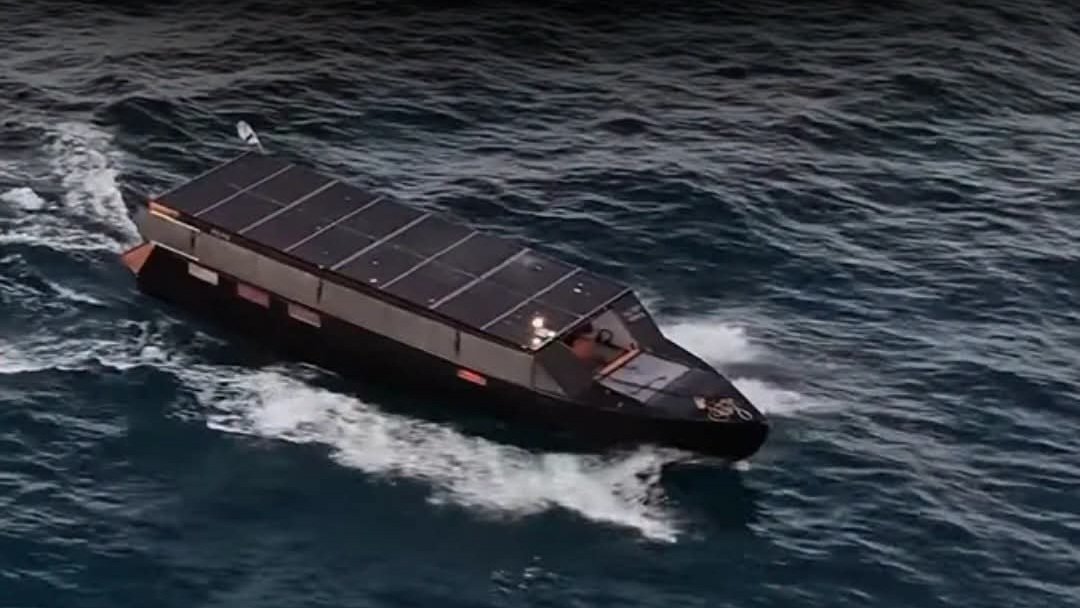

Finnish sailor Lukas Sjoman completed a 3,000-nautical-mile voyage across European waters using a self-built electric vessel powered entirely by sunlight. The journey stretched from Finland down to Spain, demonstrating that low-cost renewable marine travel can sustain long-distance transit.
Sjoman spent roughly 200 days building the 11-meter vessel in a workshop. He constructed the boat, named Helios 11, using marine plywood, fiberglass, and timber. The total material expenditure reached $20,724, creating an accessible alternative to traditional fuel-burning recreational boats.
The propulsion system relies on 10 standard residential solar panels mounted across the flat roof surface. These panels feed electrical energy into a 24-kilowatt-hour (kWh) battery bank. That stored power directly runs a 6-kilowatt (kW) electric outboard motor, propelling the craft quietly across open water.
Peak sunlight generates nearly 4,000 watts of immediate solar input. Under clear skies, the craft cruises efficiently while drawing minimal power from stored reserves. On sunny days, the onboard battery system recharges back to full capacity while the vessel remains anchored offshore.
Sjoman designed the boat with a shallow draft measuring just half a meter deep. This structural feature allows access to secluded coastal anchorages where heavy deep-draft vessels cannot safely go. It also minimizes hull drag during extended offshore runs.
Navigating Mediterranean coastal weather provided real-world validation for the hull design. Facing headwinds exceeding 20 knots, the solar propulsion sustained a steady cruising speed between 6 and 6.7 knots. Ocean spray and high winds revealed no major structural failures.
The vessel offers functional living space for extended voyages off grid. Interior amenities include an electric cooking stove, a compact refrigerator, and a standard marine head. The energy system keeps all onboard appliances operational without requiring onshore shore power connections.
Routine maintenance proved straightforward during the multi-month voyage across European seas. Minor repairs to the solar array were conducted on site without halting operations. The vessel continued generating operational power even after minor cosmetic impacts to individual panel modules.
On a single 30-nautical-mile leg along the Spanish coast, Sjoman saved roughly $46 in marine fuel costs. Over the full distance, total savings on diesel and gasoline amounted to thousands of dollars. The trip proved the financial viability of solar propulsion.
Sjoman has already initiated plans for a larger 16-meter power catamaran. The expanded hull format will double available deck space for solar harvesting. Future iterations aim to make transoceanic voyages achievable on zero fossil fuels.
The vessel demonstrates how affordable materials and standard solar hardware can replace conventional engines. Off-the-shelf components provided reliable power throughout the entire European itinerary. Sjoman expects DIY builders to replicate the project using his published blueprints.
Comments (0)
Leave a Comment
No comments yet. Be the first to share your thoughts!