
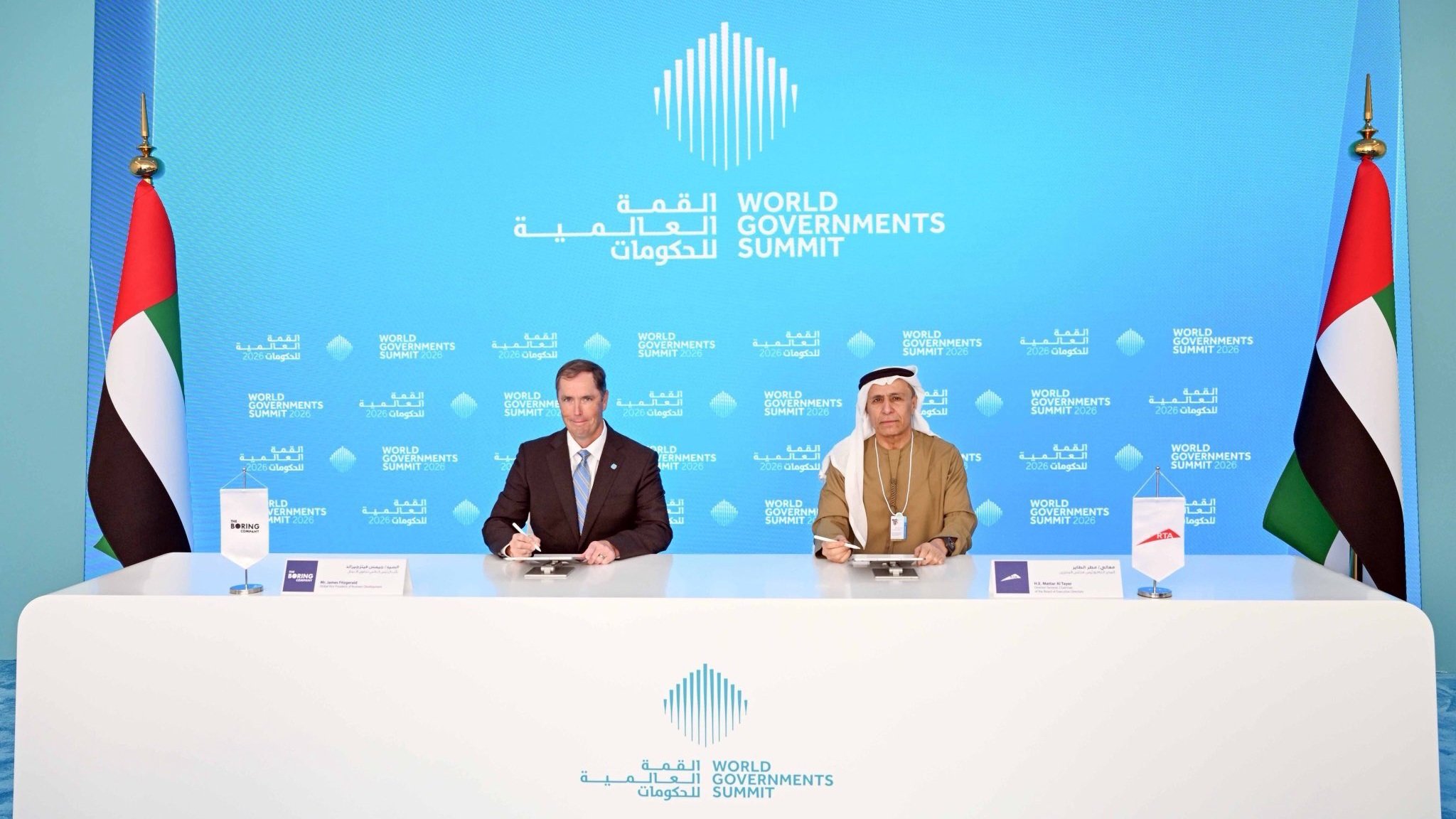

The Roads and Transport Authority (RTA) of Dubai has formalised a contract with The Boring Company (TBC) to begin construction on a new underground transit system known as the Dubai Loop. The agreement was signed on the sidelines of the World Governments Summit 2026, marking a shift from the initial planning stages to active implementation.
The project will begin with a pilot system comprising 6.4 kilometres of tunnel and four dedicated stations. Construction for this initial phase is scheduled to commence in late 2026. This pilot route is designed to link the Dubai International Financial Centre (DIFC) with the Dubai Mall, providing a targeted transit solution for one of the city's most congested commercial corridors.
Under the terms of the deal, the tunnels will be constructed with a 3.6-metre diameter. This specific dimension is tailored for the operation of autonomous electric vehicles, which will transport passengers point-to-point without intermediate stops. The technology aims to reduce transit times significantly, with estimates suggesting a trip between the financial district and the mall could be reduced from 20 minutes on surface roads to approximately three minutes underground.
Mattar Al Tayer, Director General and Chairman of the Board of Executive Directors of the RTA, noted that the project is intended to provide a flexible solution for first and last-mile travel. The pilot phase is expected to accommodate roughly 13,000 passengers per day.
Following the successful delivery of the pilot, the project is slated for a broader expansion. The full network is planned to reach a total length of 22.2 kilometres, incorporating 19 stations in total. This expanded route would extend from the Dubai World Trade Centre through to Business Bay, connecting major retail, residential, and employment hubs.
The Boring Company will utilise its Prufrock-3 boring machine for the project. This equipment is designed for rapid excavation and employs a specialized launch method that allows the machine to begin tunneling from the surface. This approach is intended to minimize the need for large entry shafts and reduce the disruption typically associated with urban tunneling projects.
Financial estimates for the first phase sit at approximately AED 565 million, which is roughly $154 million. The broader 22.2-kilometre network is projected to cost approximately AED 2 billion. Completion of the initial 6.4-kilometre section is expected within one year of the construction start date, provided design and site preparations remain on schedule.
The Dubai Loop represents the first major commercial-scale application of this specific tunneling technology outside of the United States. While similar systems are currently operating in Las Vegas, the Dubai project is being positioned as a core component of the city's future transport infrastructure strategy, aiming to handle up to 30,000 passengers daily once the full alignment is operational.
Comments (0)
Leave a Comment
No comments yet. Be the first to share your thoughts!