
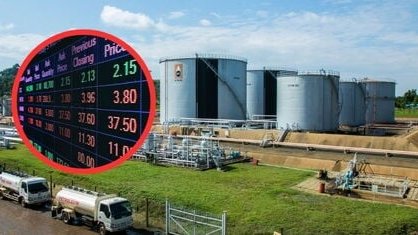

Treasury Cabinet Secretary John Mbadi revealed full results of the Kenya Pipeline Company initial public offer on Wednesday, confirming strong demand that delivered Ksh106.7 billion for the government. Kenyans and local institutional investors took 7.95 billion shares.
Regional neighbours led by Uganda and Rwanda accounted for another 3.8 billion shares out of the total on offer. This gives the East African Community bloc a 21.22 per cent holding once the transaction settles. The government itself will retain a 35 per cent controlling stake.
The offer involved 11,812,644,350 shares priced at Ksh9 each. Applications reached roughly 12.49 billion shares, producing a subscription rate of 105.7 per cent. Officials had to turn away excess bids, including some from Uganda that sought a bigger slice. Mbadi rejected suggestions the pricing was too high and blamed unnamed parties for trying to undermine the process.
Rwanda channelled its purchase through the country’s pension funds. The move comes as Kenya itself has signalled plans to securitise and deploy National Social Security Fund savings in similar diversification strategies.
Foreign investors ended up with a negligible 0.02 per cent. The remaining ownership breaks down among local categories. Local institutional investors received 41 per cent overall, retail investors 2.56 per cent, KPC employees 0.06 per cent and licensed oil marketing companies 0.041 per cent.
Mbadi spoke during the formal results announcement in Nairobi. He noted the offer closed after heavy uptake from both domestic and cross-border participants. The pipeline operator first opened the books on 19 January.
Kenya Pipeline Company operates the country’s core network for moving and storing petroleum products. The system runs from Mombasa port through major depots in Nairobi, Eldoret and beyond, serving both Kenyan demand and transit needs for landlocked neighbours.
The shares will start trading on the Nairobi Securities Exchange on 9 March, marking the fifth new listing on the current board. Proceeds will first land in the Consolidated Fund. From there parliament will appropriate them, including any amounts intended for the proposed National Investment Fund once that vehicle is legally established.
The outcome shows clear appetite for stakes in strategic infrastructure assets across East Africa. Uganda and Rwanda, in particular, have long relied on Kenyan pipeline capacity for reliable fuel imports. Their participation through pension vehicles points to longer-term regional capital flows into such networks.
Mbadi used the occasion to stress that the government had managed oversubscription carefully to maintain balance. No single bloc received more than originally contemplated. The final structure keeps majority Kenyan ownership intact while opening the door wider for EAC cooperation.
Observers will now watch how the new shareholders influence future pipeline maintenance and possible extensions. The listing itself brings KPC into the public market for the first time, subjecting its performance to daily investor scrutiny on the NSE.
Comments (0)
Leave a Comment
No comments yet. Be the first to share your thoughts!