
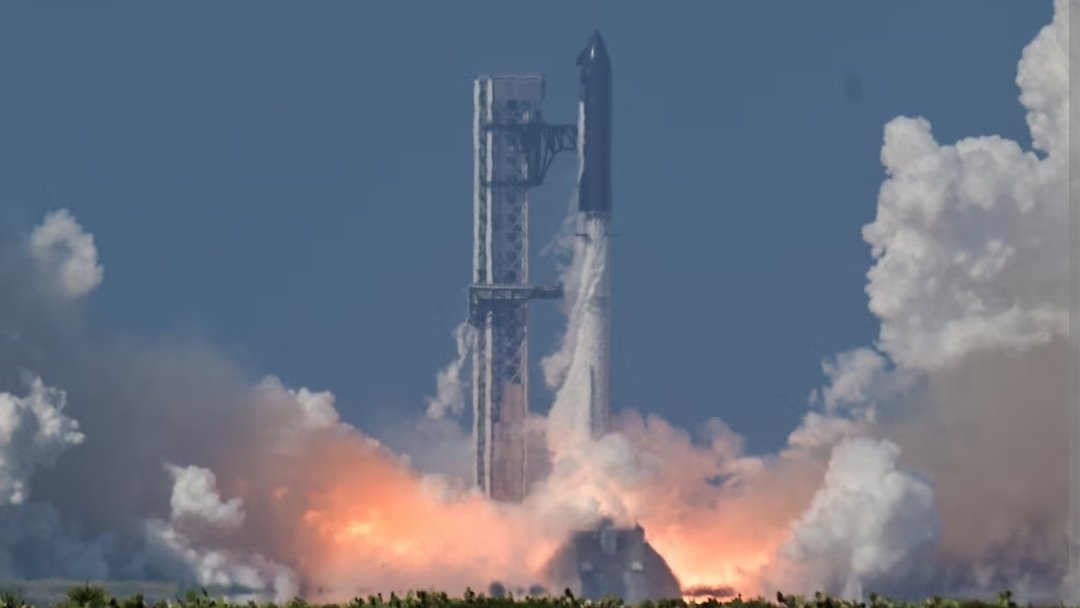

SpaceX launched its upgraded Starship V3 vehicle on Friday from Starbase in Texas for its debut test flight. The uncrewed rocket performed strongly across several major milestones before ending with a controlled splashdown.
The massive vehicle, comprising the Starship upper stage atop the Super Heavy booster, lifted off from the Gulf Coast facility near Brownsville shortly after 5:30 p.m. local time. Its 33 Raptor engines on the booster produced a powerful ignition visible for miles.
Flight controllers confirmed clean stage separation. The upper stage continued into its planned trajectory, successfully released 20 mock Starlink satellites plus two specially modified units for heat shield data, and completed a return burn. It splashed down in the Indian Ocean after roughly one hour.
One of the six engines on the Starship upper stage failed during ascent. Engineers adapted in real time and cancelled a planned in-space engine relight. The Super Heavy booster achieved separation but did not attempt its boost-back burn. SpaceX had already ruled out recovery efforts for this mission.
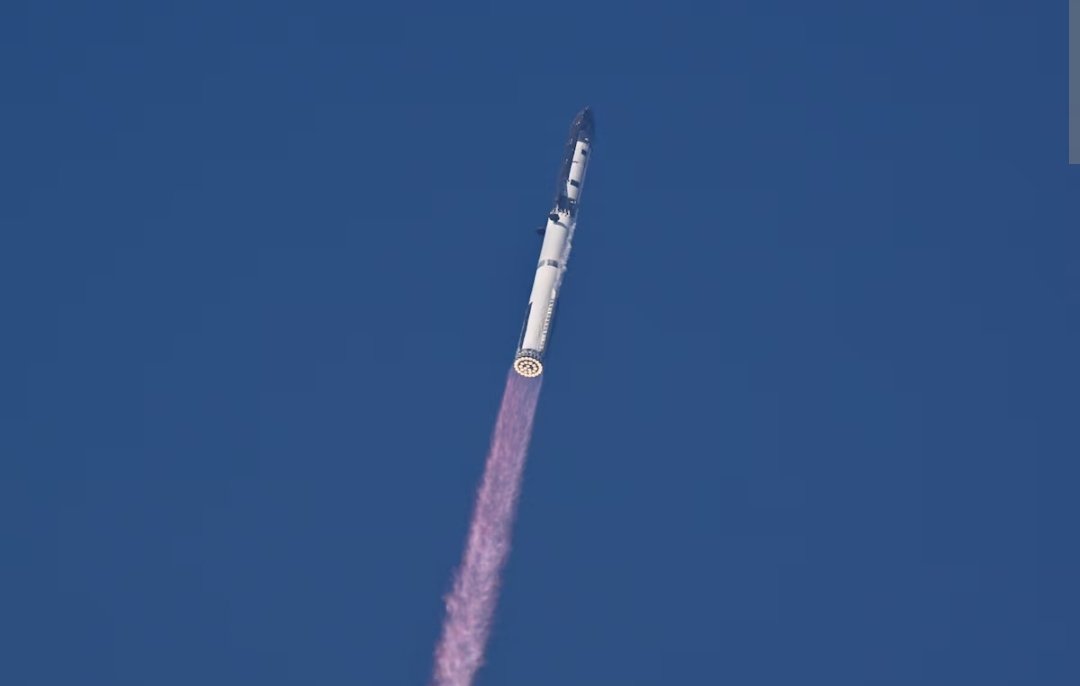
The vehicle in flight /Reuters
The upper stage eventually tipped over in the water and exploded, prompting visible celebration among the ground team watching the live stream.
This largely successful outcome marks meaningful progress for the V3 configuration. The vehicle incorporates engine upgrades for higher performance, structural refinements, and systems aimed at future in-orbit refueling operations. Starship stands over 120 metres tall when fully stacked.
The test forms part of an intensive development campaign. SpaceX has invested heavily in the program, now exceeding $15 billion, with Starbase evolving into a major industrial site complete with production halls, launch infrastructure, and propellant systems.
Timing adds weight to the flight. SpaceX is preparing for an initial public offering expected next month. Strong test results could help shape investor confidence in the company's ability to scale Starlink deployments and support ambitious deep-space goals.
Elon Musk quickly acknowledged the team's work on X following the test. Industry observers called the flight encouraging despite the single engine issue, viewing it as typical for an iterative development process that has seen earlier prototypes end in dramatic explosions.
Starship remains central to NASA's Artemis lunar program. The vehicle is slated to serve as the human landing system for missions targeting 2028, which would require multiple tanker launches to top up propellant in orbit.
From an infrastructure standpoint, Starbase's growth highlights the civil engineering demands of modern rocketry. The site features reinforced launch pads designed for the extreme forces of the world's most powerful operational rocket, along with extensive ground support networks.
Friday's test delivered useful data on ascent performance, payload handling, and re-entry behaviour. While full reusability remains the long-term target, each flight helps close the gap on reliability and cost reduction.
Challenges persist, particularly around consistent booster recovery and flawless mission execution. SpaceX's method relies on rapid testing cycles, learning from each attempt to refine hardware and procedures.
The company continues pushing toward operational capability for both Earth orbit and beyond. This includes plans for larger satellite constellations and eventual crewed missions farther from Earth.
Comments (0)
Leave a Comment
No comments yet. Be the first to share your thoughts!