
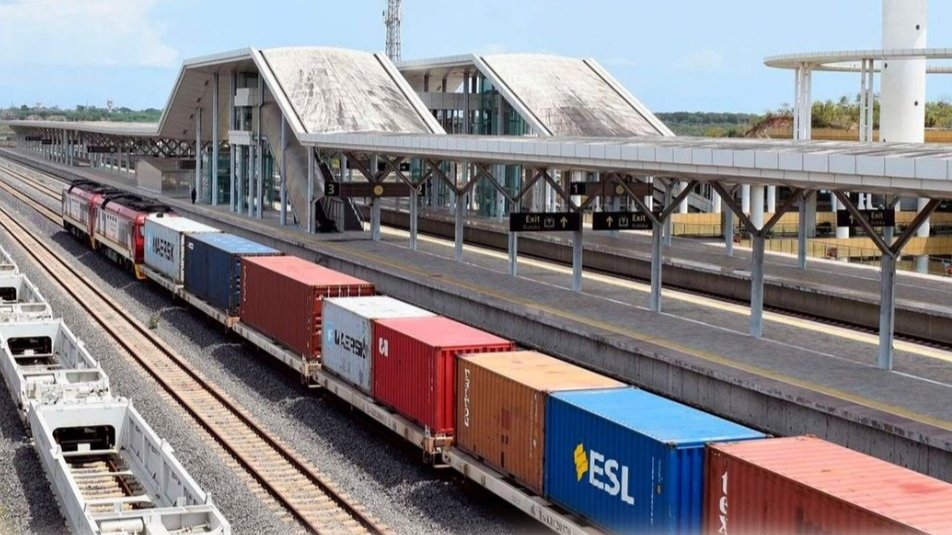

Kenya Railways Corporation is expanding into the courier business with a same-day parcel service already running on the Standard Gauge Railway between Nairobi and Mombasa.
The firm has applied for a national courier licence from the Communications Authority. This would allow it to collect, sort, transport and handle parcels and documents across the country.
Managing Director Philip Mainga said the corporation will use railway stations as collection and distribution points. Customers can pick up consignments directly from the stations.
Kenya Railways does not plan to handle last-mile deliveries itself. Instead it intends to partner with existing courier operators who will collect parcels from stations and complete final deliveries.
The same-day service on the Nairobi-Mombasa corridor is already live. The corporation plans to extend the model to other routes on its network.
This approach gives the state firm a structural advantage on the middle mile. Trains move without the traffic delays, fuel costs, driver expenses and road risks that private operators face daily.
Private couriers and informal networks built around matatus and buses currently dominate the low-cost parcel segment between towns. Many of these players rely entirely on road transport for the long haul.
A shift of volume onto the SGR for the Nairobi-Mombasa leg could squeeze margins for pure road operators. The rail service runs on infrastructure already built and maintained with public funds.
The broader courier market is changing. Domestic parcel traffic fell 6.1 percent to 3.7 million items in the quarter ended March, while letter volumes dropped more sharply. E-commerce is driving demand for parcels even as traditional mail declines.
Kenya Railways is positioning itself to capture part of that growth by focusing on bulk long-distance movement where its network already exists. It avoids the expense of building a nationwide last-mile fleet.
Reactions on social platforms highlight the tension. Some view the move as efficient use of existing infrastructure that could ease road congestion and support e-commerce. Others question whether a loss-making state corporation should compete directly with private innovators who built the industry without subsidies.
Comparisons have been drawn with Posta Kenya, another state player that has struggled to dominate modern logistics. Success will depend on volume. Without high throughput the service may not cover costs.
Last-mile remains the harder part. Getting parcels to and from stations still requires road transport, and many customers prefer door-to-door service. Partnerships with private couriers are therefore central to the model.
Kenya Railways is also expanding its wider network, including reopening routes such as Gilgil-Nyahururu and rehabilitating the Voi-Taveta line. These additions could eventually support courier services beyond the main SGR corridor.
The entry comes as the Communications Authority reviews the postal and courier market. Regulators note that the sector is shifting from letter mail toward parcel and logistics models driven by digital platforms.
For pure road operators the immediate pressure is on the high-volume Nairobi-Mombasa corridor. Lower operating costs on rail create a pricing and reliability edge that is difficult to match with trucks alone.
Whether the model scales profitably and how effectively last-mile partners are integrated will determine the longer-term impact on competition.
Comments (0)
Leave a Comment
No comments yet. Be the first to share your thoughts!