

Site engineers and contractors are increasingly focusing on the chemical and physical stability of fresh concrete mixes to prevent the phenomenon known as bleeding. While often dismissed as a minor side effect of pouring, the upward migration of water can dictate the long-term durability of infrastructure.
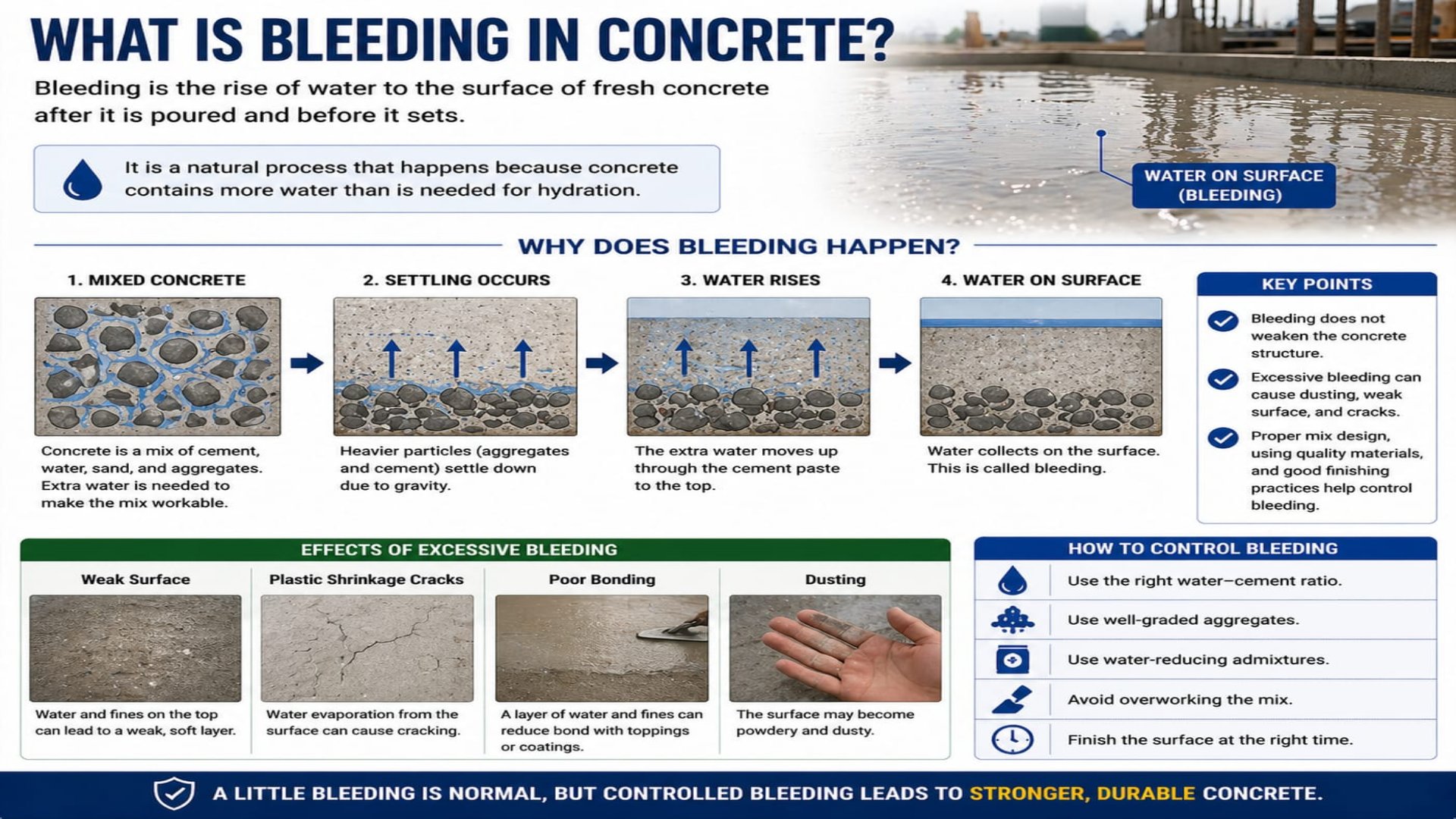
Concrete is essentially a suspension of cement, water, sand, and aggregates. During the period after pouring but before the final set, the heavier solid particles naturally begin to settle due to gravity. This displacement forces excess water, which is less dense, to move upward through the cement paste.
The appearance of a thin layer of water on the surface, sometimes called water gain, is a standard part of the hydration process. However, problems arise when this movement becomes excessive. If the water moves too quickly or in too high a volume, it can create "bleed channels" that leave the concrete porous.
Excessive bleeding often results in a weak top surface known as laitance. This layer is dusty and lacks the compressive strength required for high-traffic floors or structural slabs. If the surface is finished while this water is still present, the moisture can be trapped just below the top layer, causing delamination.
Structural bond strength is also at risk. As water rises, it can become trapped under horizontal reinforcing bars or large pieces of aggregate. This creates internal voids and weakens the grip between the steel and the concrete, which is a significant concern for heavy civil engineering projects in Kenya.
Several factors contribute to this condition. High water-to-cement ratios are the most common culprit, as the mix contains more fluid than is chemically necessary for hydration. Poorly graded aggregates, particularly those lacking in fine sand, also fail to provide the internal surface area needed to hold water in suspension.
To manage these risks, site supervisors are advised to follow strict mix design protocols.
* Use the right water-cement ratio.
* Use well-graded aggregates.
* Use water-reducing admixtures.
* Avoid overworking the mix.
* Finish the surface at the right time.
Environmental conditions also play a role. In hot or windy weather, surface water might evaporate faster than it can be replaced by bleeding, leading to plastic shrinkage cracks. Conversely, if the bleeding is too slow, the finishing team might be tempted to work the surface prematurely, which ruins the slab's wear resistance.
Modern chemical admixtures, such as superplasticizers, allow for workable concrete with much lower water content. These tools, combined with careful aggregate selection, ensure that the water remains locked within the matrix rather than pooling on the surface.
Properly controlled bleeding is not a defect but a sign of a natural settling process. The goal for any reputable contractor is to ensure that the rate of evaporation and the rate of bleeding are balanced, ensuring the final structure is as dense and durable as the design specifications require.
Comments (0)
Leave a Comment
No comments yet. Be the first to share your thoughts!