
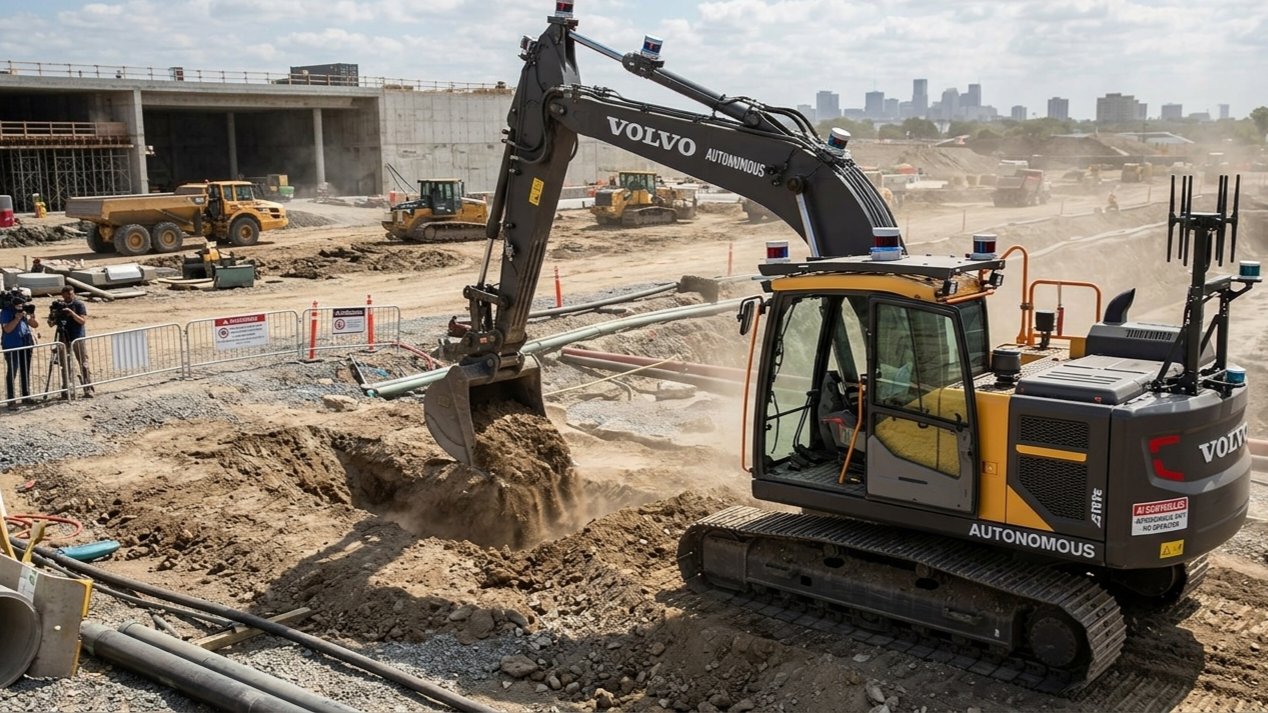

For decades, the construction site has been one of the last workplaces that technology struggled to crack. The environment is too unpredictable, the tasks too varied, the conditions too uncontrolled. Robots worked in factories. People built buildings.
That assumption is breaking down fast.
In 2026, the shift from robotic experimentation to robotic deployment on active construction sites has moved from pilot projects into something that looks increasingly like the new normal. The autonomous construction equipment market is now projected to reach $18.16 billion by the end of this year, growing at an annual rate of over nine percent.
The machines driving that figure are no longer prototypes sitting in trade show booths.
In March 2026, Built Robotics expanded its fleet of AI-driven excavation systems with upgraded machines capable of navigating complex soil types without human intervention. These are not remote-controlled units with a person watching from a screen. They operate autonomously, reading terrain conditions in real time and adjusting accordingly. At the same time, Caterpillar and Komatsu have deployed fully autonomous dozers that use GPS and LiDAR to grade terrain to within a centimetre of digital blueprints.
At CES 2026 in January, Doosan Bobcat unveiled the RogueX3, its third-generation autonomous concept loader. The fully electric machine can operate with or without a cab, switch between wheels and tracks, and be powered by diesel, hybrid, or hydrogen, depending on the application. Bobcat CEO Scott Park said at the launch that these innovations are not concepts for a distant future. They are shaping how work gets done right now.
The changes are not confined to heavy earthmoving equipment.
Rebar installation has long been one of the most physically demanding and injury-prone tasks on any infrastructure site. In 2026, bridge-like robots are being deployed on large-scale projects that crawl over rebar mats, using computer vision to identify intersections and tie them automatically. The technology has reduced injury rates by nearly 40 percent on the sites where it has been introduced. Inside buildings, robots designed for drywall finishing, floor layout and painting are becoming standard on high-density residential projects. These machines print layout lines directly onto concrete slabs from BIM files, cutting the human error that drives costly rework.
Boston Dynamics' Spot robot has become a regular fixture on large sites, performing autonomous inspection walks every night to capture 360-degree imagery and LiDAR scans. The resulting data closes what the industry calls the information gap, the persistent difference between what an architect draws and what actually gets built.
The cost question, historically the biggest barrier to adoption, is also being resolved differently. Buying a $500,000 autonomous excavator is beyond the reach of most small and medium contractors. But a growing number of firms now offer Robotics as a Service, where contractors pay a monthly subscription or a fee per cubic yard of work completed rather than purchasing equipment outright. The model has lowered the entry point significantly and brought automation within reach of firms that would previously have been locked out entirely.
What is happening to construction workers in all of this is a more nuanced story than replacement. The industry faces a structural labour shortage that robots are helping to fill. The tasks being automated are predominantly what practitioners describe as the Three Ds: work that is dull, dirty or dangerous. What is emerging in parallel is a new category of site worker, the robot operator, trained to manage a fleet of automated units from a tablet rather than perform the manual task directly.
For Kenya and much of Africa, where construction labour is relatively affordable, and the technology investment cost remains high, full deployment of autonomous systems on local sites is still some years away. But the direction of travel is set. The equipment being commercialised globally today is what will reach African markets within the decade. Understanding what it does and how it changes the economics of a project is no longer an academic exercise.
Comments (0)
Leave a Comment
No comments yet. Be the first to share your thoughts!