
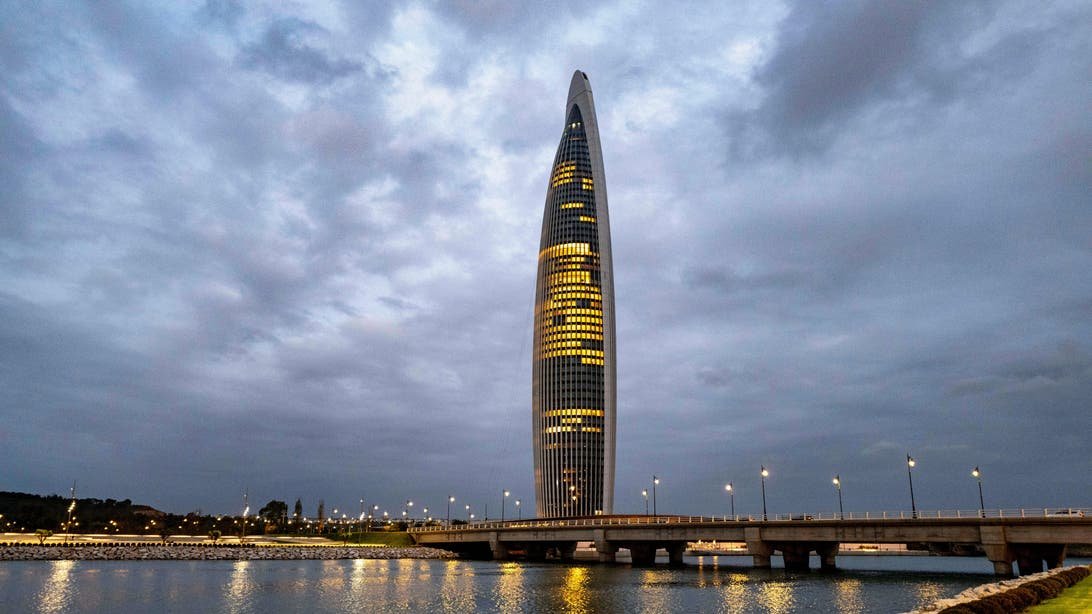

The Moroccan skyline has undergone a permanent shift with the official opening of the Mohammed VI Tower, a $700 million skyscraper situated on the right bank of the Bouregreg River. Rising 250 meters, the structure now stands as the tallest building in Morocco and the second tallest on the African continent, trailing only the Iconic Tower in Egypt.
Inaugurated by Crown Prince Moulay El Hassan, the project is the centerpiece of the Rabat City of Light program. This initiative seeks to modernize the urban fabric of the twin cities of Rabat and Salé while drawing international attention to the region's cultural and economic potential.
The 55-story tower was designed by Moroccan architect Hakim Benjelloun in collaboration with the Spanish firm Rafael de La Hoz. The aesthetic of the building, which tapers as it rises, was inspired by the form of a rocket on its launchpad. This design choice reflects the futuristic vision of Othmane Benjelloun, the 93-year-old billionaire and chairman of O Capital Group which financed the project through the Bank of Africa.
Construction of the landmark took eight years to complete and required a workforce of more than 2,500 people from over a dozen countries. The building has already achieved significant symbolic status in the country, with its silhouette appearing on Morocco’s 200-dirham banknote before the official opening ceremony took place.
Internally, the mixed-use complex covers approximately 102,800 square meters. It houses a luxury Waldorf Astoria hotel, high-end residential apartments, premium office spaces, and retail outlets. A panoramic observatory is located at the top, offering views across Rabat, Salé, and the Atlantic coastline.
Engineering the tower required specialized solutions to address its proximity to the river. The foundations extend 60 meters deep to ensure stability against seismic activity and potential flooding. To manage wind loads at its peak height, the structure utilizes harmonic dampers.
Sustainability was a priority for the developers, leading to LEED Gold and HQE certifications. The tower’s south facade integrates 3,350 square meters of solar panels, and the building uses rainwater harvesting and internal energy-recovery systems to provide hot water to occupants.
The project list of features includes:
* 55 floors rising to a total height of 250 meters.
* A four-level podium serving as the base for commercial activity.
* 36 elevators to facilitate movement across the residential, hotel, and office sectors.
* Low-carbon cement usage to reduce the environmental footprint of the concrete work.
The inauguration comes as Morocco continues a broader push to upgrade its infrastructure ahead of co-hosting the 2030 FIFA World Cup. While the tower has faced some criticism for its impact on the historic landscape near UNESCO heritage sites, its backers view it as a necessary symbol of Morocco’s growing influence in the Middle East and Africa.
The surrounding area in the Bouregreg Valley is also slated for further development, with new green spaces planned to connect the tower with other nearby landmarks, including the Zaha Hadid-designed Grand Théâtre de Rabat.
Comments (0)
Leave a Comment
No comments yet. Be the first to share your thoughts!