

A version of this article appeared on China Daily.
The recent inscription of 13 buildings and complexes designed by Finnish architect Alvar Aalto and his collaborators on the UNESCO World Heritage List has reignited interest in a body of work that helped redefine modern architecture. Recognised collectively as the "Aalto Works", the sites highlight an architectural philosophy that placed human experience at the centre of design.
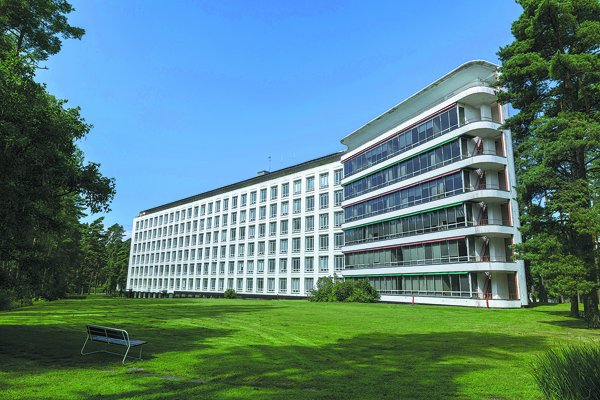
Among the most notable projects is Paimio Sanatorium in southwestern Finland, completed in 1933. Originally built for tuberculosis patients, the facility demonstrates Aalto's attention to both practical and emotional aspects of architecture. Long patient wings were positioned to maximise sunlight, while outdoor terraces provided spaces where patients could spend time in fresh air.
The building's design extended far beyond its overall layout. Washbasins were shaped to reduce the sound of running water, while leather-covered door handles were intended to feel warm to the touch and prevent clothing from catching. These details reflected Aalto's belief that architecture should support the wellbeing of the people who use it.
According to Panu Savolainen, professor of architectural history and conservation at Aalto University, Aalto's work offered a different interpretation of modernism at a time when the movement was spreading rapidly across Europe. Modernist architecture provided efficient responses to urban growth and housing shortages, but its emphasis on function often produced buildings that many viewed as impersonal.
Aalto embraced modernism's practical principles while seeking ways to make buildings feel more connected to everyday human needs. Savolainen describes Paimio Sanatorium as a turning point in that approach, noting that the project explored how architecture could contribute to physical comfort and emotional wellbeing long before such ideas became common in healthcare design.
His work later applied similar principles to housing and industrial communities. At the Sunila Housing Area in Kotka, residential buildings were arranged to follow the natural terrain while making use of sunlight, fresh air and surrounding views. Rather than imposing architecture on the landscape, the development sought to work with it.
The relationship between buildings and nature became one of the defining characteristics of Aalto's architecture. Villa Mairea in western Finland is frequently cited as an example. The house was designed to preserve much of the existing woodland, with an understated structure that appears integrated into the forest setting rather than separated from it.
While Aalto adopted elements associated with international modernism, including concrete, glass and clean lines, he also incorporated timber, brick, stone and curved forms. These materials and shapes helped his buildings respond to Finland's climate, landscape and construction traditions.
Savolainen argues that this balance demonstrated how architecture could participate in global design movements without losing a sense of local identity. The result was a style that was modern while remaining closely tied to its surroundings.
The influence of Aalto's work extends well beyond Finland. Yang Xinyi, head of Finnish language studies at Beijing Foreign Studies University, says many people have encountered elements of his design philosophy through products and interiors commonly associated with Nordic design, even if they are unfamiliar with his name.
Yang also points to similarities between Aalto's respect for nature and longstanding Chinese ideas that emphasise harmony between people and their environment. In her view, these parallels illustrate how different cultures can arrive at similar understandings of the relationship between human life, architecture and the natural world.
More than four decades after his death, Aalto's work continues to inform conversations about architecture, sustainability and human-centred design. The UNESCO recognition has brought renewed attention to a legacy that remains relevant as architects seek to create buildings that are both functional and responsive to the people who inhabit them.
Comments (0)
Leave a Comment
No comments yet. Be the first to share your thoughts!