
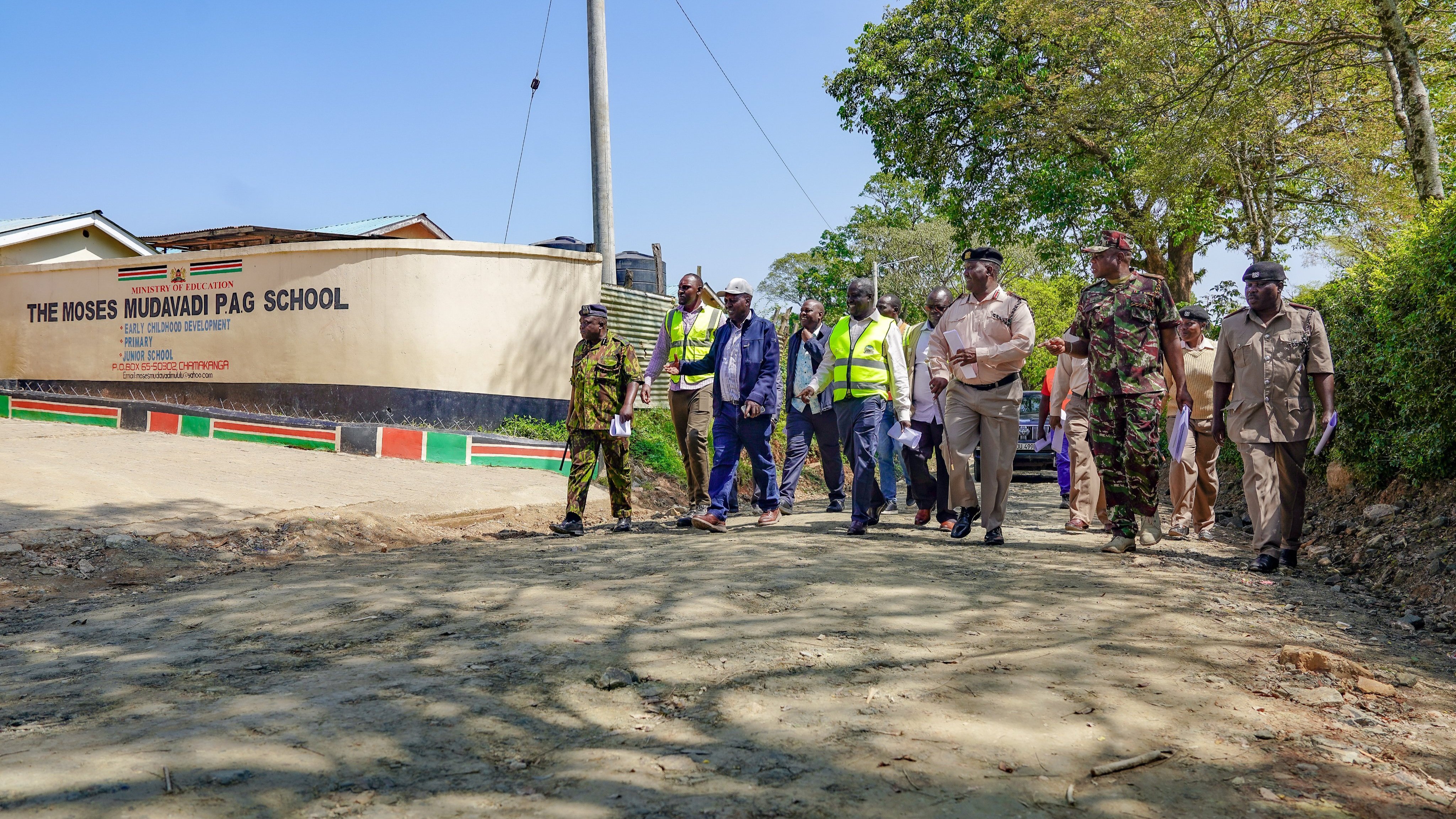

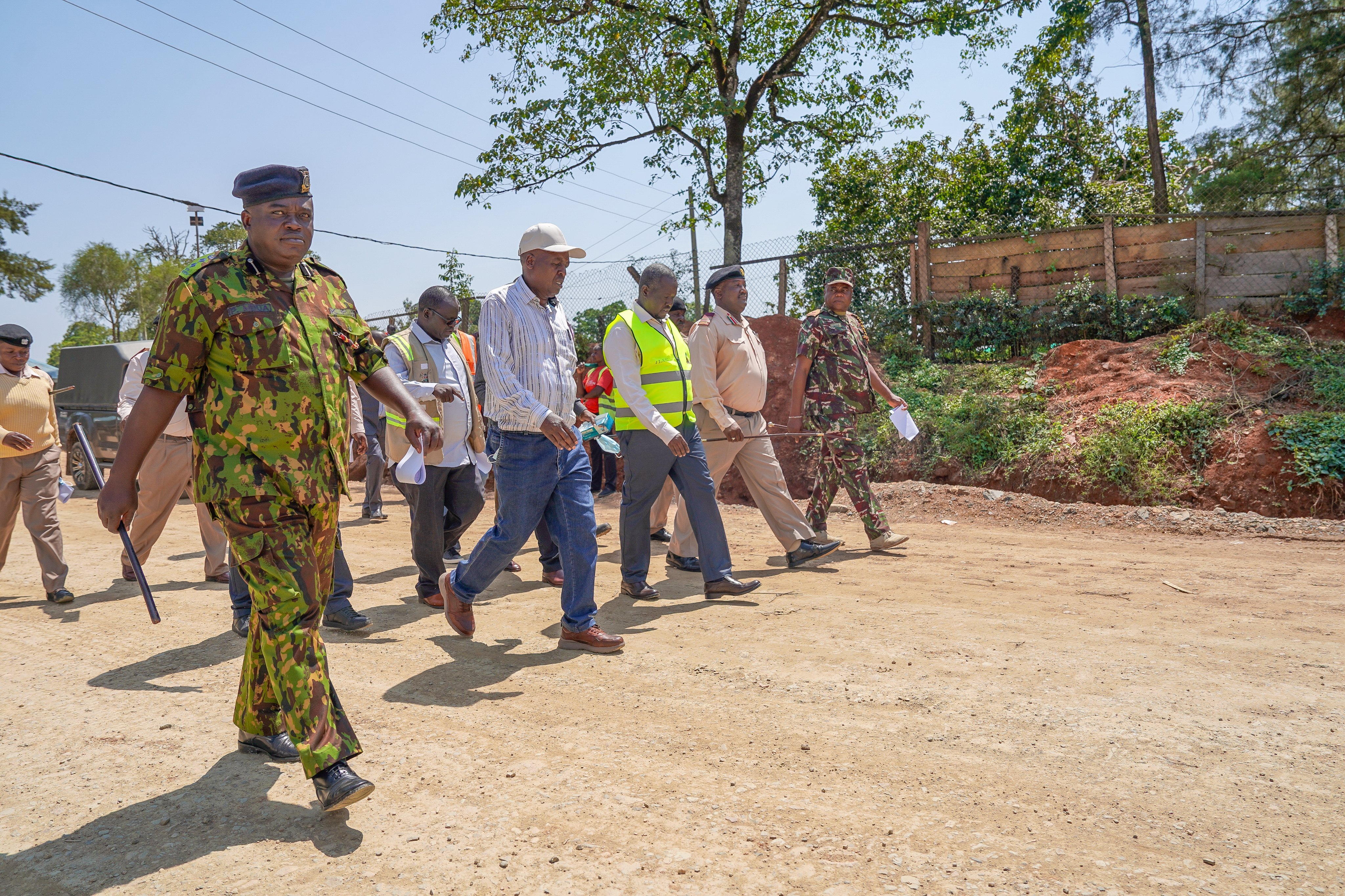
Principal Secretary (PS) for the State Department for Roads, Eng. Joseph Mbugua, inspected civil works along key rural transport arteries in Western Kenya. The physical site visit focused on evaluating execution standards across selected road links in Vihiga County.
The field inspection targeted the Mago–Mululu section, designated as route E240, alongside the adjoining Lusui–Vokoli corridor, classified as route E293. Senior ministry engineers accompanied the delegation, inspecting active earthworks, drainage installations, and sub-base preparations along the active alignment.
Government officials confirmed that the site assessment aimed to verify compliance with technical engineering specifications. Engineers from the Kenya Rural Roads Authority (KeRRA) joined the delegation, as they monitored contractor output and enforced quality assurance protocols on site.
Improving regional access routes remains a focal point under national infrastructure frameworks supported by President Ruto. Upgrading local corridors from gravel surfaces to bitumen standards reduces overall vehicle operating costs, but it also improves market access for agricultural communities in Western Kenya.
The Mago–Mululu and Lusui–Vokoli links serve critical farming zones in Sabatia and Vihiga constituencies. Transport operators have previously faced severe transit delays during heavy rainy seasons, when unpaved surfaces experienced severe washouts and deep mud accumulation.
During the field tour, resident engineers presented detailed technical updates detailing completed sub-grade formation and upcoming asphalt laying schedules. Construction teams were instructed to accelerate operations, although they must preserve structural integrity and proper road geometry.
Contractors received firm instructions to maintain strict adherence to project completion schedules and environmental management plans. Ministry officials noted that timely delivery of the infrastructural link will ease connectivity between rural trading centers, healthcare facilities, and local educational institutions.
Site supervisors confirmed that drainage structures, including concrete box culverts and lined side drains, are being prioritized to prevent future sub-grade erosion. Adequate drainage design forms a vital element, because it prolongs the operational lifespan of low-volume sealed roads.
The inspecting team reviewed heavy machinery deployment, compaction levels, and material testing reports submitted by quality control technicians on location. Ministry representatives reaffirmed that regular physical audits will continue across all regional road contracts.
Local residents and smallholder farmers along the corridor expect improved transport reliability once bituminization works are fully concluded. Seamless road connectivity is anticipated to stimulate commercial activities, while lowering transit times to neighboring urban marketplaces.
The national government continues to allocate infrastructure funding toward low-volume sealed road initiatives across rural counties. Ministry oversight visits aim to enforce financial and technical accountability, while ensuring that public expenditure yields durable infrastructure.
Engineers reiterated that routine monitoring visits will persist until final project commissioning occurs. Continuous state supervision ensures contractors meet all strict design parameters set out in national road construction manuals.
Eng. Mbugua emphasized that high construction standards must be maintained across all active sites without exception. The ministry plans further nationwide inspection tours, which will evaluate progress across secondary and tertiary road network investments.
Proper road infrastructure remains essential for driving socio-economic development across agricultural regions. Field assessments ensure public investments translate into long-term benefits for local communities.
The State Department for Roads maintains that strict quality benchmarks will dictate final contract approvals across Vihiga County. Continued monitoring guarantees that completed works meet expectations set for national road upgrade programs.
Comments (0)
Leave a Comment
No comments yet. Be the first to share your thoughts!