
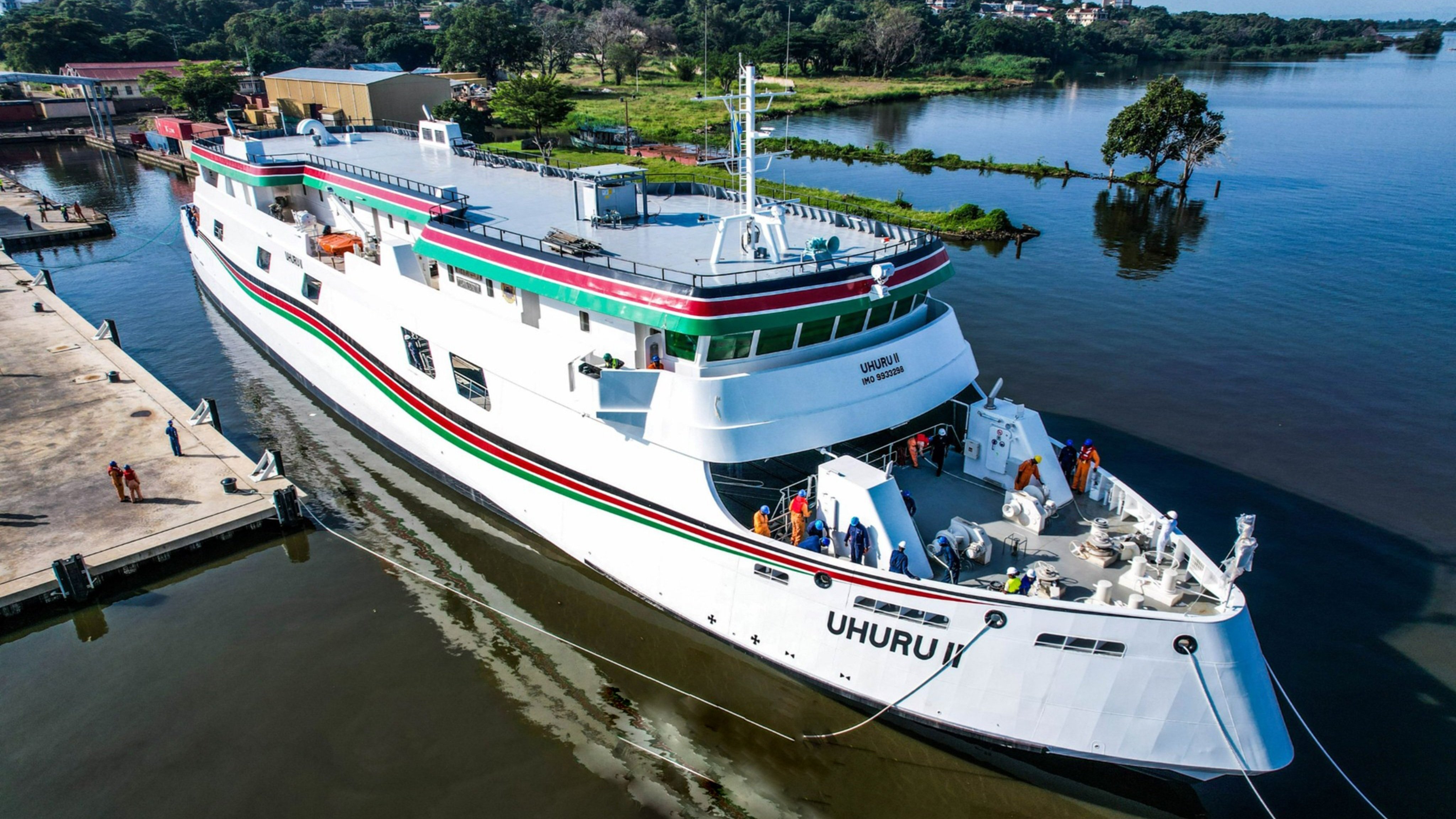

Regular sailings by MV Uhuru I and MV Uhuru II across Lake Victoria continue to anchor bulk cargo movement between Kenya, Uganda, and Tanzania, according to operational updates from Kenya Railways Corporation (KRC).
The two vessels are maintaining scheduled trips from Kisumu Port to key regional discharge points including Port Bell and Mwanza Port.
Cargo manifests confirm the ships handle a wide array of essential commodities, including steel, cement, fertilizer, grain, sugar, and petroleum products.
Each single voyage delivers up to 1,500 tonnes of freight, offering a direct, high-capacity alternative to long-haul road transport along the Northern Corridor.
Maritime transport across the freshwater body relies heavily on wagon ferry infrastructure designed to link inland water routes directly with national rail networks.
The original vessel, MV Uhuru I, was rehabilitated by KRC in partnership with the Kenya Defence Forces (KDF) and returned to commercial service in 2019 following extended dormancy. That vessel measures 91 metres in length and possesses a cargo carrying capacity of roughly 1,260 tonnes.
To meet rising regional freight demand, Kenya Shipyards Limited (KSL) constructed MV Uhuru II at the Kisumu Shipyard. Commissioned by President William Ruto, the 100-metre vessel represents a Sh2.4 billion investment designed to expand local marine engineering capacity.
The newer ship offers an 1,800-tonne deadweight capacity, accommodating up to 22 rail wagons or two million litres of bulk liquid cargo per transit.
Together, both vessels provide approximately 1,800 square metres of usable deck space for heavy industrial goods and containerized freight. KRC officials note that operating the twin-vessel fleet allows for predictable sailing schedules, with ships conducting multiple round trips weekly to support cross-border trade flows.
Logistics planners emphasize that lake transport significantly reduces turnaround times for heavy freight moving between Mombasa and landlinked markets.
Oetroleum products pumped via the Kenya Pipeline Company (KPC) infrastructure to Kisumu are loaded onto the vessels for onward shipment to Uganda, eliminating highway congestion and transit delays.
The operational integration of marine haulage with the Meter Gauge Railway (MGR) network provides continuous transport links from the Port of Mombasa through the Naivasha Inland Container Depot (ICD) to inland ports across Lake Victoria.
Strategic investments in Kisumu Port have positioned the facility as a central marine hub for the East African Community (EAC).
As cargo volumes grow across the regional bloc, KRC plans to maintain regular vessel maintenance schedules to prevent operational downtime.
The continued deployment of both vessels remains central to Kenya's broader strategy of lowering cross-border logistics costs and improving regional supply chain resilience.
Comments (0)
Leave a Comment
No comments yet. Be the first to share your thoughts!