
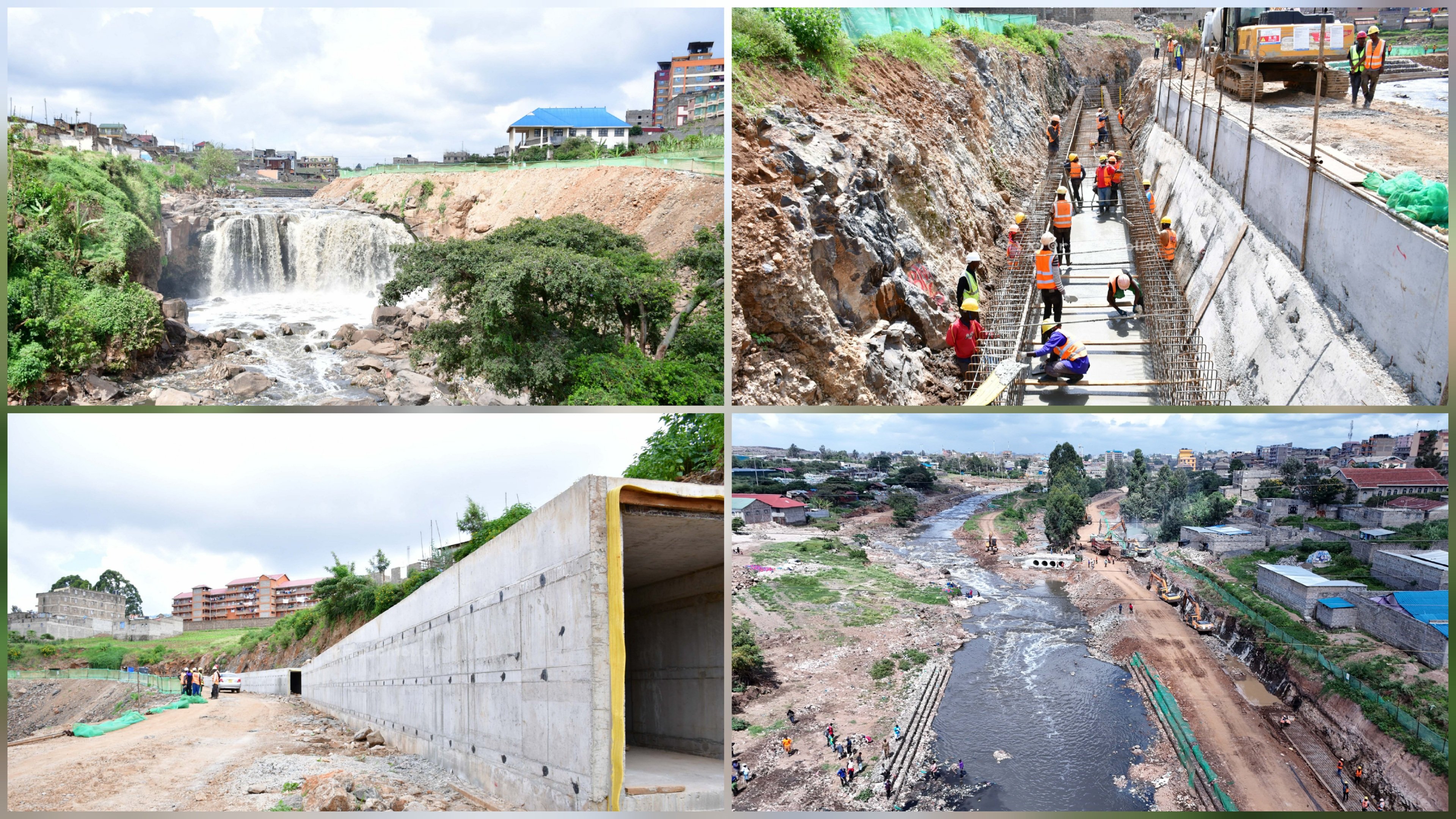

The Government has launched a major overhaul of Nairobi's sanitation infrastructure, citing the failure of the existing sewer network to keep pace with the capital's rapid urban expansion. Dr. Raymond Omollo, the Principal Secretary for Internal Security and National Administration, confirmed that the current system was constructed in 1970 and has long exceeded its design capacity.
The aging infrastructure has left many residents with few options for waste disposal, often leading to the discharge of raw sewage directly into the Nairobi River. This ongoing environmental crisis has exposed downstream communities to severe health risks and necessitated a modern engineering intervention to stabilize the city's sanitation.
At the center of the Nairobi River Regeneration Programme is the construction of twin trunk sewer lines. These lines will stretch approximately 28 kilometres along both banks of the river corridor. The design ensures that wastewater is intercepted before it can reach the water table, protecting the river’s ecosystem from further degradation.
The new system is engineered to run across several key sections of the city. Starting from Naivasha Road, the network will pass through Museum Hill, Dagoretti, and Chiromo via Kirichwa Kubwa. The lines will then extend onward to Dandora Falls, creating a comprehensive loop that captures waste from some of the city’s most densely populated areas.
Once the project reaches completion, the infrastructure will have the capacity to handle up to 310 million litres of wastewater every day. This capacity is expected to significantly ease the pressure on existing pipes that have been prone to bursts and blockages. Areas set to benefit from the new connection include Westlands, Lavington, Kangemi, Kawangware, and Kikuyu.
This infrastructure work is being coordinated alongside the Climate WorX initiative. While the engineering teams focus on the trunk lines, Climate WorX is managing the reclamation of riparian land and the restoration of the river’s ecosystem. This includes an extensive tree planting exercise intended to stabilize the banks and improve the local micro-climate.
The project is also serving as a significant source of local employment during its construction phase. Current data indicate that over 1,000 workers are engaged on-site, with several thousand additional youth involved in sanitation and environmental restoration through the broader regeneration program. The administration has framed the project as a demonstration of how climate-focused infrastructure can be aligned with job creation.
The State Department for Internal Security and National Administration is overseeing the coordination of the various agencies involved. Their role includes safeguarding public order at construction sites and ensuring that the reclamation of land along the river corridor proceeds without administrative delays. This whole-of-government approach is intended to ensure the new sewer lines remain secure and functional for the long term.