
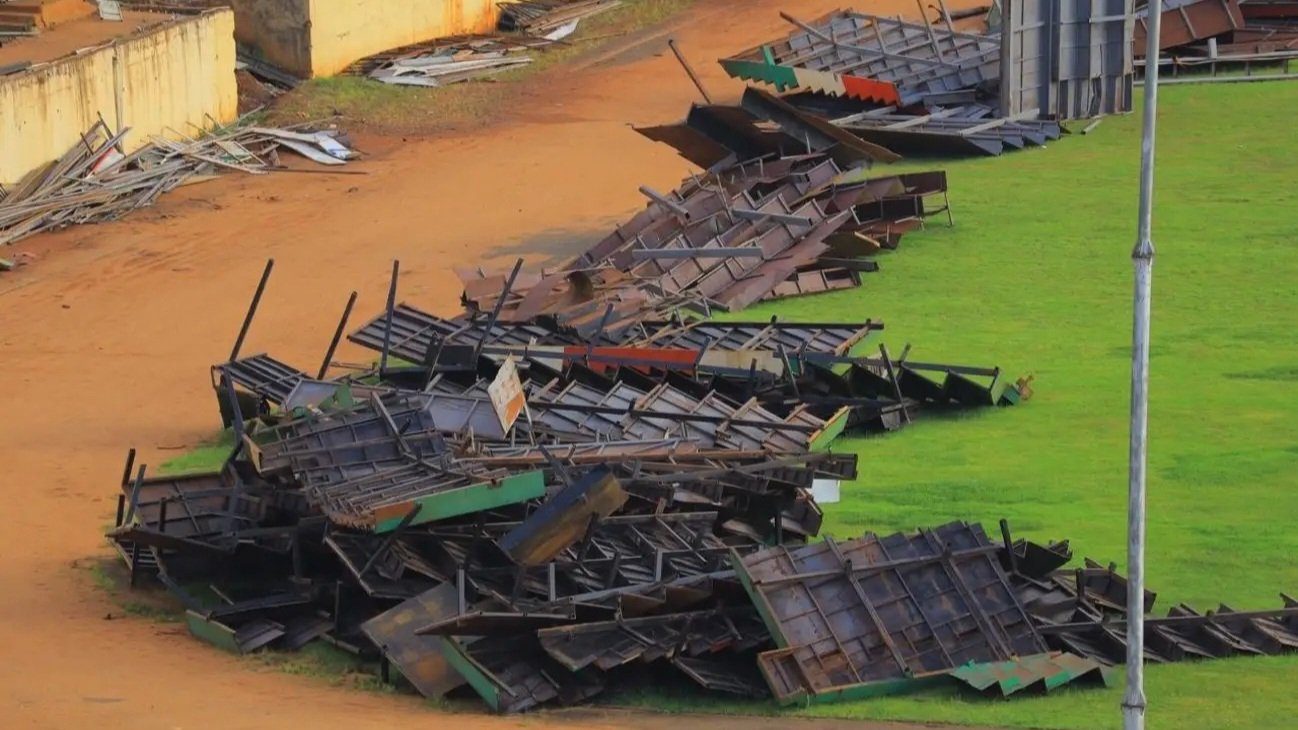

Demolition work has concluded at Gusii Stadium in Kisii County, clearing the path for a comprehensive infrastructure modernization project. The development requires an investment of KSh1 billion, which will convert the old grounds into an international sports venue.
The initiative targets a complete replacement of the old structure, with engineers planning a modern 14,000-seat facility. According to project schedules, contractors must finish all primary structural works by April 2027, when the venue will reopen for matches.
President William Ruto, who initially launched the project during a regional development tour, confirmed that the funding will provide modern amenities. The upgrade features an expanded football pitch built to Federation Internationale de Football Association (FIFA) standards, which will host premier league games.
In addition to the football pitch, construction crews will install a standard eight-lane running track for athletics. The old running surface had degraded over years of heavy use, which prevented the region from holding certified regional track events.
Kisii County Governor Simba Arati inspected the site, noting that the new arena will directly support local academic curricula. Specifically, students pursuing the Competency-Based Education (CBE) pathway in Sports Science will use the grounds for practical training.
Governor Arati explained that young people can gain hands-on experience in sports management, coaching, and physical therapy, although they must wait for structural completion. He urged youths to explore these professions, which offer viable employment avenues.
Local sports organisations have welcomed the long-awaited upgrade, citing the severe challenges previously faced by regional teams. Shabana Football Club (FC) Secretary General Elizaphan Kerama stated that the facility will give local athletes access to high-quality training pitches.
Kerama noted that modern infrastructure provides a level playing field, which helps Kenyan Premier League (KPL) clubs compete nationally. The upgraded venue will also ease the process of scouting and signing fresh talent within the western region.
The displacement of teams during construction has necessitated logistical adjustments, but the government has provided interim financial support. President Ruto pledged KSh20 million to Shabana FC, which will assist the club in securing alternative match venues.
The club also received a new team bus from the national government, which will ease transport logistics for away matches. These interventions ensure that local football operations continue smoothly, although the club cannot use its traditional home turf.
To accommodate the expanded footprint of the 14,000-seat stadium, planners had to negotiate for additional land. The national government reached an agreement with the Agricultural Society of Kenya (ASK) to facilitate the relocation of their nearby showgrounds.
This land acquisition resolved space constraints that had previously limited expansion plans, since the original stadium boundaries were too confined. The extra acreage allows for proper covered terraces and a modern VIP pavilion, which meet international hosting rules.
The project forms part of a broader national sports infrastructure program aimed at delivering twenty-five new facilities across Kenya. Government officials emphasize that improving these local arenas helps young athletes turn sports into sustainable livelihoods, which boosts regional economies.
National investments in Kisii extend beyond sports infrastructure, as visible in a report by the Kenya Broadcasting Corporation (KBC). The state plans to renovate the nearby Suneka airport, which will receive KSh400 million to adjust its existing runway.
The runway adjustments will allow the airstrip to handle larger aircraft, which complements operations at Kisumu International Airport. It will also alleviate logistical pressure on smaller facilities, such as Kabunde Airstrip in Homa Bay County.
Furthermore, the state will relocate the Kisii GK Prisons from the town centre, which frees up valuable public land. The cleared urban space is earmarked for affordable housing units, which will address local residential deficits.
Comments (0)
Leave a Comment
No comments yet. Be the first to share your thoughts!