
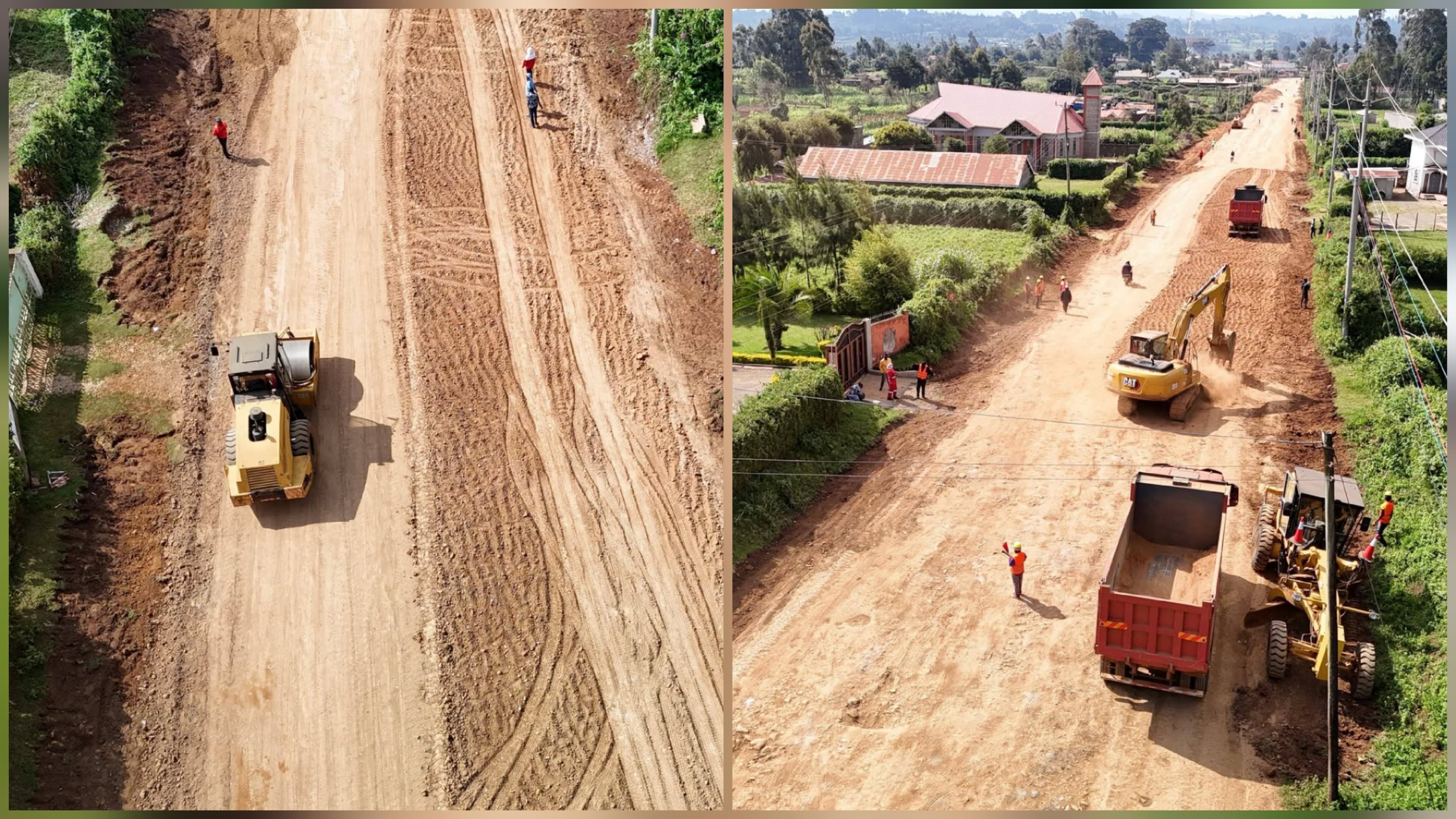

The State Department for Roads (SDR) has confirmed that civil works on the Nyambari-Shauri-Githunguri road network are moving ahead. Earthworks and compaction are actively shaping the corridor, which is transitioning from an unpaved rural route into a fully engineered highway.
According to updates released by infrastructure authorities on June 17, 2026, engineering teams are focused on upgrading the stretch to standard asphaltic concrete. The intervention targets a critical transport artery within Lari and Githunguri sub-counties, where poor transit infrastructure historically hampered local mobility.
Progress on-site indicates a systematic execution of sub-base preparation and drainage installation. Heavy machinery, including soil compactors and crawler excavators, has been deployed across the active construction zones, which clear the way for subsequent bituminous layers.
The infrastructure project holds strategic importance for the agricultural zone within Kiambu County. Local dairy, tea, and horticultural farmers have frequently faced logistical challenges, particularly during heavy rainy seasons, when unpaved surfaces regularly deteriorated into impassable mud.
With the upgrade moving toward highway bitumen standards, transport reliability between the farming hubs and major commercial markets is expected to change. The corridor offers a vital alternative link connecting secondary agricultural collection points directly to national trading hubs.
The current administration under President Ruto has emphasized the completion of critical arterial roads to support rural productivity. This specific network serves as a geographical bridge, which links inner production areas with broader national economic distribution systems.
Photographic documentation from the site, captured in the file 257204.png, shows earthworks progressing through trading centers and rural farmlands. Work crews are executing grading operations alongside existing structures, while maintaining essential safety barriers for local traffic.
The Kenya National Highways Authority (KeNHA) and partner road agencies have maintained oversight on the technical specifications of the network. Engineers are enforcing strict quality control measures to ensure that the completed pavement handles the heavy axle loads associated with agricultural transport.
For years, public transport operators and local agricultural cooperatives have lobbied for permanent pavement solutions along this route. Vehicle maintenance costs had escalated due to the rough terrain, but the ongoing surfacing works provide a clear timeline toward relief.
Contractors are taking advantage of favorable weather conditions to expedite the foundational layers. Standard operational protocols are being observed across the alignment, with detours established to minimize disruptions for local residents and commercial operators.
As the base stabilization phase concludes, the deployment of asphalt pavers will signal the final stages of the primary carriageway construction. Ancillary works, including road markings, road signs, and pedestrian footpaths through built-up areas, will follow the main paving sequence.
The completed network will ultimately streamline connectivity across the central region, which reduces travel times significantly. By providing a durable, all-weather highway, the ministry aims to resolve decades of transit bottlenecks that have restricted regional trade.
Comments (0)
Leave a Comment
No comments yet. Be the first to share your thoughts!