
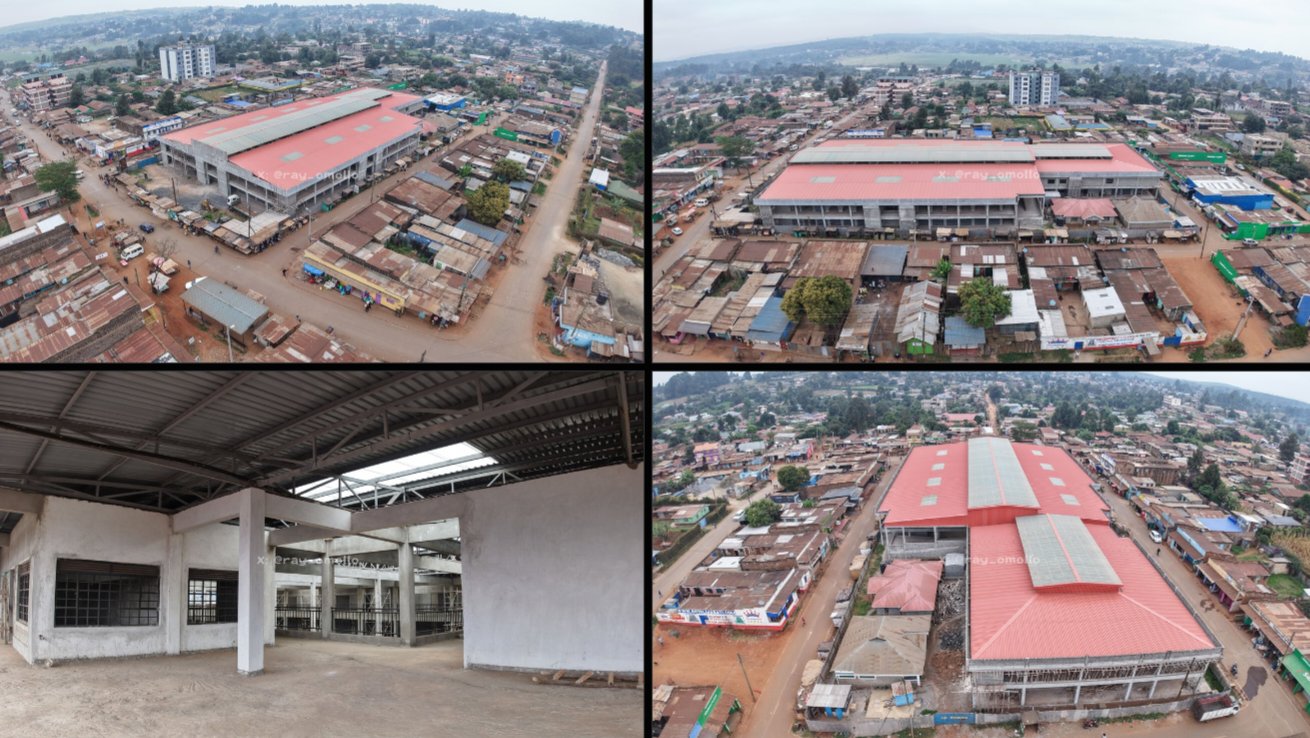

The government has advanced construction of the new Gikambura Modern Market in Kiambu County. Interior Principal Secretary (PS) Raymond Omollo highlighted the development during a recent site assessment, where technical teams reviewed structural progress.
The facility provides structural space for local vendors operating along busy transport corridors. Builders have completed the main roofing structure, which covers two main floors of commercial stalls.
Civil works include dedicated drainage lines, paved access walkways, and security lighting. Engineers designed the site layout to handle peak foot traffic, which surges during morning trading hours.
Traders currently operate in temporary open-air stalls along the roadside, where severe weather frequently disrupts daily sales. The covered complex protects small businesses from heavy rain, but construction crews must complete utility installations first.
The State Department for Housing and Urban Development (SDHUD) oversees physical planning for the market facility. Regional supervisors inspect structural concrete pours, while contractors finalize electrical conduits across upper floors.
Local leaders emphasize that structured retail spaces resolve urban congestion around market towns. Moving informal vendors inside a designated venue improves safety, although traffic management plans require further refinement.
Water reticulation systems, overhead tanks, and sanitation blocks are undergoing installation this week. Plumbers are fitting high-capacity storage units, which will supply clean water across all vendor stalls daily.
Waste management infrastructure forms a critical component of the structural plan. Masons have built reinforced collection points, which allow municipal trucks to collect refuse without blocking entrance gates.
The National Government Constituencies Development Fund (NGCDF) partnered with national agencies to secure funding allocations. Local administration officers maintain that predictable funding schedules keep construction on schedule, when materials arrive on site promptly.
Contractors are using locally sourced steel trusses and iron sheets to frame the roof canopy. Heavy machinery operators have completed floor slab compacting, which provides a stable foundation for ground-floor retail counters.
Commercial banks and microfinance institutions plan to establish service desks nearby. Financial service providers view concentrated retail nodes as prime locations, who seek to offer digital payment services to market traders.
Safety inspectors recently verified the installation of fire suppression equipment throughout the main halls. Technicians placed emergency exits near major walkways, where clear signage guides pedestrians toward open grounds.
The project reflects ongoing national investments in modern public markets across rural and peri-urban locations. Government initiatives under President Ruto prioritize retail infrastructure, which creates organized spaces for agricultural produce distribution.
Fresh produce vendors will occupy the lower floor to facilitate efficient loading and unloading of goods. Wholesalers arrive during early morning hours, when supply trucks deliver fresh farm harvests directly from surrounding agricultural zones.
Dry goods sellers, clothing retailers, and service providers will occupy the upper levels. Spatial allocation plans ensure balanced customer traffic across all floors, if management committees enforce zoning guidelines consistently.
Site managers report that structural steel assembly reached full completion earlier this month. Masonry teams are now applying wall finishes, while electrician crews lay main power cables along main corridors.
Kiambu County residents anticipate improved trading conditions once construction teams clear remaining exterior debris. Surrounding shop owners express optimism, because organized market operations reduce litter along primary access roads.
The project execution highlights technical collaboration between national administration officers and local contractors. Site supervisors maintain daily activity logs, which ensure compliance with structural engineering standards before final handover.
Comments (0)
Leave a Comment
No comments yet. Be the first to share your thoughts!