
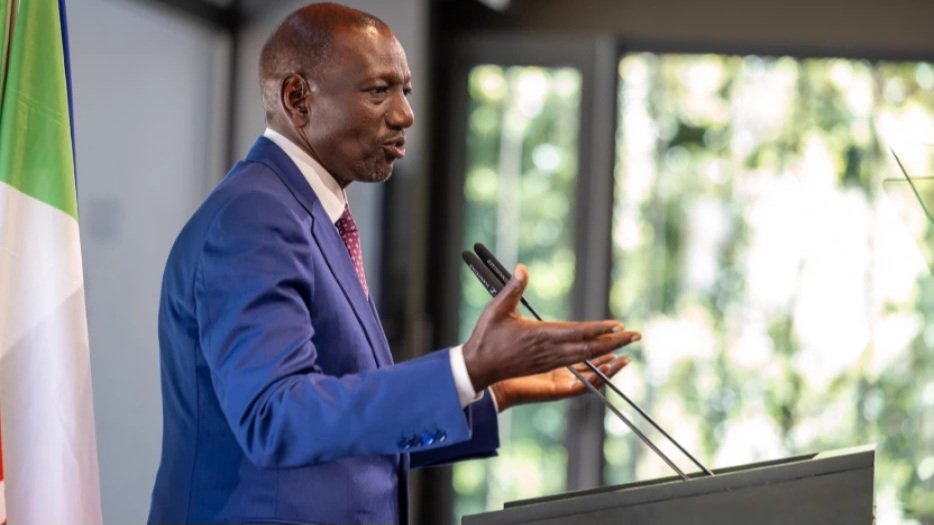

President William Ruto outlined details regarding the Nairobi Metropolitan Mass Rapid Transport (NMMRT) system during a public address on July 31, 2026. The government initiative focuses on resolving severe road congestion across the capital city and nearby urban areas.
Urban gridlock remains a persistent challenge for daily commuters traveling into the capital. Heavy vehicular volume frequently stalls commerce along major arterial corridors during peak operating hours.
The proposed infrastructure design incorporates a 30-kilometer underground railway line. This subterranean route is intended to establish direct connectivity between densely populated residential neighborhoods in Eastlands and the Central Business District (CBD).
According to President Ruto, the transit layout includes 25 distinct passenger stations situated along the corridor. The subterranean alignment allows high-capacity trains to move underneath existing surface streets without disrupting current road traffic.
Subterranean transit networks are designed to offer predictable transit times for passengers. By bypassing conventional surface intersections, underground passenger rail avoids delays linked to traffic signals, accidents, and highway bottlenecks.
The Eastlands area houses a significant percentage of the workforce in Nairobi. Thousands of residents travel from these eastern suburbs every morning, which places immense strain on available public minibus routes and major access highways.
Transport planners have long sought ways to increase urban transit capacity without acquiring expensive surface land. Developing underground rail corridors provides an alternative path, although civil engineering requirements for tunneling remain substantial.
Constructing 25 stations requires extensive excavation, structural reinforcement, and specialized tunneling machinery. Project engineers must also navigate underground utility lines, water tables, and varying geological formations across the urban footprint.
Integrating rail stops within the Central Business District (CBD) will require carefully planned access points. Passenger terminals need subterranean platforms, automated ticketing systems, and pedestrian connections to transfer smoothly to local surface transport.
The state maintains that expanding commuter rail options forms a crucial component of long-term urban planning. Moving large populations efficiently remains vital for supporting economic activity throughout the wider metropolitan territory.
Further technical assessments and financial frameworks for the transit proposal continue to undergo review. Government agencies have emphasized that civil works must align with broader environmental and urban development standards.
If fully realized, the commuter line will significantly alter how commuters navigate the capital every day. Officials maintain that high-volume rapid transit provides the necessary capacity to absorb future population growth across the region.
The announcement reflects ongoing policy discussions regarding public infrastructure funding in Kenya. State planners continue to evaluate various capital financing models to support large civil engineering projects across the country.
Stakeholders within the transport sector are awaiting further details on project procurement schedules. Detailed engineering surveys will dictate the exact alignment, station placements, and construction timelines for the underground transit line.
Comments (0)
Leave a Comment
No comments yet. Be the first to share your thoughts!