
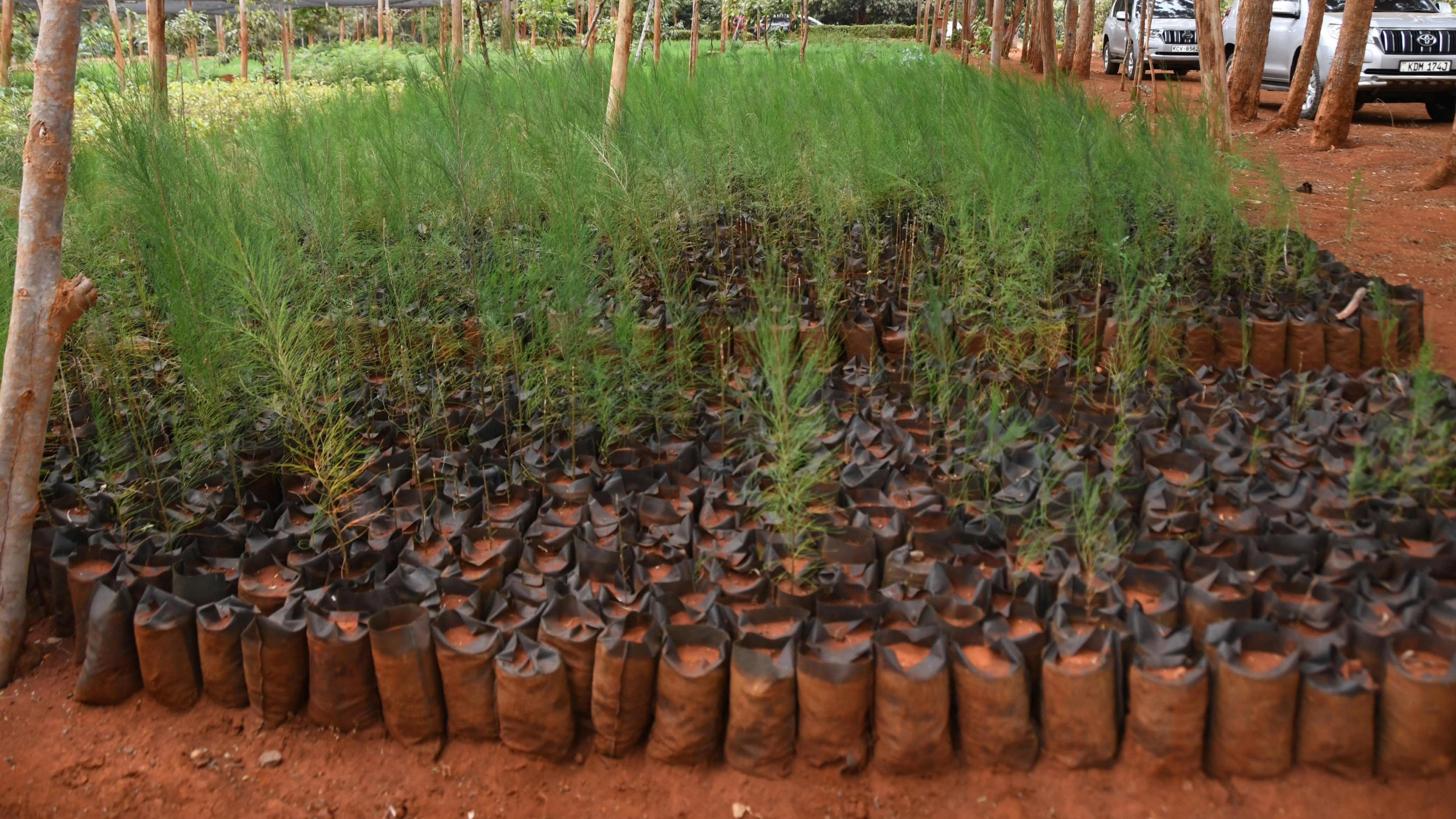

State Department for Irrigation Principal Secretary Ephantus Kimotho Kimani inspected the ongoing implementation of the Sh73 million Ruiru Prison Farm Irrigation Project in Kiambu County. The initiative represents a joint partnership between the State Department for Irrigation and the Kenya Prisons Service.
Infrastructure development on the site focuses on placing 100 acres under coffee cultivation across Blocks A, B, and C. An additional area covering over 20 acres is assigned for horticultural production to supply prison facilities across Nairobi, which reduces dependence on external food suppliers.
The project also features a large-scale tree nursery designed with a production capacity of approximately 18 million seedlings annually. Production from the facility carries an estimated value exceeding Sh75 million and directly supports the government's 15 Billion Tree Growing Programme.
Civil and water engineering components completed so far include intake desilting works, drilling of two boreholes, installation of two hybrid water pumping units, and construction of water storage facilities.
Contractors are currently completing the in-field distribution network and sprinkler systems, which have reached 80 percent completion. Remaining installation works focus on fitting sprinklers in two final blocks and extending the piping infrastructure into the Greening Kenya section.
Beyond direct agricultural production, the project delivers practical agribusiness and irrigation training to more than 300 inmates. The training aims to provide transferable skills suitable for employment or commercial farming after their release.
Principal Secretary Kimani noted during the site visit that the facility demonstrates how public land can be leveraged using modern irrigation infrastructure. Resident Engineer Agnes Agong and Director of Prison Farms Patrick Kariri hosted the inspection delegation.
Once fully operational, the coffee enterprise alone is projected to generate over Sh20 million in revenue. Overall, the project scope anticipates reaching more than 10,000 direct and indirect beneficiaries across the surrounding region.
The contract is structured for completion within less than one year. It serves as a benchmark model for future inter-agency collaborations involving public land development.
Comments (0)
Leave a Comment
No comments yet. Be the first to share your thoughts!