
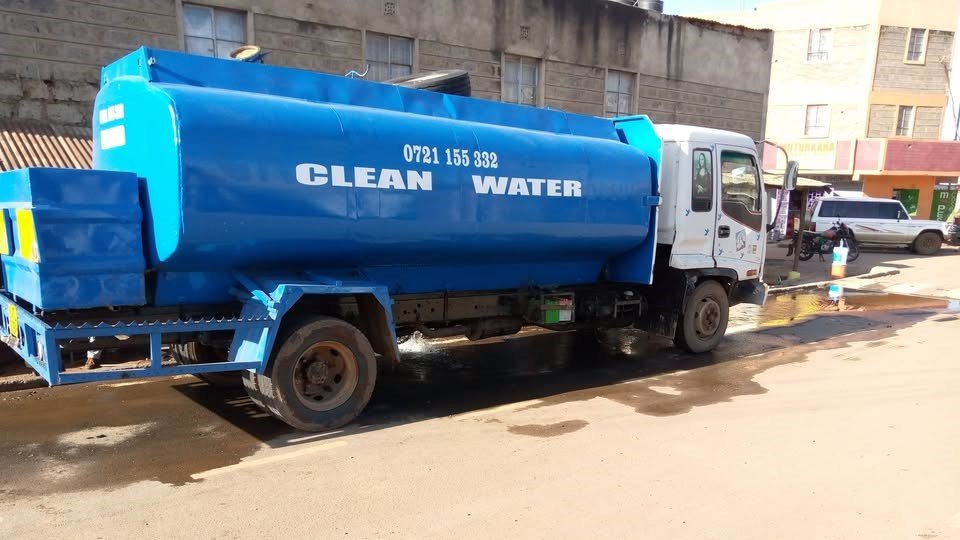

More than five million people in Nairobi County who get their water from the Nairobi Water and Sewerage Company now face higher monthly bills. The utility has announced a tariff adjustment of between 15 and 30 per cent, effective immediately.
A household that has been paying about Sh500 for 10,000 litres will move to roughly Sh748 for the same volume. That extra Sh248 hits at a time when many families already juggle tight budgets and high living expenses. Informal settlements feel the change hardest, where cartels often dictate the price of every drop.
Acting managing director Martin Nang’ole linked the rise directly to climbing expenses. Costs for treating water, running sewerage systems, buying electricity, sourcing pipe materials and carrying out routine fixes have all jumped since the last review in 2023. Without extra revenue, the company says it cannot maintain service levels or push ahead with upgrades.
The money will support a newly launched five-year strategic plan. Its goals include lifting overall supply, cutting losses across the network and extending sewerage coverage to more parts of the city. Nang’ole described the plan as essential for keeping pace with fast-rising demand.
Work on the ground will involve laying 180 kilometres of fresh water pipelines and constructing 100 kilometres of new sewer lines. Residents in informal settlements will receive a simplified sewer connection designed to fit their neighbourhoods.
“Implementation of the strategic plan will see the capital city’s five million residents get a safe and reliable water supply, and higher sewerage system coverage even in the face of rapid growth in demand,” Nang’ole said.
Many parts of Nairobi already draw extra water from the Northern Collector Tunnel. The 11.8-kilometre project, funded by the French Development Agency at Sh8.5 billion back in 2015, is now operating and adds 140 million litres a day to the system. Residents, however, say they have yet to feel the full benefit in their taps.
Governor Johnson Sakaja highlighted recent gains during his state of the county address. He pointed to new pipelines in Lang’ata that have brought more frequent supply and ended years of interruptions in several wards.
The county has also reached an agreement with the national government to improve overall service. Under the deal, the national side takes charge of bulk water provision and major sewer improvements, while the county focuses on distributing water to homes and businesses.
Nang’ole insisted every extra shilling from the tariff rise will go toward infrastructure and reducing losses. He warned that without the adjustment, essential upgrades would stall and service reliability would suffer.
The company first applied to the regulator before announcing the change. Once the new structure is locked in, both water and sewerage charges will reflect the higher rates.
Nairobi’s water network has come under growing strain as the city expands. Older pipes leak, treatment works operate near capacity, and demand keeps climbing with new housing and commercial projects. The planned pipeline and sewer construction directly targets these gaps.
In high-density neighbourhoods, pressure on the system is most acute. The combination of higher bills and promised better supply leaves residents watching closely to see whether the investment delivers quicker and more consistent flow from their taps.
Comments (0)
Leave a Comment
No comments yet. Be the first to share your thoughts!