
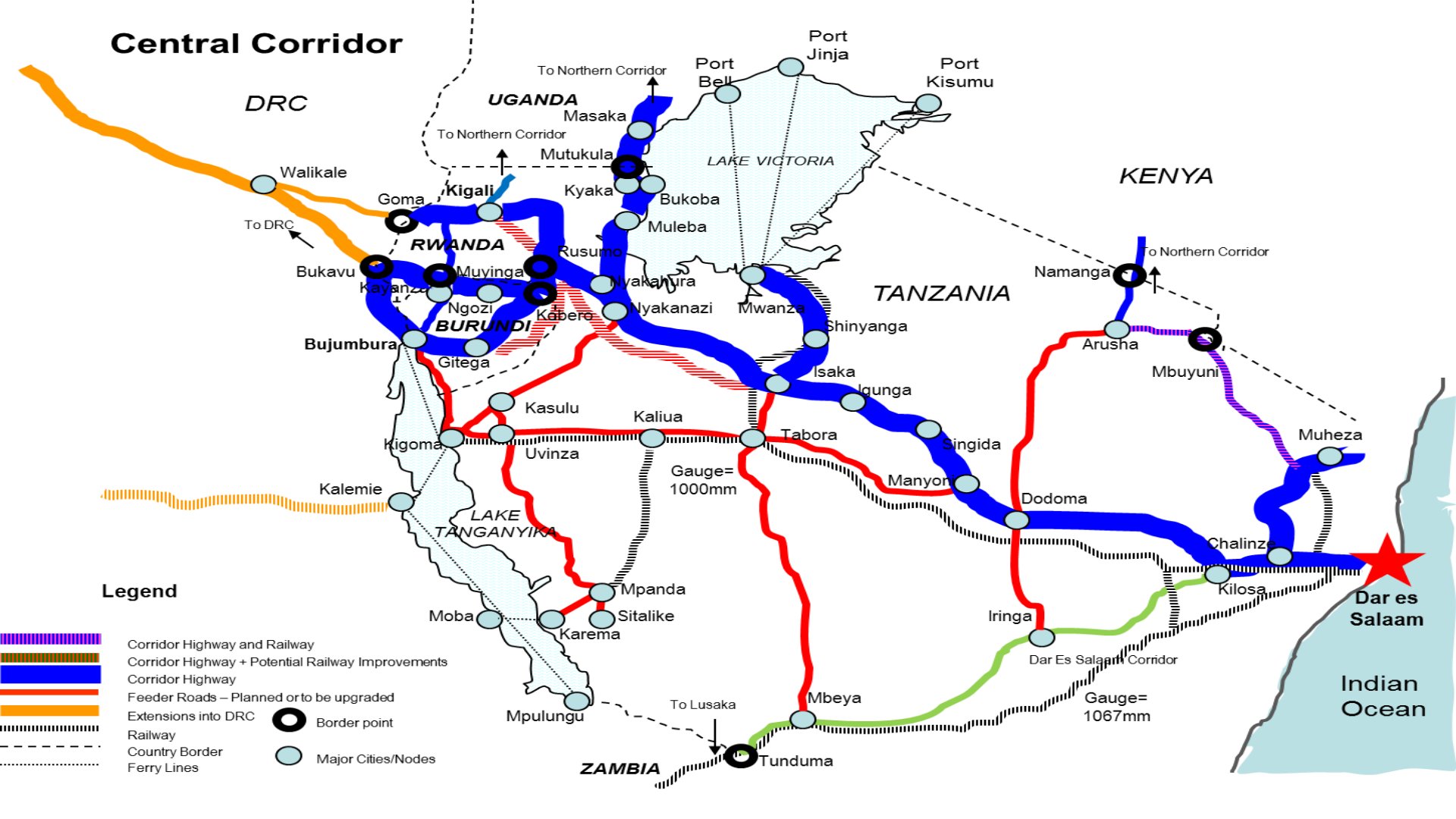

Tanzania and the Democratic Republic of Congo (DRC) are holding talks regarding the potential completion of the Central Corridor infrastructure network by 2030. The extensive regional initiative requires investments reaching up to $14.2 billion, with Kinshasa actively evaluating direct financial involvement in the project.
The regional transport network encompasses a 2,190-kilometer Standard Gauge Railway (SGR) alongside a 1,300-kilometer highway system. Once fully executed, the combined infrastructure will establish direct transport connections between Tanzania and the Democratic Republic of Congo (DRC), Uganda, Rwanda, Burundi, and Zambia.
Negotiations remain centered on co-financing options and construction timetables required to realize the multi-state regional corridor. Officials from both governments are currently reviewing alignment options, funding structures, and logistical operational frameworks needed to mobilize the required $14.2 billion capital outlay.
The transport infrastructure network spans several key trade transit points across Central and East Africa. Strategic sections of the corridor are designed to integrate maritime access from Dar es Salaam with landlocked regional trading partners across East and Central Africa.
Kinshasa is currently assessing investment terms to support construction schedules across key cross-border links. Bilateral working groups continue to address cross-border transit logistics, capital allocation strategies, and technical specifications for both rail and road components.
The broader network configuration relies on cross-border infrastructure links to streamline commercial transit across the region. The operational blueprint involves coordinated rail lines, highway networks, and border facility infrastructure to support regional freight movement.
Financing talks involve evaluating public capital contributions alongside potential private sector participation models. Governments along the route continue to refine individual national commitments to align with the overall target date.
Detailed project components for the corridor include:
* 2,190 km Standard Gauge Railway (SGR) network
* 1,300 km highway infrastructure network
* Direct linkages connecting Tanzania, DRC, Uganda, Rwanda, Burundi, and Zambia
Technical committees continue to meet to refine engineering frameworks, cost-sharing protocols, and legal frameworks governing regional transit. Discussions are ongoing as participating states seek to finalize financing structures ahead of target construction deadlines.
Comments (0)
Leave a Comment
No comments yet. Be the first to share your thoughts!