

An overview of global infrastructure rankings highlights how structural design demands continue to push the boundaries of modern civil engineering. Across international waterways, these massive crossings serve as essential transport links while defining regional mega-infrastructure portfolios.
The structural ranking of a suspension bridge relies primarily on the length of its central span. This specific measurement represents the unsupported distance stretching between the two main vertical towers, which dictates the overall engineering complexity of the project.
According to current structural data published by Autocar, the top tier of international bridge engineering features an elite group of twentieth and twenty-first century structures. These megastructures are situated across key marine transit corridors in Europe and Asia.
Holding the absolute record for the longest central span is the 1915 Çanakkale Bridge in Turkey. Spanning the Dardanelles Strait, the structural marvel features a record-breaking central span of 2,023 meters, making it a critical asset in the cross-continental transport grid.
Prior to the completion of the Turkish crossing, Japan held the top position for more than two decades with the Akashi Kaikyo Bridge. Opened to traffic in 1998, the crossing spans the Akashi Strait with a central measurement of 1,991 meters.
The global landscape shows a heavy concentration of these mega-structures within Chinese river systems and coastal regions. Rapid structural deployment over the last decade has positioned multiple Chinese projects at the top of international engineering tables.
Among these notable structures is the Yangsigang Yangtze River Bridge located in Wuhan. Featuring a central span of 1,700 meters, this double-deck structure carries intensive urban traffic loads and represents a major accomplishment for the China Railway Major Bridge Engineering Group (MBEC).
Further down the Yangtze River corridor sits the Nansha Bridge system in Guangdong. The east span of this multi-bridge crossing measures 1,688 meters, serving as a critical freight pipeline within the heavily industrialized Pearl River Delta region.
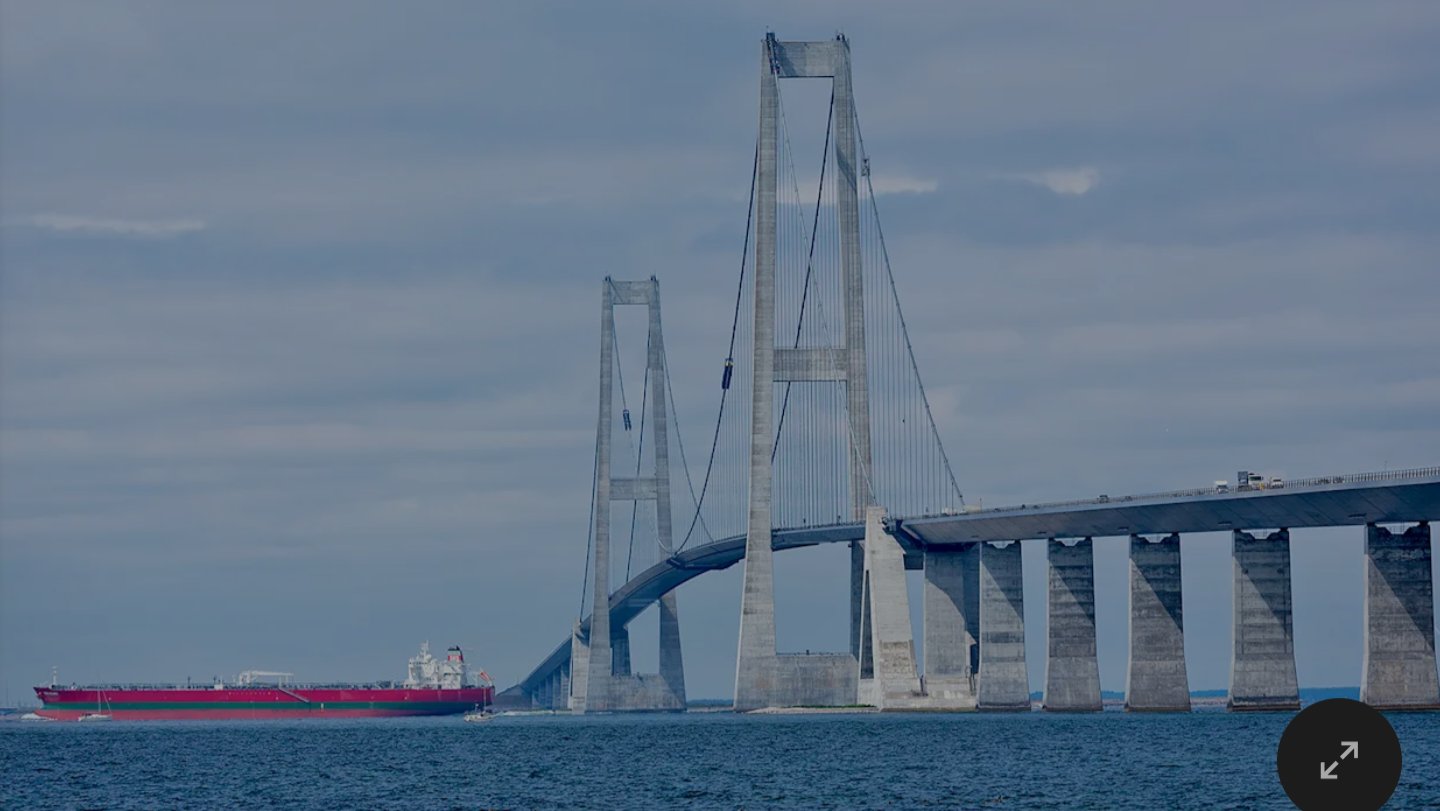
Europe also retains high-ranking historical structures within the global top ten. The Great Belt Bridge in Denmark, completed in 1998, features a main span of 1,624 meters and connects the Danish islands of Zealand and Funen across the international shipping lane.
Engineers face unique structural risks during the construction of these immense spans. Aerodynamic stability remains a primary concern, as massive wind forces exert substantial lateral pressure on the long decks, requiring advanced computer-aided design systems during early drafting phases.
Deep-water foundations present another severe challenge during maritime deployment. Towers must anchor firmly into deep seabed soils, often requiring massive steel caissons that are towed out to sea and sunk under precise geometric controls.
The massive scale of these projects demands substantial capital allocations and complex multi-year timelines. Governments often rely on public-private partnerships to distribute financial risks associated with material procurement and specialized deep-water labor.
As traffic volumes escalate, international engineering consortiums are investigating advanced composite materials to reduce total superstructure weight. These innovations ensure that future infrastructure projects can safely surpass current span limitations.
Comments (0)
Leave a Comment
No comments yet. Be the first to share your thoughts!