

A version of this article appeared on Mechvox.
Industrial butterfly valves remain a staple in modern fluid management, yet their mechanical longevity depends heavily on precise engineering standards and routine maintenance. These quarter-turn valves facilitate the isolation or regulation of flow using a rotating disc, making them indispensable for large-scale infrastructure and industrial piping.
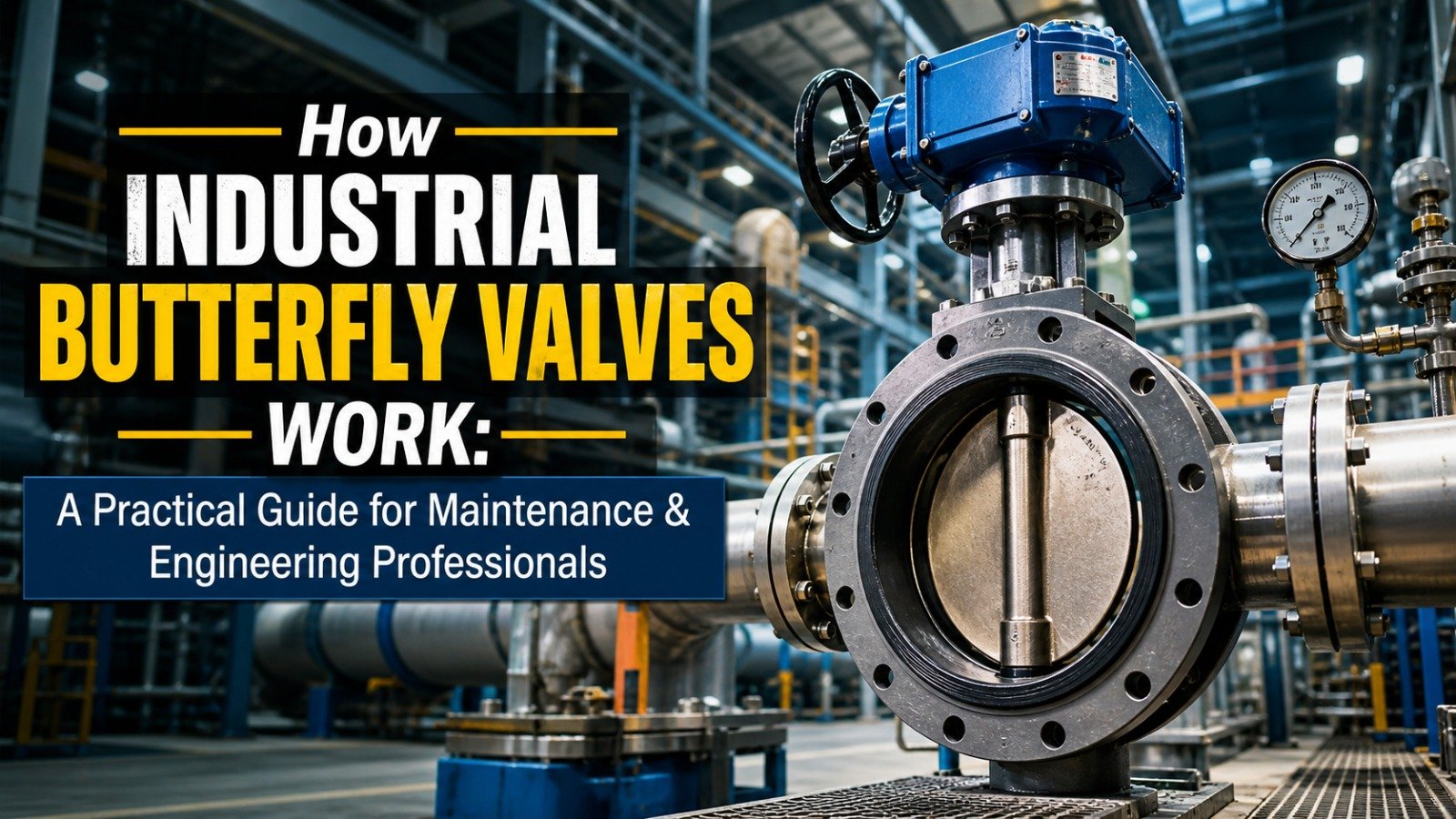
The core functionality of the valve relies on a disc positioned in the center of the pipe. A rod passes through the disc to an actuator on the outside. Rotating the actuator turns the disc either parallel or perpendicular to the flow.
When the disc is parallel, the valve is fully open, allowing for maximum fluid passage. A ninety-degree turn brings the disc perpendicular to the flow, effectively sealing the pipe. This simple but effective mechanism is what characterizes the butterfly valve as a quarter-turn component.
Maintenance professionals emphasize that the seat is one of the most critical components. Typically made from elastomeric materials or metal in high-performance models, the seat provides the necessary seal between the disc edge and the valve body. If the seat degrades, the valve loses its ability to shut off flow completely.
Regular inspections are necessary to identify wear on the seat and the stem. The stem is the shaft that transmits motion from the handle or actuator to the disc. In many heavy-duty applications, a triple-offset design is used to minimize friction, as the disc only contacts the seat at the final point of closure.
Environmental factors can also impact performance. Engineers recommend checking for corrosion on the body, especially in systems handling slurries or abrasive chemicals. Debris trapped in the pipeline can score the disc or damage the seat during operation, leading to leaks.
For manual systems, a simple lever or handwheel is used. However, larger industrial applications often require gear operators or automated actuators. These can be pneumatic, electric, or hydraulic, depending on the speed and torque requirements of the specific infrastructure project.
Lubrication of the moving parts, specifically the stem and gear housing, prevents seizing. Experts suggest that valves kept in a static position for long periods should be cycled periodically. This prevents the buildup of deposits that could interfere with the valve’s movement when an emergency shutdown is required.
Proper installation is equally vital. Aligning the valve correctly between flanges ensures that the disc does not strike the pipe walls during its rotation. If the valve is not centered, it can lead to immediate mechanical failure or significant damage to the internal disc edges.
As industrial systems become more complex, the demand for high-performance butterfly valves continues to grow. Adhering to these engineering and maintenance fundamentals ensures that these critical components remain functional throughout their intended service life.
Comments (0)
Leave a Comment
No comments yet. Be the first to share your thoughts!