
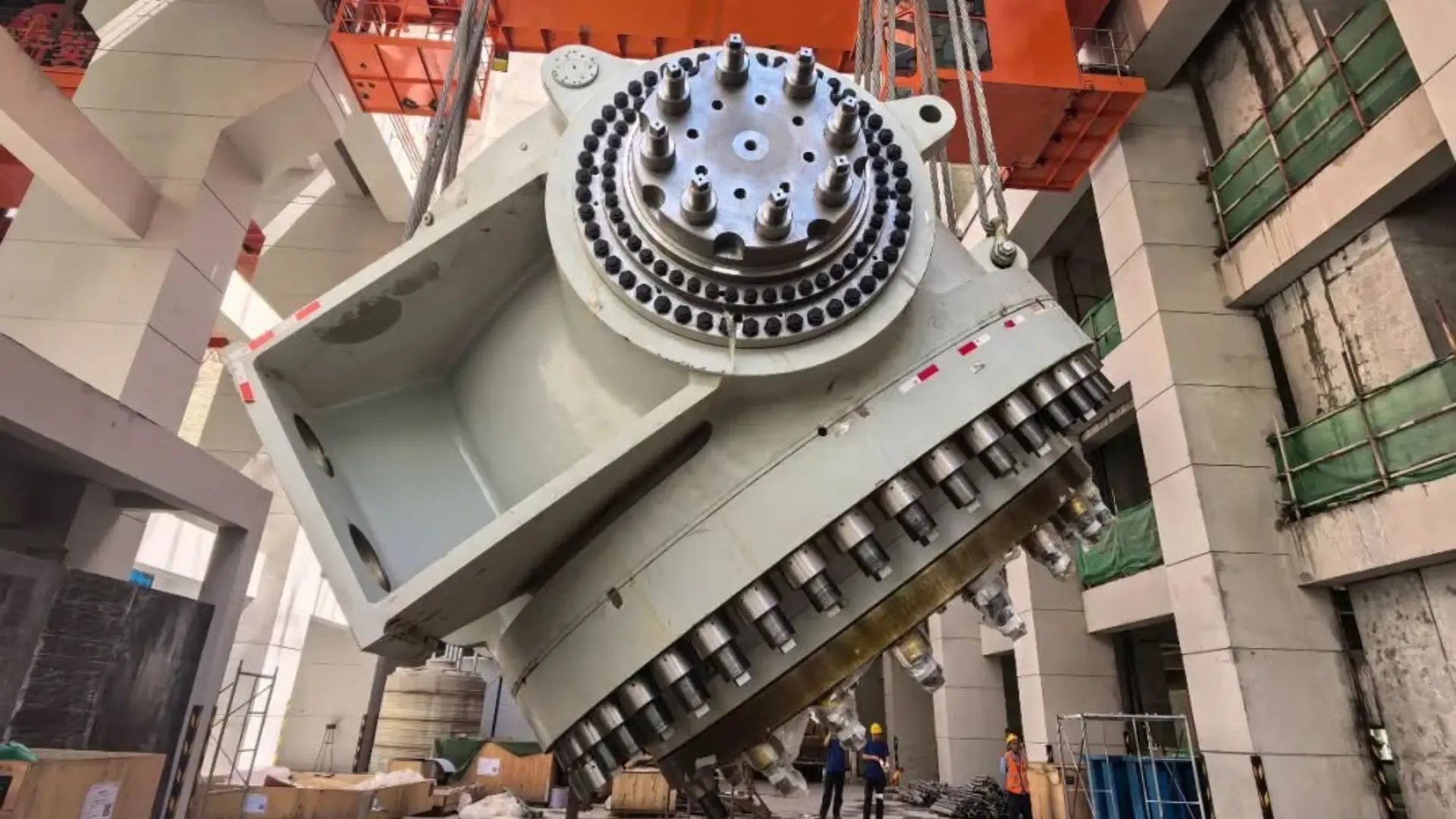

Technicians in the Xizang Autonomous Region (XAR) completed hydrostatic pressure testing on a massive inlet spherical valve for Unit 1 at the Datang Zhala Hydropower Station (DZHS). The successful test confirmed that sealing performance across all operating parameters met technical design specifications.
Work on the infrastructure asset reached this stage following extended outdoor fitting operations. Securities Times reported that completing the pressure check concluded the on-site fitting and testing phase for the station's primary inlet spherical valve.
State authorities under the National Energy Administration (NEA) previously placed the power project on the official list of major technical equipment initiatives. Dongfang Electric Corporation (DEC) leads the engineering and fabrication efforts for one of the complete generation assemblies at the facility.
The facility features two impulse power units, each operating with a capacity of 500 megawatts (MW). These units rely on Pelton turbines designed specifically to handle high hydraulic heads and large output requirements in high-altitude environments.
Crews encountered unusual field conditions while fitting the heavy valve assembly. Unlike conventional power plant components built in indoor facilities, workers completed this assembly in an open yard exposed to weather variations and space constraints.
Heavy lifting equipment maneuvered the structure into position despite severe physical limits in the outdoor staging space. High-altitude atmospheric conditions created further challenges for assembly crews during the installation process.
The steel valve measures 2.9 meters in diameter and functions under a design pressure rating of 9 megapascals (MPa). Core structural components include a large main body, a smaller outer casing, an internal valve disc, and a central valve shaft.
Fully assembled, the valve body weighs more than 300 metric tons. Specialized technical teams designed the unit to withstand intense water pressure from upstream mountain runoff.
The power complex sits on the Yuqu River, which flows into the Nu River basin before continuing through neighbouring regions. Water drops 671 meters vertically from the reservoir to the generation bay, creating strong pressure against internal components.
Harbin Electric Machinery Company (HEMC) fabricated the accompanying runner unit using high-strength martensitic stainless steel. That component weighs approximately 80 tons and incorporates 21 individual precision water buckets to capture hydraulic energy.
Project developers expect the completed facility to generate roughly 4 billion kilowatt-hours (kWh) of electricity every year. Chinese energy officials plan for the station to supply regional power grids alongside nearby wind and solar installations.
Constructors broke ground on the main facility structure in 2023,, with full operational status targeted for 2028. Testing on Unit 1 components will continue as site workers prepare additional mechanical systems for future power generation.
Comments (0)
Leave a Comment
No comments yet. Be the first to share your thoughts!