
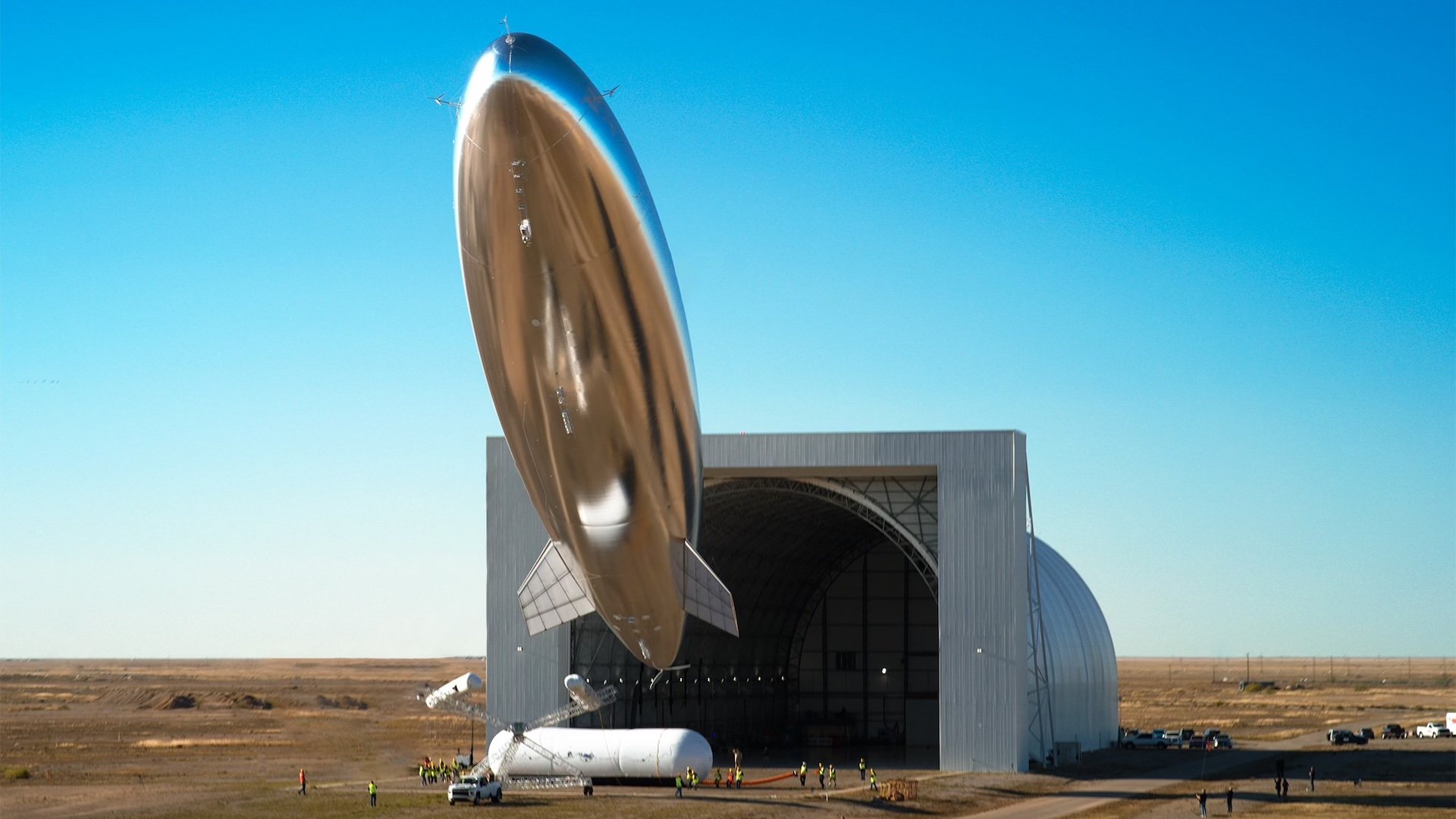

The aerospace industry has reached a new threshold for high-altitude platform stations, following a successful endurance test by Sceye. The company’s solar-powered airship remained in the stratosphere for 12 days, operating at altitudes of approximately 52,000 feet.
This flight, launched from the Roswell Air Center in New Mexico, focused on testing the craft's ability to maintain a fixed position over a specific area. Unlike satellites that orbit the earth or drones that require frequent refueling, these airships are designed to stay stationary for months.
Engineers utilized a specialized solar-battery system to power the vessel. During daylight hours, the solar arrays across the airship's surface charge the internal batteries, which then sustain flight throughout the night. This cycle allows for continuous operation without traditional fuel.
The platform is classified as a High-Altitude Platform Station, or HAPS. These vehicles operate in the stratosphere, a layer of the atmosphere above commercial air traffic and weather systems, but below the orbital path of conventional satellites.
According to technical reports from the mission, the airship carried a suite of sensors designed for environmental monitoring and connectivity. The test demonstrated that the craft could provide high-speed internet to remote areas, filling gaps in terrestrial fiber-optic networks.
Infrastructure experts suggest that HAPS technology could be particularly useful in regions with difficult terrain. In Kenya, where rural connectivity remains a priority, such platforms could offer a cost-effective alternative to building thousands of physical cell towers.
The airship also showed promise for disaster response. During the 12-day window, the onboard imaging systems monitored ground conditions in real-time. This capability is vital for tracking wildfires or assessing flood damage when ground-based infrastructure is compromised.
Maintaining a position at 52,000 feet requires precise navigation to counter stratospheric winds. Sceye confirmed that the autonomous flight control systems successfully kept the vessel within its designated flight corridor for the duration of the mission.
The success of this flight marks a transition from experimental prototypes to functional infrastructure tools. Previous attempts at long-term stratospheric flight often struggled with energy storage, but improved battery density has changed the feasibility of these projects.
Environmental monitoring was a key component of the Roswell test. The sensors tracked methane leaks and other greenhouse gas emissions, providing data that is often difficult to capture from lower-altitude aircraft or distant satellites.
Sceye representatives indicated that the goal is to deploy these ships for months at a time. The ability to land, refurbish, and relaunch the craft makes it a more sustainable option than satellites, which eventually become space debris.
For the construction and telecommunications sectors, the deployment of HAPS represents a shift in how connectivity is delivered. Instead of heavy land-based installations, a single airship can cover thousands of square kilometers from the edge of space.
Further testing is scheduled to push the endurance limits beyond the two-week mark. As battery technology continues to evolve, the industry expects these solar-powered vessels to become a permanent fixture in the global communications landscape.
Comments (0)
Leave a Comment
No comments yet. Be the first to share your thoughts!