
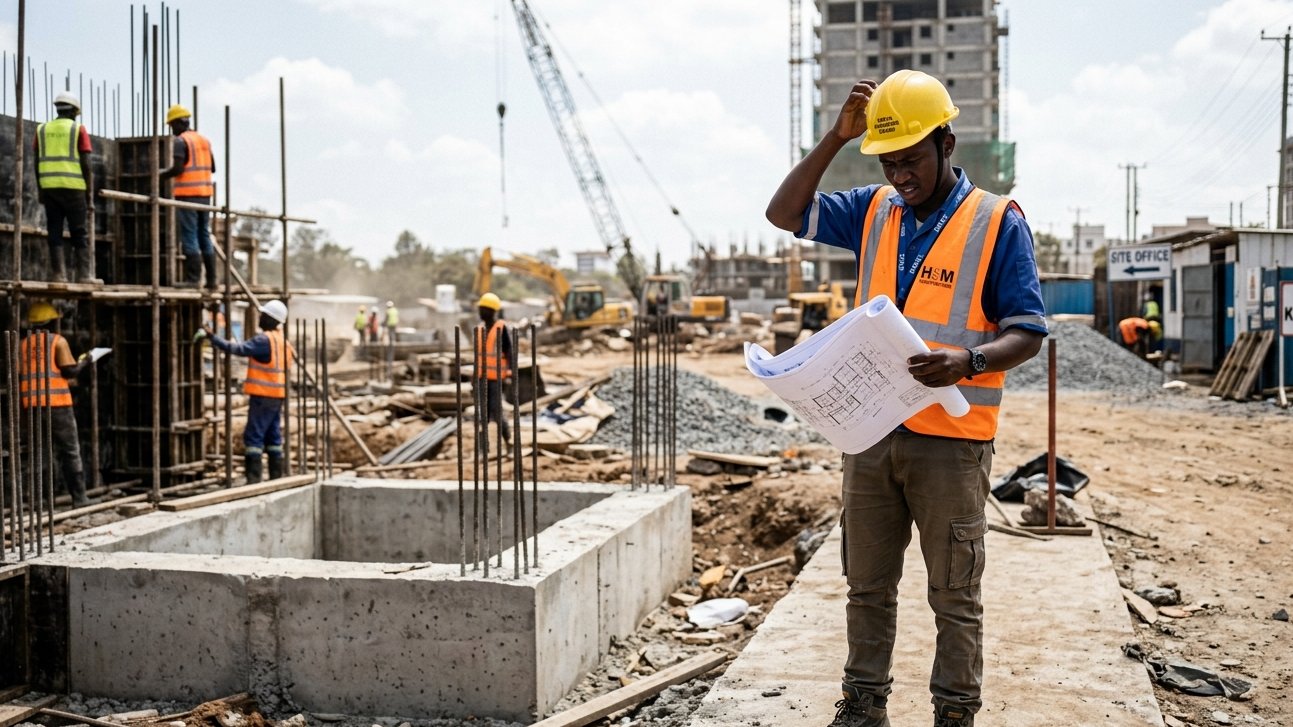

Many engineering graduates complete their studies feeling prepared for the professional world. They have passed their examinations and hold the certificates to prove their competence. Yet a different picture often emerges once they begin work in construction.
Reality sets in quickly. The controlled environment of the classroom gives way to the dynamic and sometimes unforgiving conditions of actual project sites. In school, assessment centres on theory, mathematical calculations and written tests. These elements form an important base but do not fully replicate what comes next.
On construction sites, different skills take centre stage. Professionals must interpret technical drawings with precision. They need to follow and understand processes as they unfold in real time. Decision making becomes immediate, often without the luxury of consulting notes or supervisors for every detail. Problem solving takes on a practical dimension that demands quick thinking and adaptability.
This difference creates a noticeable gap for many new graduates. The transition can shake their belief in their own abilities. Doubts surface easily. Some feel they do not measure up despite their academic achievements. The experience is shared widely enough that it has prompted conversation among young engineers in Kenya.
It is worth stating clearly that the individuals are not the issue. University programmes deliver foundational knowledge in engineering disciplines. What they often cannot provide in full is the applied aspect of the work, particularly in fields like civil and structural engineering that dominate local construction activity.
Confidence builds differently. It grows from repeated practice and direct involvement in tasks. Exposure to varied site conditions helps. Learning continues through observation and hands-on repetition rather than solely through formal instruction.
Graduates facing this situation have options. Seeking out opportunities for practical engagement proves useful. Asking questions when unclear and pushing for involvement in different aspects of projects can accelerate the learning curve. Many discover that skills develop steadily with time spent in the field.
Kenya's construction landscape offers context for these challenges. The Engineers Board of Kenya reports more than 37,000 trained engineers, even as the sector advances major projects in roads, housing and energy. Despite this activity, reports indicate that a substantial portion of qualified professionals remain underutilised or outside gainful employment in their field.
Employer surveys often highlight shortcomings in the practical application of knowledge. Concerns frequently centre on the ability to operate independently on site. Calls have grown for improved links between educational institutions and industry to ease the entry process.
On-the-job training and internship placements have emerged as practical responses. These arrangements allow newcomers to gain familiarity with equipment, workflows and the decision processes central to construction delivery. Over time, such experiences help restore and strengthen professional self-assurance.
The pattern repeats across cohorts entering the sector. Graduates arrive eager but encounter hurdles that their prior training did not entirely anticipate. Addressing the divide requires effort from both sides. Institutions can emphasise applied learning where possible. Young engineers, for their part, must take initiative in building the capabilities the work demands.
For those currently in the early stages of their careers, recognising the gap as a common stage rather than a personal failing can itself prove liberating. Progress comes through consistent engagement with real engineering tasks. With patience and deliberate practice, the initial uncertainty gives way to competence and assurance.
Comments (0)
Leave a Comment
No comments yet. Be the first to share your thoughts!