
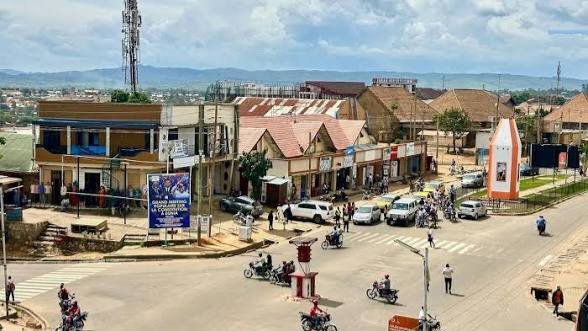

The Democratic Republic of Congo (DRC) has confirmed a new outbreak of Ebola in its eastern frontier region, where local transmission has already caused at least 80 deaths.
Health Minister Samuel Roger Kamba Mulamba announced late on Friday that laboratory testing confirmed the presence of the virus in Ituri province, which sits close to the borders of Uganda and South Sudan.
According to data compiled by the Africa Centres for Disease Control and Prevention (Africa CDC), health workers have registered 246 suspected cases across the region.
The outbreak is centered within the Mongwalu, Rwampara, and Bunia health zones, creating a precarious situation for urban centers and nearby mining communities.
Medical investigators identified the suspected index case as a local nurse, who died at the Evangelical Medical Centre in Bunia on April 24.
The nurse exhibited classic hemorrhagic symptoms, including fever, severe physical weakness, vomiting, and bleeding.
Officials stated that initial field samples collected by response teams came back negative, causing early delays in tracking the virus.
Subsequent laboratory analysis performed by the National Institute for Biomedical Research (INBR) in Kinshasa eventually confirmed positive infections.
Out of 13 blood samples successfully processed by the institute, eight tests came back positive for the rare Bundibugyo strain of the virus.
Virologists warned that the presence of the Bundibugyo variant presents a significant obstacle for health workers on the ground.
Jan-Jacques Muyembe, the Congolese virologist who co-discovered Ebola, noted that most historical outbreaks in the country involved the Zaire strain.
The shift to a less common variant means existing medical countermeasures may face limitations in the field.
Currently, there are no approved vaccines or specific therapeutic treatments available to combat the Bundibugyo strain.
The lack of established pharmaceutical interventions means response efforts must rely heavily on traditional containment strategies.
Epidemiologists are focusing their efforts on aggressive contact tracing, strict quarantine protocols, and public education campaigns.
The World Health Organization (WHO) has scaled up its support, airlifting five metric tonnes of emergency medical supplies to the affected province.
The shipment includes protective equipment, isolation tents, infection control materials, and specialized laboratory infrastructure.
Health agencies expressed deep concern over the high mobility of populations around local mining sites, which could accelerate regional transmission.
Insecurity within Ituri province further complicates the humanitarian deployment.
Years of clashes between rival militia groups have displaced thousands of residents, forcing families into crowded temporary camps.
Aid organizations warned that the poor hygiene conditions in these displacement hubs create a ripe environment for rapid disease transmission.
The situation marks the 17th recorded Ebola outbreak in the country since the virus was first discovered near the Ebola River in 1976.
The previous outbreak in Kasai province concluded in December after causing 45 deaths over a three-month period.
Regional health authorities from Uganda and South Sudan have held emergency meetings with international partners to coordinate border screenings.
Local residents in the provincial capital of Bunia reported a sudden rise in daily burials, causing widespread panic across the municipality.
The central government has activated its emergency operations infrastructure to manage logistics and deploy rapid response squads to remote villages.
Public health experts emphasize that swift equipment delivery and immediate movement restrictions remain the only viable options to halt the current vector.
Comments (0)
Leave a Comment
No comments yet. Be the first to share your thoughts!